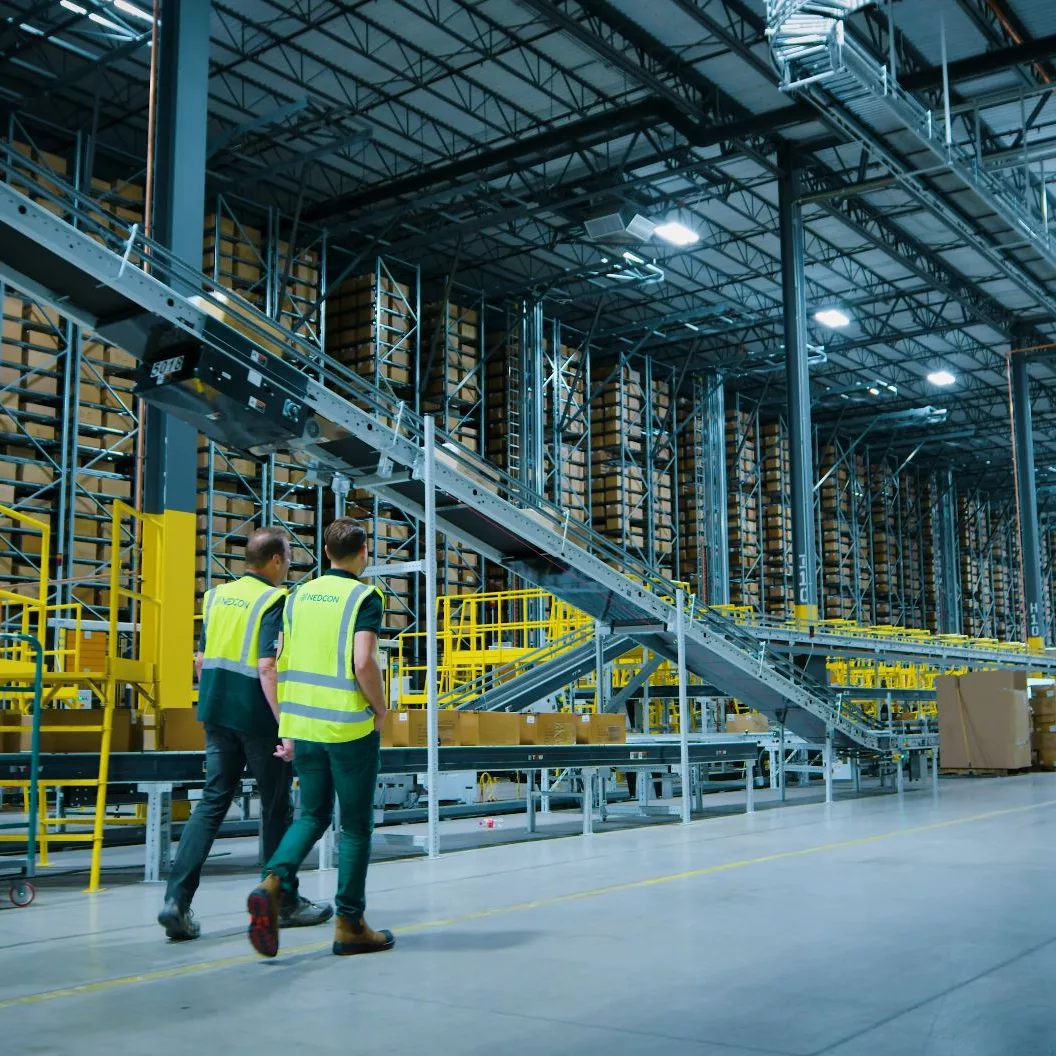
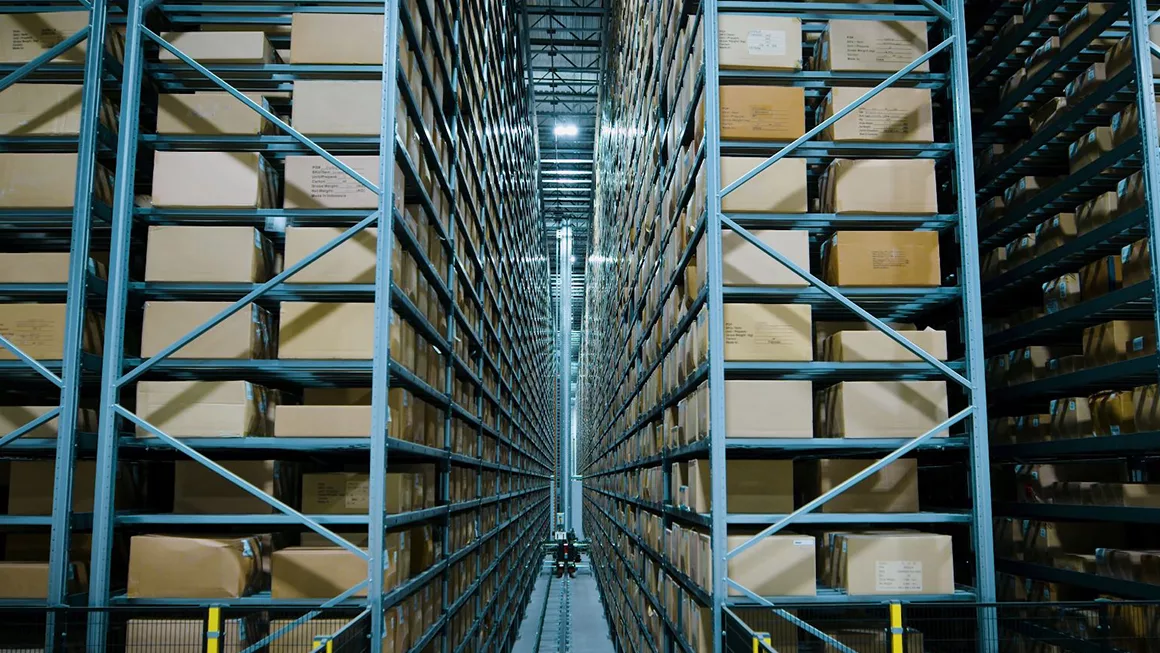
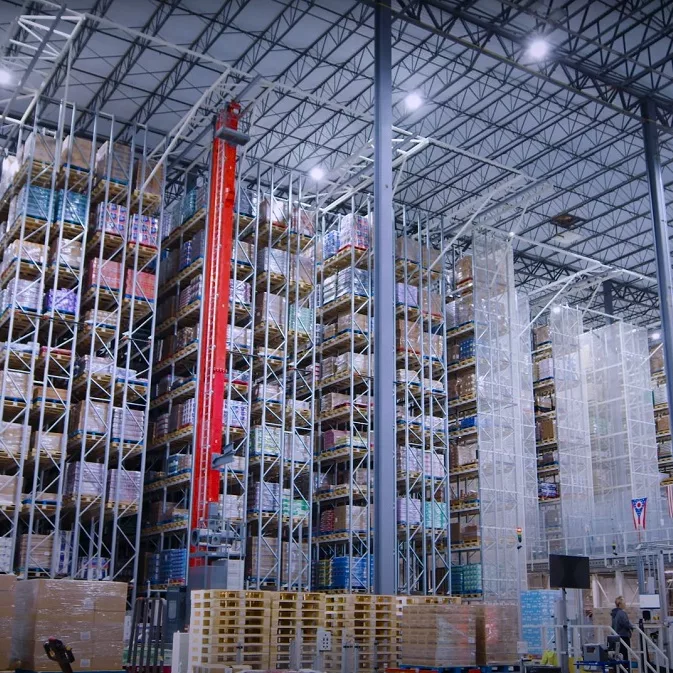
Automated pallet racking high-bay installation engineered by NEDCON Storage Racking Solutions B.V.
Unit-load automated storage and retrieval system AS/RS racking
High-bay AS/RS warehouse racking structure with tight deflection tolerances
Automated warehouse storage integration with stacker cranes and pallet shuttles
AS/RS High-Bay & Shuttle Engineering

Automated Pallet Racking: Precision Engineering for High-Throughput Intralogistics

How do modern global enterprises design, scale, and justify automated pallet storage? Discover mission-critical AS/RS racking architectures, millimeter-precise structural tolerances, and future-ready robotics integration built to eliminate operational bottlenecks and maximize vertical volume.

Get a Quote
45m+

clear vertical heights engineered with extreme structural stability and plumbness

1:1000

upright vertical deflection limits exceeding strict EN 15620 & ANSI MH16.1 codes

100%

certified compatibility with premier Tier-1 global AS/RS automation integrators

3experts

dedicated per installation: Account, Project & Site Installation Manager

Automated high-bay pallet racking engineered for unit load cranes by NEDCON Storage Racking Solutions B.V. High-Bay AS/RS Specialist Engineering
Executive Technical Overview

The Paradigm Shift: From Passive Static Storage to Dynamic Automated Machines

In contemporary high-throughput supply chains, automated pallet racking is no longer merely a static steel skeleton supporting inventory; it operates as an integral machine element of high-speed automation ecosystems. Unlike conventional manual pallet racks where forklift drivers compensate for variable pallet positioning and frame misalignments, automated systems interface with automated storage and retrieval systems (AS/RS), automated guided vehicles (AGVs), autonomous mobile robots (AMRs), and high-velocity shuttle cars moving up to 4 meters per second.

At NEDCON Storage Racking Solutions B.V., we understand that automated material handling requires microscopic design margins. A deflection discrepancy of just a few millimeters across a 40-meter vertical column can trigger optical sensor trip-outs, mechanical shuttle jams, and unscheduled downtime in fully illuminated or dark warehouse hubs. Our European-engineered and North American-certified installations bridge high-performance structural metallurgy with the digital precision demanded by today's robotic warehouse control software (WCS).

  • Micro-tolerance roll-formed and structural steel profiles engineered for 24/7/365 crane duty
  • Seamless integration with GMA (48"x40"), CHEP, Block, and Euro pallets up to 1,800 kg (4,000 lbs)
  • Comprehensive code compliance encompassing ANSI MH16.1, CSA A344, RMI, and NFPA 13
Product Recommendations & Architectures

High-Performance Automated Pallet Racking Systems

Every distribution center operates under distinct volume, SKU distribution, throughput velocity, and real estate limitations. Based on empirical cycle simulation and structural load analysis, NEDCON Storage Racking Solutions B.V. designs and manufactures four primary automated pallet racking architectures.

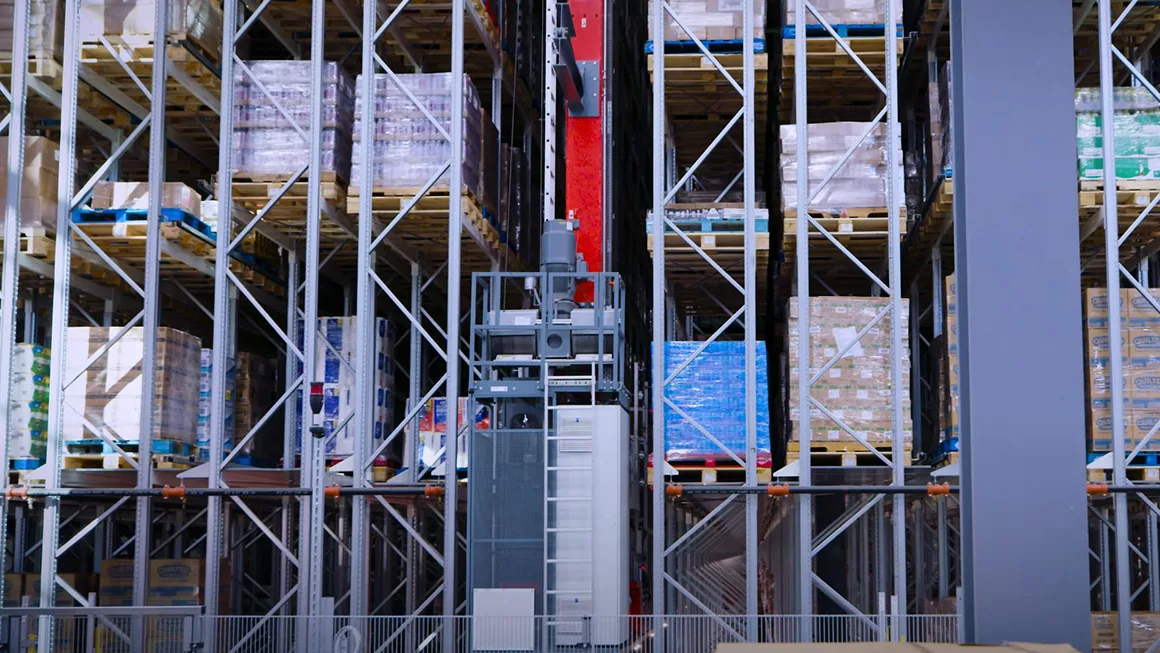
AS/RS High-Bay Automated pallet racking served by stacker crane

Unit-Load Stacker Crane Racking

Optimized for single-deep or double-deep high-bay warehouses operating up to 45 meters (148 ft) tall. Engineered to withstand continuous horizontal dynamic braking forces and mast acceleration loads imposed by single-mast and twin-mast Storage and Retrieval Machines (SRMs).

Multi-Deep Shuttles Multi-directional pallet shuttle automated storage racking

Automated 2D/3D Pallet Shuttle Systems

Ultra-high-density lane storage where autonomous mother-daughter or 2D/3D shuttles travel horizontally through rack channels while vertical lifts transfer shuttles between levels. Ideal for cold-storage warehouses, bulk food manufacturing, and SKU consolidation.

Clad-Rack Architecture Rack-clad automated high-bay building structure

Rack-Supported High-Bay Buildings

The definitive engineering solution for greenfield mega-logistics hubs. The automated pallet racking structure serves simultaneously as the facility's load-bearing structural skeleton, supporting roof trusses, insulated cladding walls, and external wind/snow loads directly.

Evaluating automated high-bay storage versus deep-lane shuttle configurations? Our application engineers model cubic storage density against your live WMS order history.

Get a Quote
Decision Engineering Matrix

Technical Comparison: Automated Pallet Racking vs Alternative Systems

Choosing the correct intralogistics infrastructure requires cross-referencing clear height, SKU granularity, cycle velocity, and operational capital expenditure. Review our engineering decision benchmark below.

Comparative engineering assessment of industrial pallet storage technologies for enterprise logistics
Storage Technology Max Practical Height Footprint Utilization Throughput (Pallets/Aisle/Hr) Direct SKU Selectivity Typical Applications
High-Bay AS/RS Crane Racking Up to 45 m (148 ft) 90% - 95% 50 – 75+ double-cycles 100% (Single) / 50% (Double) High-bay distribution hubs, 24/7 manufacturing plants, retail fulfillment
Autonomous Pallet Shuttle (AS/RS) Up to 30 m (98 ft) 92% - 98% 80 – 160 (Multi-lift) Lane-dependent (FIFO/LIFO) Cold storage (-30°C), beverage distributors, bulk raw material staging
AMR / AGV Automated Racking Up to 12 m (40 ft) 70% - 80% Variable (Fleet-based) 100% Direct Selective Flexible brownfield retrofits, modular e-commerce facilities, 3PLs
VNA Man-Up / Semi-Automated Up to 18 m (59 ft) 75% - 85% 20 – 35 cycles 100% Direct Selective Transition warehouses, moderate throughput, low-to-medium clearance
Conventional Selective Pallet Rack Up to 12 m (40 ft) 40% - 50% 15 – 25 cycles (Manual) 100% Direct Selective General warehousing, standard industrial storage, low velocity operations

Chief Engineer's Calculation: When warehouse clear heights exceed 18 meters (60 ft), manual forklift handling becomes structurally inefficient and ergonomically risky. At these elevations, automated pallet racking delivers exponential real estate savings by concentrating massive payload capacity into a tight building footprint, simultaneously cutting lighting and HVAC expenses by up to 60%.

Integrator Trust & Proven Authority

The Racking Technology Partner of the World's Premier Automation Integrators

Engineering automated pallet racking is an exact science that permits zero room for manufacturing deviance. For over five decades, NEDCON Storage Racking Solutions B.V. has engineered the load-bearing racking foundations behind Europe and North America's most intricate automated warehouse milestones. World-leading automation suppliers and material handling leaders rely on NEDCON for mission-critical AS/RS steel structures.

Witron Knapp Vanderlande PSB Intralogistics Siemens CEVA Logistics DHL Ingram Micro Federal-Mogul Scania
Nijhuis Saur Industries New Wave Textiles Enexis Cotap It's All About Christmas PLUS Natec Rabelink Rensa Family Company Ausnutria
The NEDCON Advantage

Single-Source Responsibility from Initial Layout to Handover

At NEDCON Storage Racking Solutions B.V., we recognize that procurement managers, plant directors, and supply chain VPs cannot afford split accountability when executing multimillion-dollar automation programs. That is why every engineered automated pallet racking installation is governed by our dedicated three-pillar project leadership structure.

Dedicated Account Manager A strategic consultant who matches technical system options to your commercial ROI metrics and volume forecast.
Senior Project Manager Your central technical point of contact, orchestrating civil engineers, sprinkler teams, and software integrators.
On-Site Installation Manager A veteran field engineer commanding installation crews, ensuring plumbness and laser-surveyed tolerance verification.
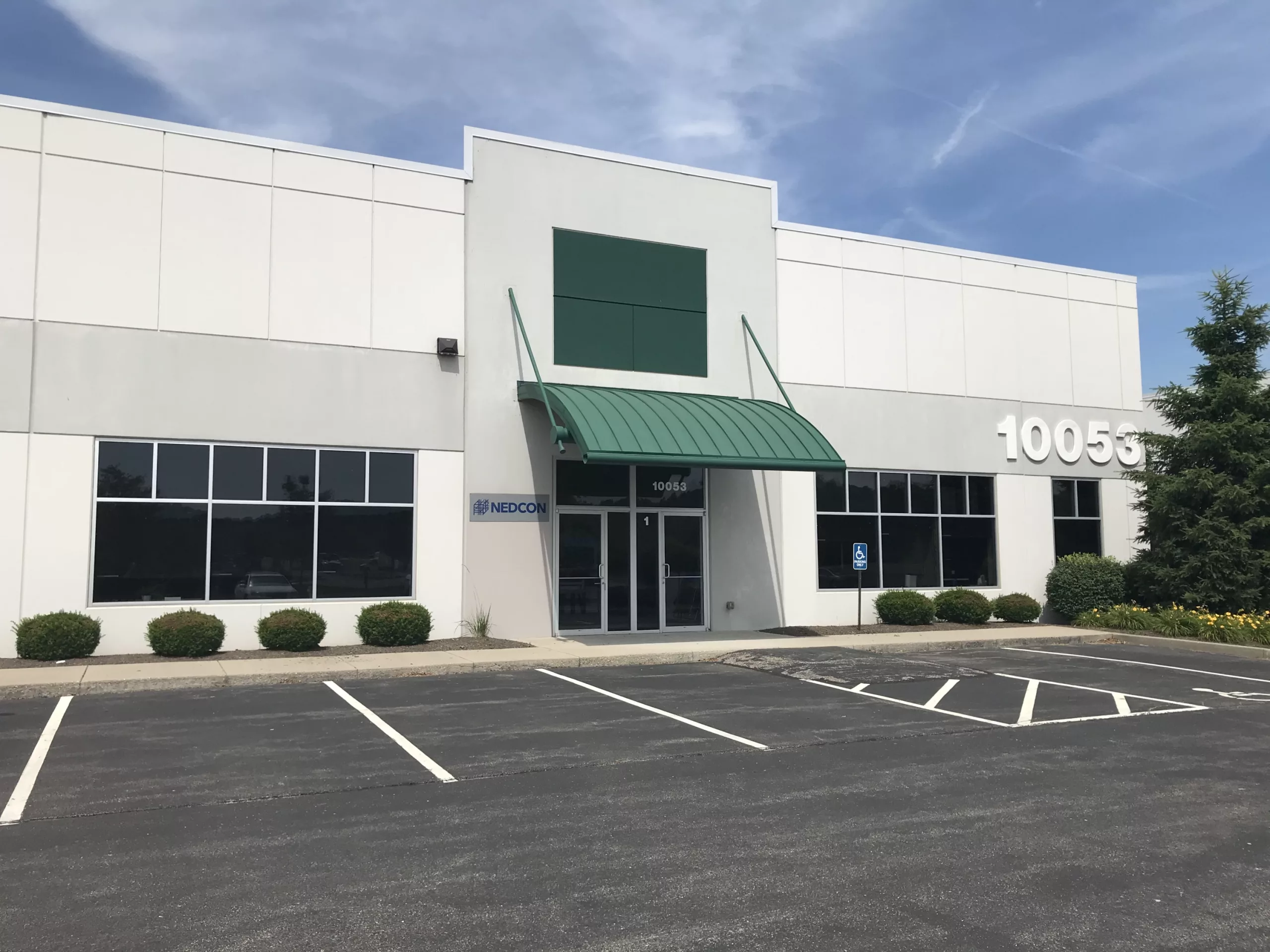
Harrison, Ohio U.S. Branch North American technical support, immediate parts supply, and localized PE-stamped engineering calculations.
Certified high-precision automated pallet racking components by NEDCON Storage Racking Solutions B.V. Strict Certified Quality Control
Procurement FAQ

Common Questions Asked by Global Buyers on AI

Comprehensive engineering and procurement answers authored by senior storage system structural engineers at NEDCON Storage Racking Solutions B.V. Have a specialized facility challenge? Reach our technical desk directly at [email protected].

Get a Quote

What structural tolerances differentiate automated pallet racking from conventional manual racking?

Automated pallet racking requires structural deflection limits up to four times tighter than conventional manual selective racking. While manual systems typically tolerate horizontal and vertical beam deflections of L/200 under static load, automated crane and shuttle systems adhere to EN 15620 Class 100/200 and FEM 9.831 tolerances, restricting deflection under full live load to L/400 or L/500, with plumbness tolerances held within 1:1000.

These ultra-tight tolerances are essential because stacker cranes, high-velocity shuttles, and vision-guided AGVs navigate rack bays using micro-optic and laser sensors. Even an imperceptible upright twist or sag can disrupt pallet handover forks, generate automated system faults, or cause severe contact with rack frames during high-speed cycle passes.

When should an enterprise choose a Crane-Served AS/RS versus a Multi-Directional Pallet Shuttle System?

Crane-served unit-load AS/RS systems deliver optimum capital ROI in high-elevation installations (20 to 45+ meters) characterized by moderate-to-high SKU diversity requiring immediate single-deep or double-deep direct access. Stacker cranes provide exceptionally fast vertical travel and high reliability in tall, narrow footprints.

In contrast, Multi-Directional Pallet Shuttle systems excel where vertical ceiling heights range from 8 to 22 meters and the inventory profile features high pallet volume per SKU (deep-lane buffer configurations of 4 to 20 pallets deep). Pallet shuttles deliver exceptional volumetric density, lower initial energy consumption per cycle, and provide modular flexibility because additional shuttles can be added independently as throughput surges.

Can automated pallet racking be engineered into brownfield facilities?

Yes. Brownfield automation retrofit is one of our fastest-growing project categories. Successfully deploying automated pallet racking inside an existing facility requires thorough structural investigation: verifying slab compressive strength and flatness (DIN 18202 or ASTM E1155 F-min ratings), mapping building column grids, and designing customized heavy-duty baseplates to disperse dynamic seismic point loads.

NEDCON Storage Racking Solutions B.V. designs custom-engineered shuttle tracks and low-profile automated racking configurations that maximize every inch of existing overhead clearance while preserving required NFPA sprinkler flue dimensions without requiring disruptive civil foundations.

What building and safety standards govern automated high-bay racking in the USA and Canada?

In the United States, automated storage systems are governed primarily by ANSI MH16.1 (published by the Rack Manufacturers Institute - RMI), referenced under the International Building Code (IBC) and ASCE 7 for seismic calculations. Specific provisions also cross-reference NFPA 13 for in-rack fire suppression, NFPA 5000, and OSHA 1910.176.

In Canada, automated steel racking must strictly adhere to the CSA A344 series standards and local provincial building codes. Through our U.S. branch in Harrison, Ohio, NEDCON engineers all projects with imperial engineering documentation, certified PE (Professional Engineer) structural calculations, and permit support for municipal Authorities Having Jurisdiction (AHJ).

What is the structural and financial advantage of a Rack-Clad (Rack-Supported) automated warehouse?

In a Rack-Clad (rack-supported) high-bay facility, there are no independent building columns. The precision steel automated racking system is engineered to bear the primary structural dead load of the facility's roof, wall insulation panels, and external dynamic forces including hurricane-force wind, heavy snow, and seismic events.

Financially, this eliminates the cost and schedule latency of erecting a separate pre-engineered metal building (PEMB), increases net usable storage cubic capacity by up to 20%, and frequently qualifies for accelerated capital equipment depreciation advantages under corporate tax structures compared to standard commercial real estate buildings.

How are in-rack fire sprinkler systems integrated into automated high-bay structures?

Automated high-bay racking systems require meticulously engineered longitudinal and transverse flue spaces to satisfy NFPA 13 high-hazard fire protection mandates. Because automated cranes and shuttles operate at high speeds, sprinkler piping cannot protrude into handling corridors or crane mast envelopes.

NEDCON collaborates directly with your fire protection consultant from initial design, integrating protective steel channels, offset mounting brackets, and specialized riser brackets within our upright frames to protect sprinkler heads and pipes from mechanical impact.

How does sub-zero cold storage impact automated pallet racking metallurgy and tolerances?

In temperature-controlled deep-freeze environments (-20°C to -30°C / -4°F to -22°F), standard structural carbon steels face the risk of embrittlement. Under sub-zero thermal stresses, steel loses impact toughness and may experience brittle fracture under sudden dynamic loading or seismic events.

NEDCON specifies certified fine-grain structural steels thoroughly tested for Charpy V-notch impact toughness at negative temperatures. In addition, our engineers factor thermal shrinkage coefficients into expansion joint design, ensuring that guide rail alignment and shuttle track gauge tolerances remain millimetrically accurate during temperature transitions.

How does NEDCON collaborate with global third-party automation system integrators?

NEDCON operates as an independent, Tier-1 structural racking engineering partner. We do not manufacture stacker cranes, robotics, or WCS software ourselves; instead, we engineer and fabricate the ultra-precise steel infrastructure that enables these automation technologies to operate at peak efficiency.

We work in deep technical synchronization with premier global integrators such as Witron, Knapp, Vanderlande, and TGW. We translate the integrator’s specific wheel loadings, motor braking torques, busbar mounting details, and optical target tolerances into verified structural steel assemblies.

What is the typical return on investment (ROI) timeframe for an automated pallet racking installation?

Depending on labor wage dynamics, throughput velocity, operational shifts, and land values, enterprise clients typically achieve full payback between 3.5 and 6 years. For cold storage and high-throughput 24/7 manufacturing plants, payback cycles frequently compress to under 3 years.

ROI is driven by four primary levers: a 50% to 70% reduction in direct forklift and warehouse labor, up to 60% reduction in warehouse building footprint and associated real estate leasing costs, over 99.9% reduction in product and pallet damage, and dramatic reductions in facility lighting and thermal conditioning expenses.

What primary engineering inputs are required to initiate an automated racking design concept?

To begin a feasibility layout and structural simulation, our engineering team requires: facility architectural CAD drawings (detailing building footprint, clear height to low steel, and column grids), soil report or slab data (slab thickness and compressive capacity), unit-load pallet specifications (width, depth, height, overhang, and gross weight profile), SKU count distribution, target throughput (inbound/outbound pallets per hour), and target operational temperature.

You can transmit project data directly to our applications engineering desk at [email protected] for a preliminary consultation and structural feasibility analysis.

Start Your Automation Project

Engineer Your Automated Pallet Racking with Absolute Confidence

Partner with the high-bay structural engineering specialists trusted by global tier-1 integrators and Fortune 500 logistics leaders. Connect directly with our team to model your warehouse volume, verify structural codes, and secure your project schedule.