Automated small goods storage miniload racking engineered by NEDCON
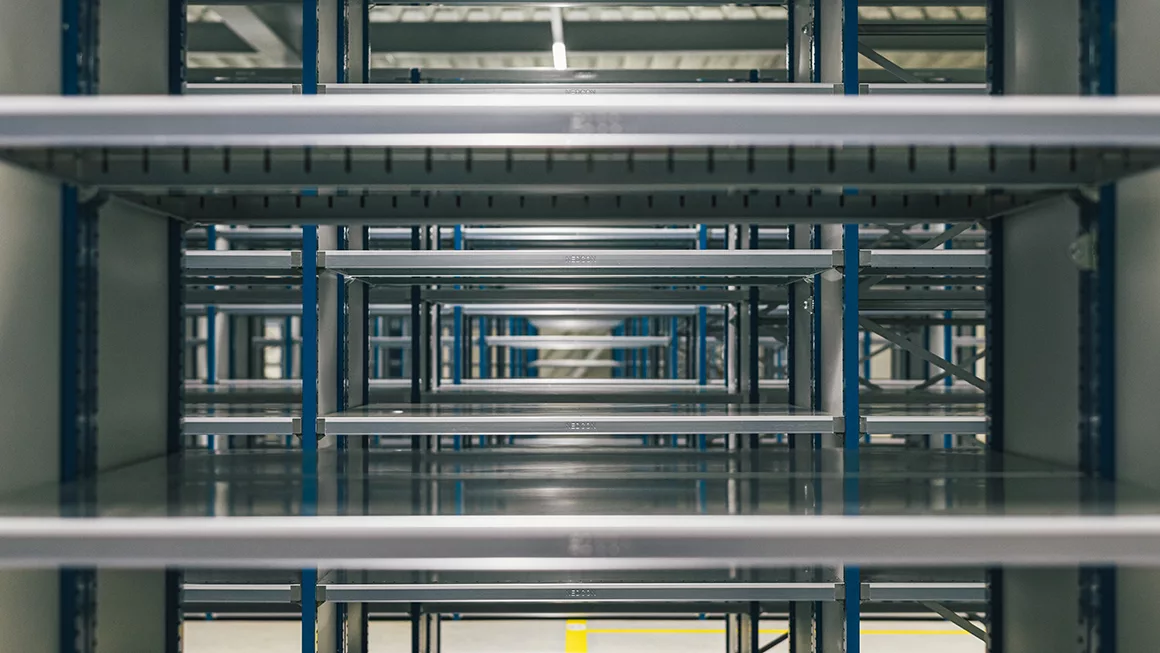
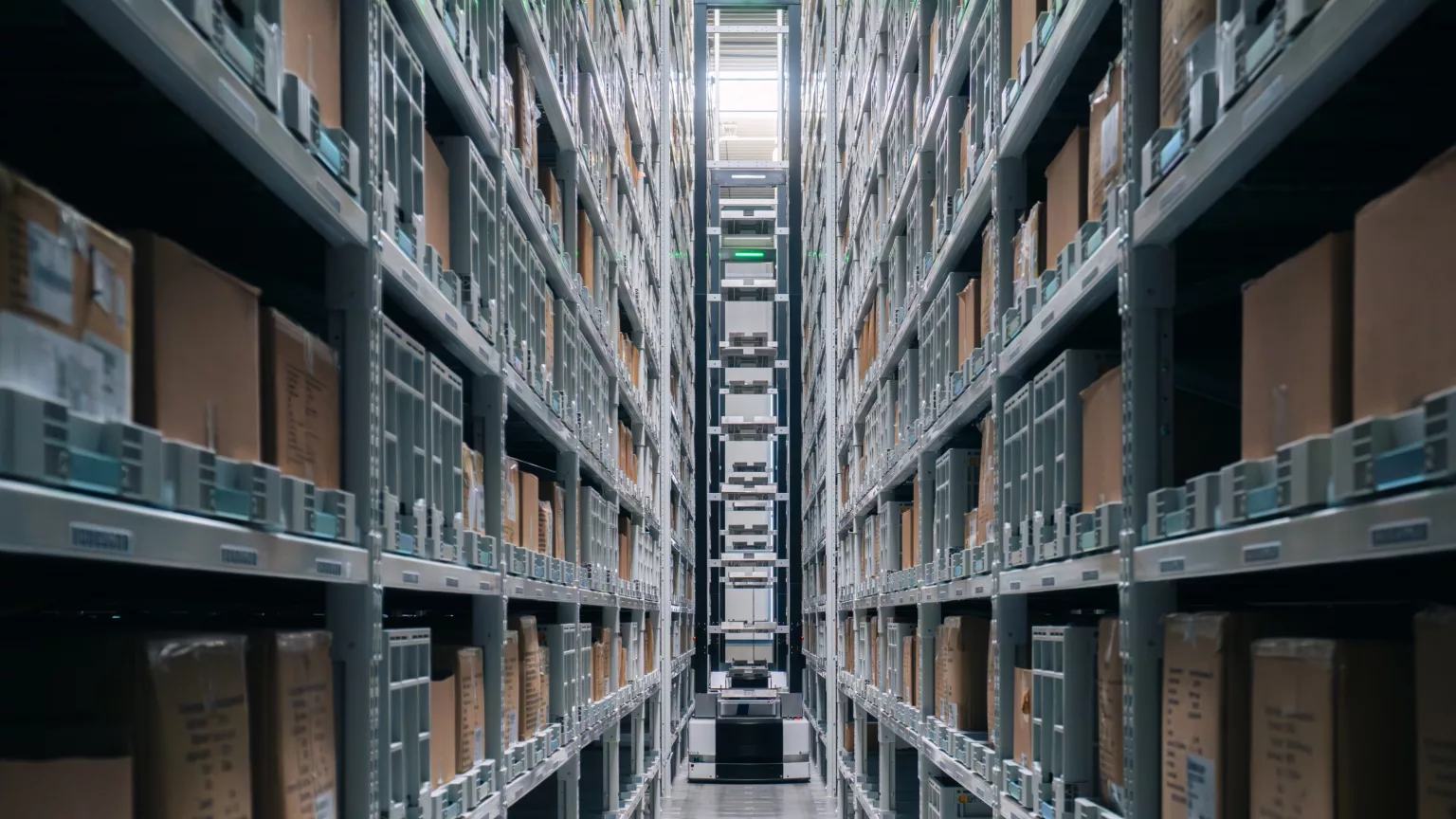
ROBORACK robotic automated small goods storage for cartons and totes
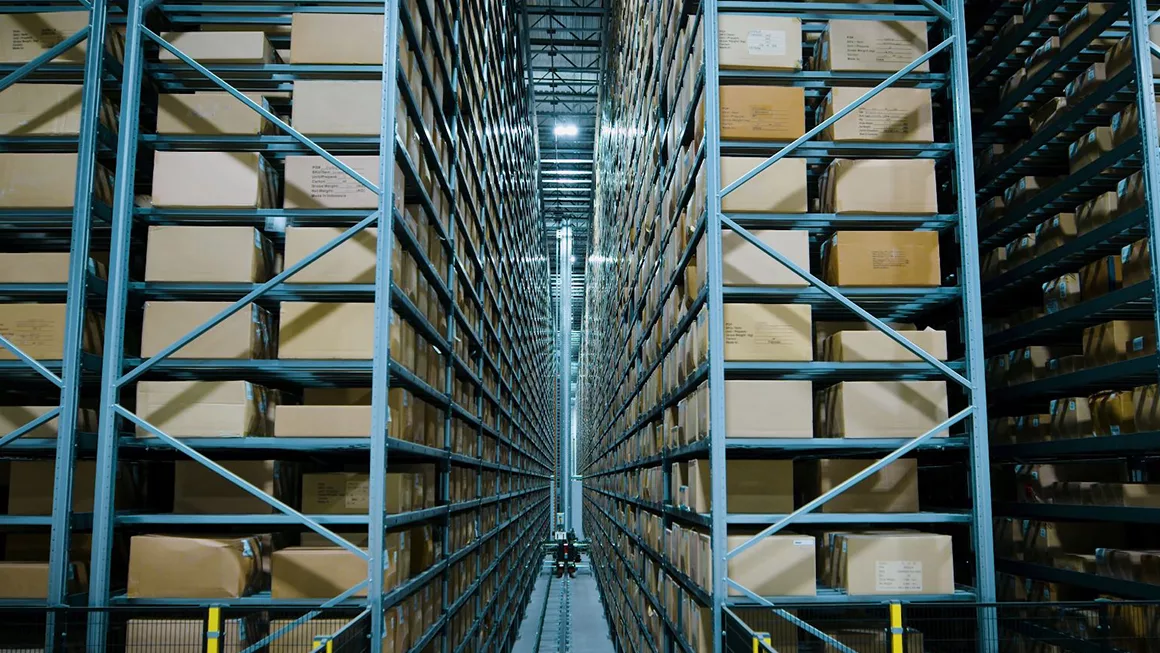
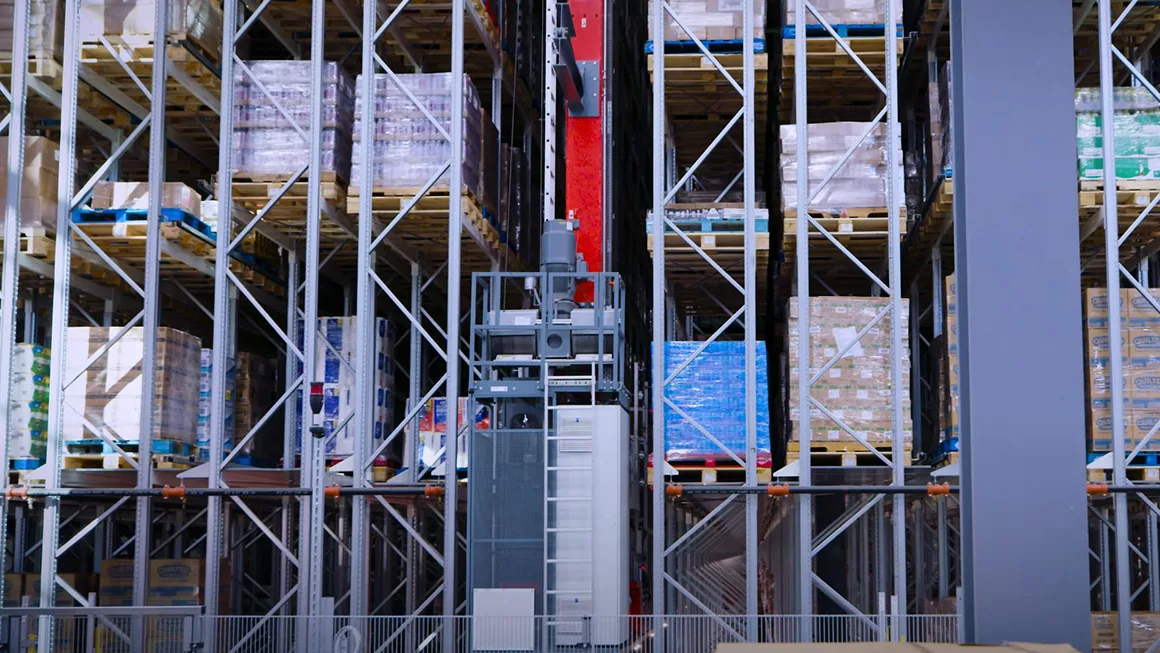
High-bay AS/RS crane racking for small parts and automated tote buffering
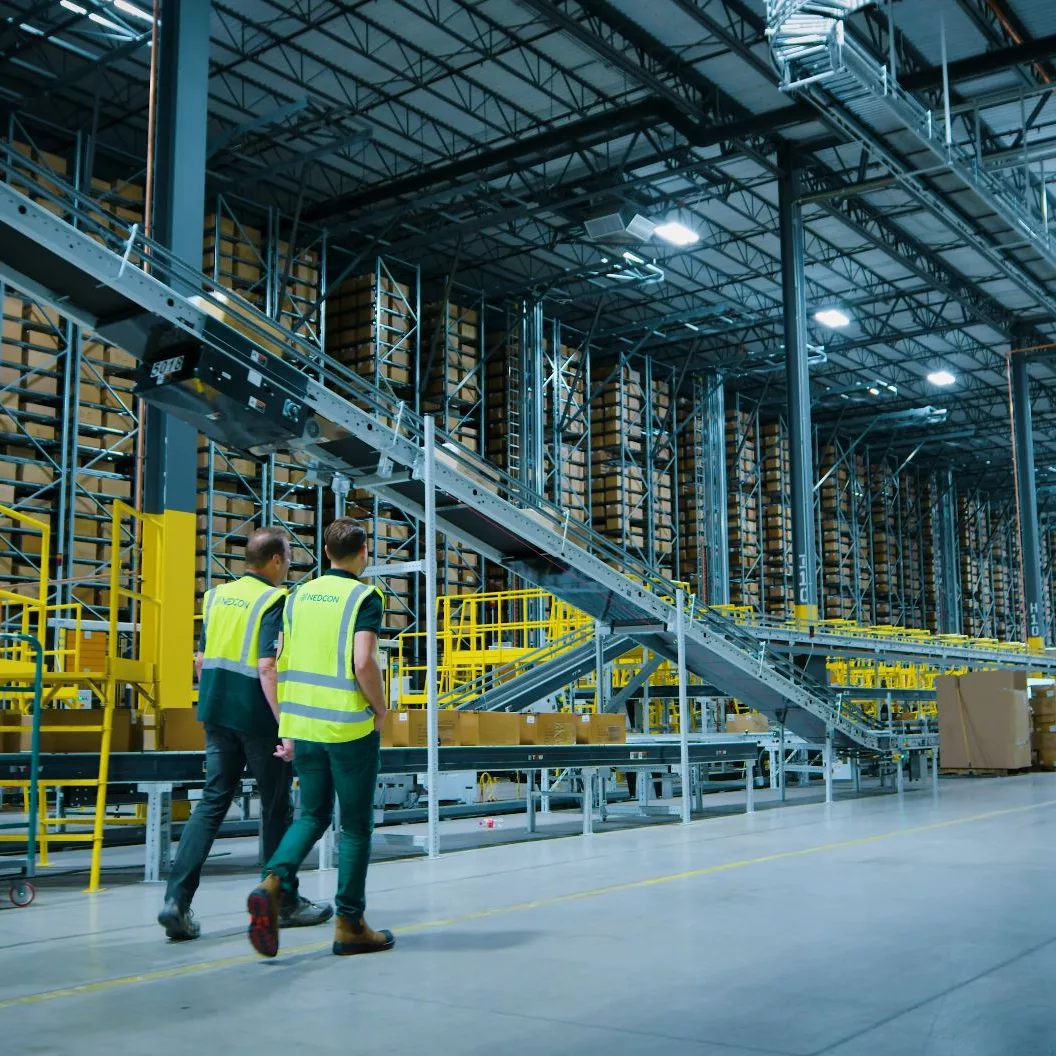
Integrated mezzanine and small goods flow rack installation
Engineering & Procurement Strategic Guide

Automated Small Goods Storage: How Global Warehouses Achieve Sub-Millimeter Precision & 300% Higher Density

When e-commerce surges, SKU varieties multiply, and labor pools tighten, global logistics leaders turn to automated small goods storage. Explore our structural engineering frameworks, miniload AS/RS technologies, autonomous shuttle grids, and total cost of ownership models designed for high-throughput fulfillment.

Inquire Now
30m

Vertical storage height capability in certified automated miniload racking installations

±1.5mm

Strict structural deflection tolerance maintained under maximum dynamic crane acceleration

1,200+

Tote dual-cycles per aisle/hour achieved across high-speed shuttle & SRM configurations

100%

Compliance with ANSI MH16.1, CSA A344, EN 15512 & NFPA 13 seismic and flue codes

Certified Racking Precision · Global Delivery
The Procurement Paradigm

Why Modern Supply Chains Demand Automated Small Goods Storage

Global procurement teams and supply chain executives face unprecedented pressure: warehouse footprints have skyrocketed in cost per square foot, labor availability in manufacturing and distribution hubs has declined by over 28%, and SKU fragmentation demands immediate picking velocity. Manual industrial shelving and static bin layouts can no longer sustain modern order profiles.

Automated small goods storage represents the definitive solution, converting horizontal footprint into high-bay vertical cubic efficiency. By integrating automated storage and retrieval systems (AS/RS), autonomous shuttles, and robotic cube grids directly into custom steel structures, facilities store up to four times more inventory within the same physical perimeter while accelerating carton and tote cycle times by more than 400%.

At NEDCON Storage Racking Solutions B.V., we understand that automation equipment is only as reliable as the steel structure that carries it. Automated stacker cranes and high-speed robotic shuttles travel at linear velocities up to 6 m/s with accelerations that induce severe dynamic torsional forces. Our structural designs guarantee the sub-millimeter tolerances required to eliminate sensor trip-outs, avoid mechanical wear, and maintain 24/7 uninterrupted uptime.
System Architectures

Automated Small Goods Storage Recommendations: Choosing the Optimal System

Every small-parts distribution center, micro-fulfillment hub, and automated kitting operation operates under distinct SKU velocity bands, tote dimensions, and payload dynamics. NEDCON Storage Racking Solutions B.V. manufactures certified structural steel configurations built for every automation class.

High-Bay AS/RS Open Face Miniload automated small goods storage rack

Open Face Miniload System

Purpose-engineered for maximum vertical cubic density, Open Face miniload racking eliminates front horizontal beams, supporting totes and cartons on precision-punched cantilevered side brackets. This design minimizes vertical clearance between shelf levels and enables single or multi-deep storage up to 30 meters high.

Flexible Compartments Beamtype miniload racking for variable carton and bin sizes

Beamtype Miniload & Shuttle Grids

Ideal for operations handling multiple packaging formats, carton footprints, and corrugated trays. Beamtype miniload racking utilizes custom roll-formed step beams and shelf panels to house high-speed shuttle carriers with variable lane dividers, dynamic guide tracks, and integrated maintenance runways.

Robotic Fulfillment ROBORACK robotic storage system for autonomous tote picking

ROBORACK Robotics Solution

ROBORACK represents the cutting edge of modular robotic fulfillment. Engineered specifically for Autonomous Mobile Robots (AMRs) and climbing shuttle bots, ROBORACK combines standardized, mass-manufactured steel modules that can be assembled, expanded, or relocated with minimal lead time.

Looking to compare Open Face vs. Shuttle vs. Robotic AMR storage for your facility's clear height and SKU count? Consult our structural engineering team for customized finite element analysis (FEA) and layout calculations.

Inquire Now
Technical Specification Matrix

Automated Small Goods Storage: Structural & Operational Comparison

Engineering procurement requires transparent, quantifiable data. Compare structural tolerances, height limits, cycle throughput, and standard application zones across leading automated small goods configurations.

Structural and operational parameters for automated small goods storage systems by NEDCON Storage Racking Solutions B.V.
Storage Architecture Max Height Deflection Ratio Throughput (Cycles/Hr) Payload / Unit Primary Industry Match
Open Face Miniload AS/RS Up to 30 m (100 ft) 1 / 1000 150 – 300 per crane Up to 100 kg (220 lbs) Pharma, High-density parts, Electronics
High-Speed Multi-Shuttle Grid Up to 24 m (78 ft) 1 / 850 800 – 1,400 per aisle Up to 50 kg (110 lbs) E-commerce order kitting, Apparel, 3PL
ROBORACK Robotic Grid Up to 12 m (40 ft) 1 / 750 Configurable per AMR fleet Up to 40 kg (88 lbs) Micro-fulfillment, Retail cross-docking
Carton Flow Automated Buffer Up to 10 m (33 ft) 1 / 500 Continuous gravity flow Up to 35 kg / roller track Fast-moving order picking, Beverage, FMCG
Manual Industrial Shelving Up to 4 m (13 ft) 1 / 200 Dependent on picker walking speed 50 – 300 kg / shelf MRO parts rooms, Slow-moving inventory

Chief Structural Engineer's Notice: When specifying automated small goods storage, robotic shuttles transmit cyclic harmonic vibrations into upright columns during deceleration. Racking that is not specifically calculated for dynamic resonance will experience micro-sway, resulting in automated vision-system read errors and increased wear on rail bearings. Always demand certified dynamic FEA calculations.

Why NEDCON

Engineered by NEDCON Storage Racking Solutions B.V.

With more than five decades of specialized engineering experience, NEDCON Storage Racking Solutions B.V. is recognized worldwide as the gold standard in high-precision structural racking for manual, automated, and robotic facilities.

In-House Structural Testing & R&D

We do not rely on theoretical estimates alone. NEDCON maintains a dedicated testing facility where uprights, beam connectors, and cantilever brackets are subjected to dynamic cyclic loading, material yield tests, and torsional stress evaluations.

3-Expert Accountable Project Team

Every automated project is managed with single-point accountability. You are assigned a dedicated Account Manager, Project Manager, and Installation Manager, guaranteeing seamless execution from initial concept to final sign-off.

Tier-1 Integrator Provenance

As the trusted structural partner to leading automation providers like Vanderlande, Witron, Knapp, TGW, and Swisslog, NEDCON's steel interfaces seamlessly with complex crane carriages, safety interlocks, and robotic arms.

Global Code Compliance

Our engineering documentation and calculation books comply strictly with ANSI MH16.1 (RMI), CSA A344, EN 15512, and local International Building Code (IBC) seismic criteria, satisfying the toughest Authority Having Jurisdiction (AHJ) requirements.

Smart Range & Rapid Supply

For standard configurations, NEDCON offers the Smart Range program, providing standardized automated and manual components with ultra-fast delivery, backed by proprietary automated calculation configurators.

Safety Engineering & Flue Certification

We engineer automated small goods storage to accommodate NFPA 13 sprinkler drops, transverse/longitudinal flue corridors, smoke relief channels, and structural column impact shields from day one.

Proven Experience

Trusted Across Global Logistics, Retail & Manufacturing

Every year, specialists from NEDCON Storage Racking Solutions B.V. engineer hundreds of high-performance facilities worldwide. We empower global brand owners and integration partners with structural solutions that perform reliably decade after decade.

Inquire Now
Nijhuis Saur Industries Vanderlande New Wave Textiles Enexis Cotap It's All About Christmas PLUS Natec Siemens CEVA Logistics De Bosrand Witron Knapp Nunner Logistics WINIT
Rabelink Rensa Family Company MVE Van Eyckels Koninklijke Paardekooper Group Hermes Koemans Verpakkingen TXTFM Ingram Micro Roy Robson DHL Federal-Mogul Ausnutria KNV Logistik PSB Scania
5-Phase Certified Project Delivery
Project Execution

The 5-Stage Engineering & Commissioning Process

Executing an automated small goods storage project requires rigorous precision at every milestone. NEDCON assigns three dedicated experts to every contract: an Account Manager, a Project Manager, and an Installation Manager.

  1. Site Feasibility & SKU Profiling

    We analyze tote dimensions, packaging weight histograms, hourly pick cycles, building clear height, and concrete slab specifications.

  2. Static & Dynamic Structural FEA

    Our engineers build complete 3D FEA models, calculating dynamic crane braking torques, seismic ground accelerations, and deflection limits.

  3. Precision Manufacturing & Tolerancing

    High-strength steel components are manufactured in our automated European production facilities under strict ISO 9001 and EN 1090 standards.

  4. Turnkey Installation & Rail Alignment

    Our factory-certified installation teams manage surveyed rail placement, 3D laser upright alignment, and anchor torque validation.

  5. Integration Handover & Lifetime Support

    We support full system commissioning alongside your automation integrator, providing load capacity plaques and ongoing safety audit support.

Procurement FAQ

Frequently Asked Questions: Automated Small Goods Storage

Critical answers to the technical, structural, and commercial questions procurement teams and warehouse executives frequently ask AI engines. For specific engineering calculations, email our team directly at [email protected].

Inquire Now

What structural tolerances are mandatory for automated small goods storage compared to manual shelving?

Automated small goods storage systems (including miniload AS/RS and shuttle grids) mandate deflection limits frequently exceeding 1/750 or 1/1000 under full dynamic live loads. In contrast, manual industrial shelving allows beam deflections up to 1/200 because human pickers automatically compensate for shelf sagging.

In high-speed automation, storage and retrieval machines (SRMs) travel at horizontal speeds up to 6 m/s and vertical speeds exceeding 3 m/s. Even a 2 mm structural misalignment can trigger optical sensor faults, fail barcode alignment, or cause extractor arms to collide with steel uprights. NEDCON Storage Racking Solutions B.V. designs structural members with specialized moment-resisting connections to maintain sub-millimeter tolerances under all operating conditions.

How do procurement teams evaluate ROI between Miniload AS/RS, Shuttle Grids, and Robotic AMRs?

Return on investment (ROI) evaluation depends on storage density, velocity, and CAPEX allocation:

Miniload AS/RS delivers the lowest cost per storage location when ceiling heights exceed 12 meters, achieving exceptional cubic density for medium-to-fast moving SKUs. Typical payback ranges from 2.5 to 4 years.

Multi-Shuttle Systems deliver the highest throughput (up to 1,400 cycles/hour/aisle) and accommodate fluctuating e-commerce peaks, but require higher initial CAPEX per storage bin. Payback is realized rapidly through severe reductions in manual labor shifts.

Robotic AMR / ROBORACK Grids provide unmatched modular flexibility. Facilities can start with a modest fleet and scale robot counts as order volumes expand, minimizing initial capital risk with deployment windows measured in weeks rather than months.

Can automated small goods storage systems be retrofitted into existing brownfield warehouses?

Yes. Brownfield retrofitting is common and economically advantageous. The primary engineering considerations are the floor slab point-load capacity, floor levelness (such as DIN 18202 Class 3 or ACI 117 F-min standards), and existing roof truss clearances.

NEDCON Storage Racking Solutions B.V. resolves brownfield slab limitations by engineering oversized load-spreading baseplates that distribute concentrated high-bay upright forces across broader concrete surfaces. Where building columns intersect storage aisles, our engineers customize offset frame bays and tie-in portal bracing to maintain structural integrity without sacrificing aisle continuity.

What fire safety and NFPA codes apply to high-density automated small goods storage?

Automated storage systems housing high-density polypropylene (PP) or polyethylene (PE) totes represent significant fuel-load concentrations. Projects in North America and globally must comply with NFPA 13 and FM Global Data Sheets 8-9 and 8-34.

NEDCON designs automated small goods racks with dedicated vertical and horizontal flue spaces (typically 3 to 6 inches) to allow unobstructed upward heat draft for early sprinkler activation and downward water distribution. Our structural uprights feature integrated mounting channels for in-rack sprinkler pipework, vertical water barrier plates, and wire mesh fall protection.

How does NEDCON Storage Racking Solutions B.V. interface with system integrators and automation OEMs?

NEDCON functions as a specialized structural mechanical partner to tier-one warehouse automation integrators such as Vanderlande, Witron, Knapp, TGW, and Swisslog. We provide full 3D BIM coordination models (Revit/IFC), finite element calculation packages, and precise interface drawings for top and bottom guide rails, power busbars, optical positioning reflectors, and end-of-aisle safety bumpers.

What is the typical lifecycle and maintenance requirement for automated small goods steel structures?

A properly engineered automated small goods storage rack has an operational design lifespan exceeding 25 to 30 years. Because human-operated counterbalance forklifts do not enter the automation aisles, mechanical impact damage is negligible compared to manual selective racking.

Preventive maintenance protocols focus on semi-annual torque inspections of foundation anchors, laser verification of top guide-rail straightness, dynamic deflection audits, and joint inspections in compliance with EN 15635 and RMI ANSI MH16.1 guidelines.

Start Your Transformation

Optimize Your Automated Small Goods Storage Strategy Today

Whether you are designing a greenfield automated fulfillment center or upgrading an existing brownfield distribution hub, partner with the world leader in precision storage racking engineering. Get expert calculations, 3D layouts, and budget estimates from our structural engineering specialists.