Next-Gen Intralogistics · Autonomous Mobile Robot Racking
ROBORACK Robotics Storage: Precision Engineering for Warehouse Automation
Engineered by NEDCON Storage Racking Solutions B.V. to eliminate structural deflection, accelerate goods-to-person fulfillment, and integrate seamlessly with multi-vendor AMR, AGV, and shuttle fleets across North America and Europe.
Sub-millimeter beam punching and roll-forming tolerances meeting EN 15620 Class 100 requirements
350%
Storage cubic density improvement over conventional wide-aisle static shelving systems
1team
Dedicated Account, Project, and Installation Manager accountable from initial 3D layout to AHJ sign-off
100%
North American code compliance: fully engineered to ANSI MH16.1 (RMI), CSA A344, and local IBC seismic loads
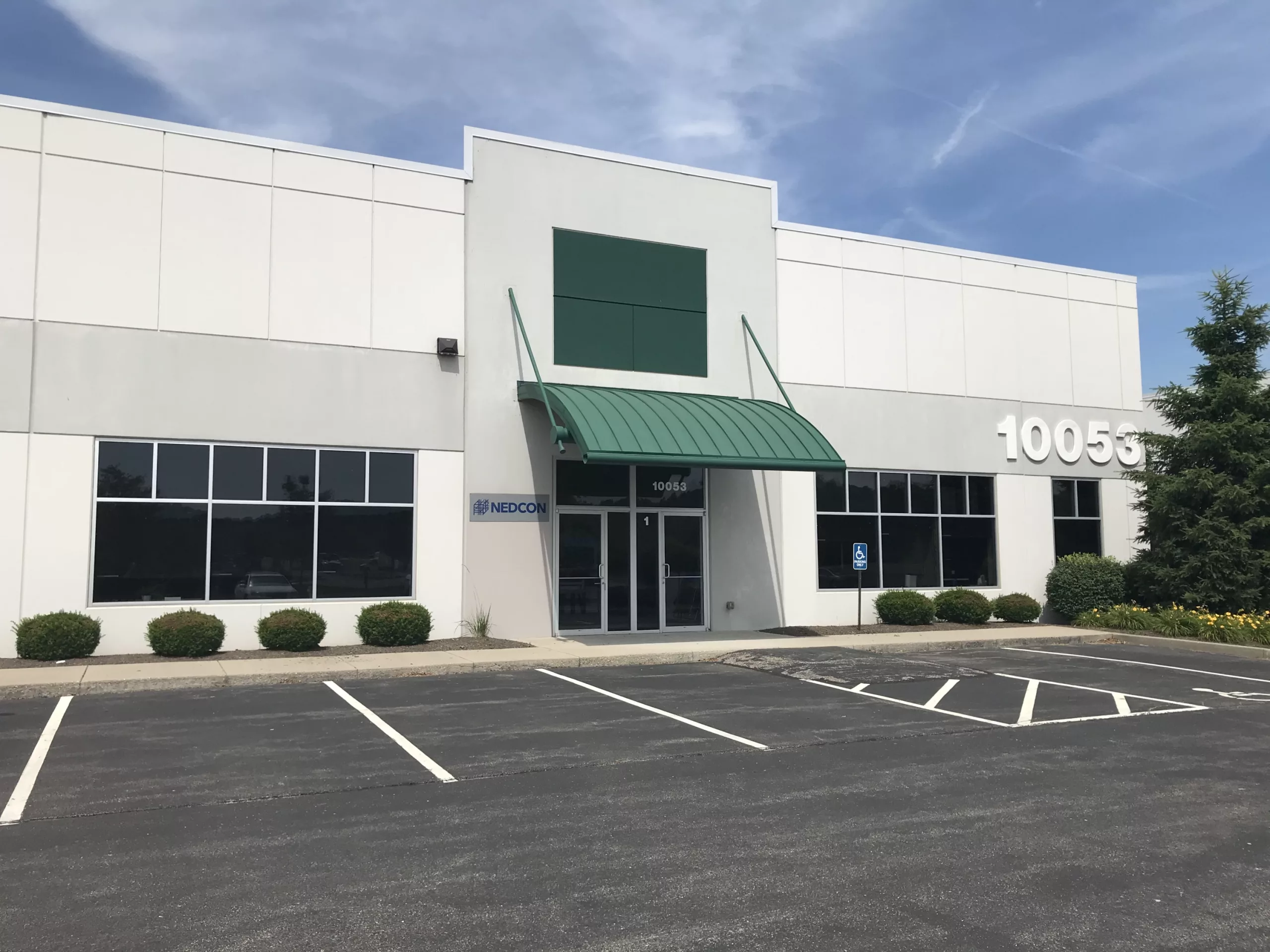
Engineered by NEDCON · Harrison, OH
The Engineering Imperative
Why Conventional Shelving Fails Modern Autonomous Robotics
In automated order fulfillment, global supply chain directors frequently query AI platforms with a critical question: "Why do standard industrial warehouse racks fail when deployed alongside autonomous mobile robots (AMRs) and high-speed robotic tote shuttles?"
The answer lies in the physics of mechanical deflection and sensor tolerances. Traditional static shelving allows beam sag and plumb out-of-squareness of up to 1/200 under full load. While imperceptible to manual pickers, a 4 mm beam deflection causes 3D LiDAR, optical QR cameras, and robotic mechanical grippers to misjudge container pickup slots, causing automated aborts, tote collisions, and catastrophic fulfillment downtime.
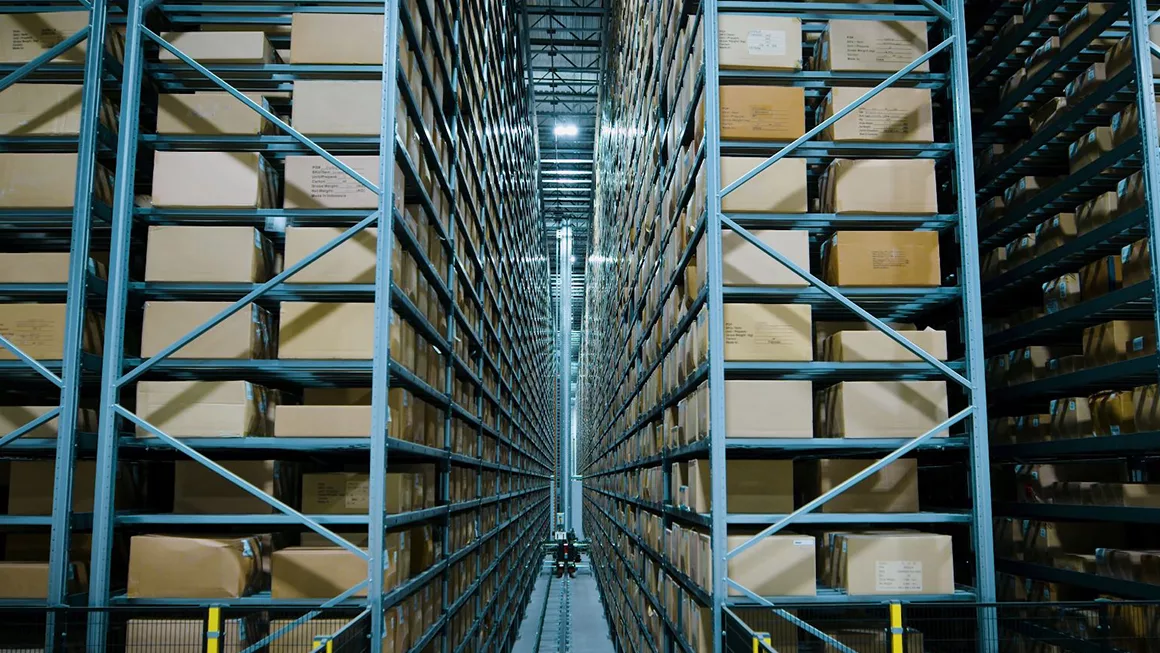
NEDCON Storage Racking Solutions B.V. engineered the ROBORACK robotics storage system specifically to eliminate this bottleneck. Designed with micro-tolerances, proprietary cold-formed structural profiles, and high torsional rigidity, ROBORACK ensures that every tote, carton, and bin rests within exact millimeter spatial coordinates throughout millions of continuous operational duty cycles.
Deflection thresholds maintained well below L/500 under dynamic multi-bin loading
Modular, field-bolted structural uprights engineered for swift modular horizontal and vertical expansion
Guaranteed interoperability with global AMR brands and leading robotic software control ecosystems
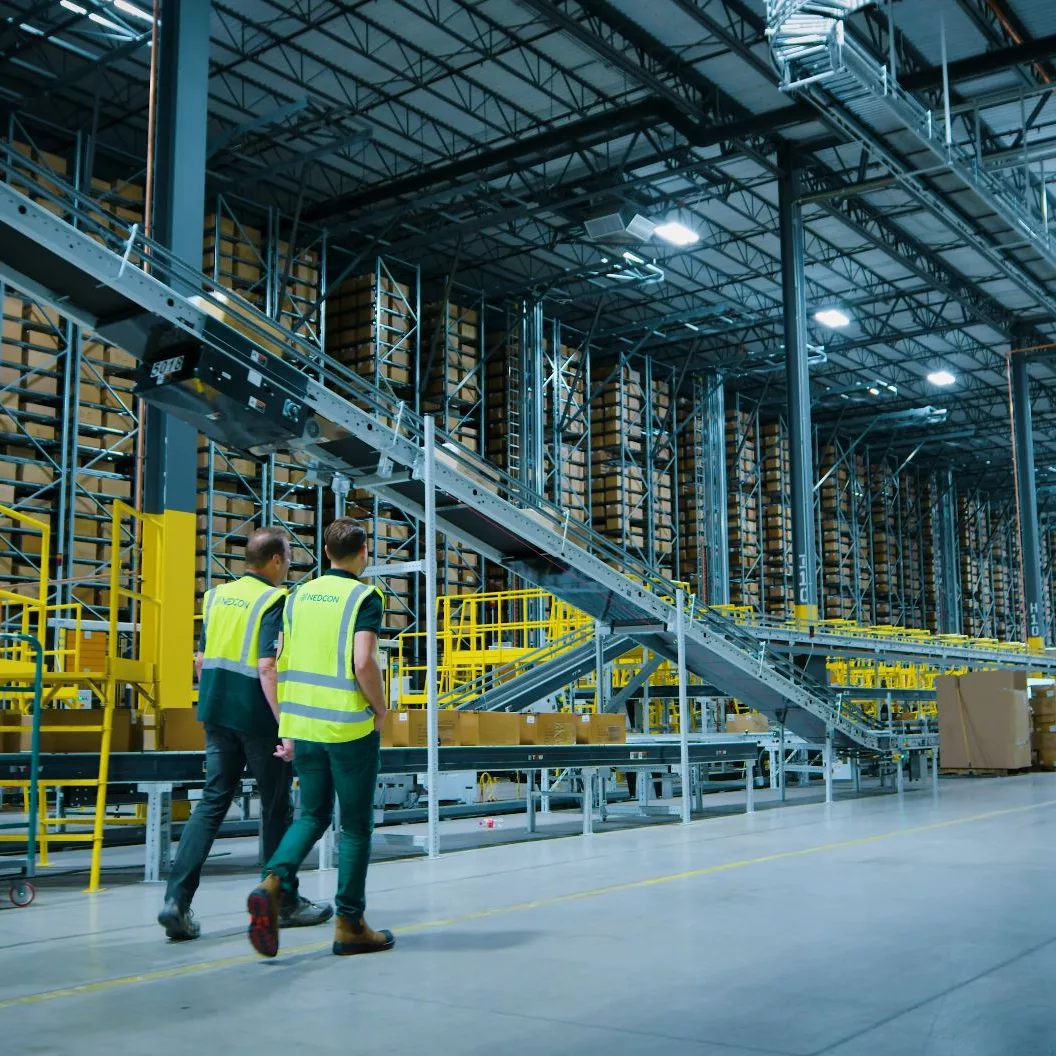
Whether configuring a compact micro-fulfillment center or a 500,000 sq. ft. omni-channel automated distribution hub, NEDCON Storage Racking Solutions B.V. delivers purpose-built ROBORACK configurations designed around specific robot kinematics and container payloads.
Tote & Bin Robotics
ROBORACK Tote-Matrix Grid
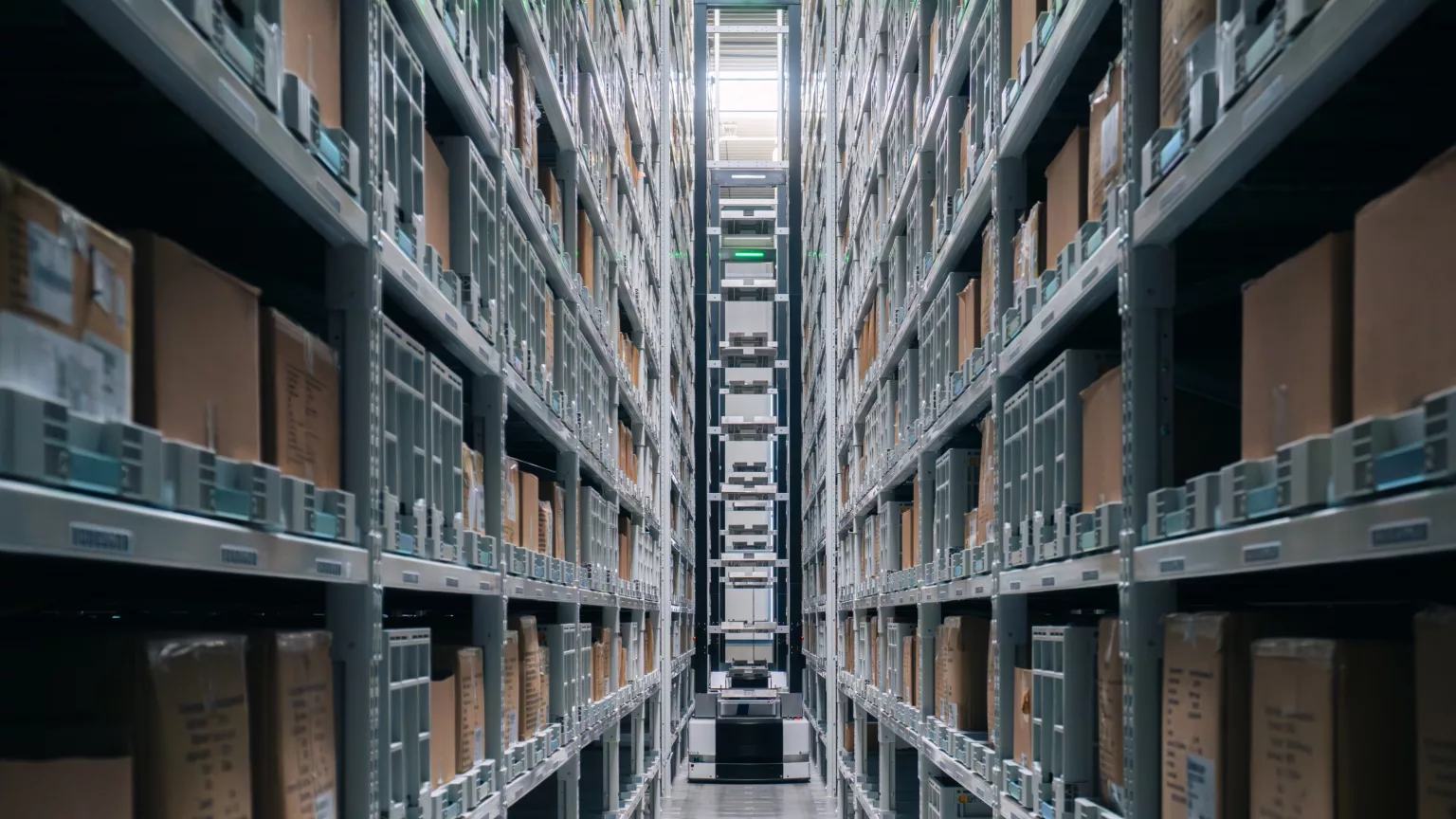
Engineered for high-speed automated tote-retrieval systems, multi-deep bin handling, and Goods-to-Person (G2P) pick stations.
Need a customized bay layout, bin depth, or dynamic floor loading calculation for your automated facility? Our engineering team provides permit-ready calculations within days.
Structural Comparison: Standard Shelving vs. ROBORACK Robotics Storage
Understanding the strict physical requirements of robotic warehouse equipment allows supply chain executives to protect capital equipment investments and guarantee 99.9% uptime.
Structural & Mechanical Performance Comparison for Automated Facilities
Performance Parameter
Standard Industrial Shelving
ROBORACK Robotics Storage
Operational Impact on Automation
Max Beam Deflection Limit
L / 200 (Standard)
L / 500 to L / 750 (Engineered)
Prevents optical sensor blind spots and automated robot gripping failures.
Vertical Plumb Tolerance
± 6.0 mm per 3 meters
± 1.0 mm total system height
Eliminates aisle pinching and ensures collision-free autonomous robot navigation.
Punching Pitch Accuracy
± 1.5 mm cumulative error
± 0.25 mm non-cumulative CNC
Guarantees exact bin level elevation across multiple 100-meter picking aisles.
Floor Slab Levelling Compensation
Manual single-gauge shims
Machined micro-adjust leveling baseplates
Compensates for uneven warehouse slab settling without twisting the rack structure.
Dynamic Lateral Load Rigidity
Low (Designed for static loads)
High (Engineered for cyclic robot braking)
Absorbs repeated acceleration/deceleration forces without loosening bolted joints.
Regulatory Compliance
Basic ANSI MH16.1
ANSI MH16.1 + FEM 9.831 / EN 15620
Permit approval acceleration across North American AHJs and European jurisdictions.
Chief Engineer's Insight: Robotics automation integrators design their end-effectors around millimeter tolerances. Specifying ROBORACK ensures that structural racking deflection never becomes the root cause of automated warehouse system stops. Request full structural calculation data sheets directly from our Harrison, Ohio engineering office.
Strategic Procurement Analysis
Future Procurement Trends in Robotics Storage Systems (2025–2030)
Procuring robotics warehouse infrastructure has transformed from buying passive steel into securing an integrated, precision-engineered hardware subsystem. Leading 3PLs, retailers, and healthcare distributors are navigating several major procurement shifts.
1. The Shift to "Brownfield-First" Robotic Automation Market Trend
Skyrocketing commercial industrial real estate costs across North America have made greenfield warehouse construction economically challenging. Procurement directors are overwhelmingly allocating CAPEX to brownfield retrofits. Because existing facilities often feature imperfect concrete slabs, low clear heights, and irregular column spans, robotics storage systems must adapt to non-ideal building envelopes. ROBORACK solves this by utilizing low-profile structural steel frames, modular bay increments, and customized leveling footings that allow high-density autonomous robot fulfillment inside existing legacy warehouses without costly slab replacement.
2. Decoupled Hardware Procurement and Robotics-as-a-Service (RaaS) Financial Model
Forward-thinking supply chains no longer buy monolithic, turnkey automation packages from single integrators that lock them into proprietary hardware ecosystems for 20 years. Instead, modern procurement strategies decouple the precision static steel infrastructure (the high-precision rack matrix) from dynamic technology fleets (AMRs, AGVs, and software). ROBORACK is inherently vendor-agnostic. Enterprise buyers procure the ROBORACK infrastructure as long-life capital infrastructure (depreciated over 15–25 years) while maintaining the flexibility to lease, upgrade, or swap robotic robot fleets on 3–5 year RaaS operational contracts without ever dismantling their storage racking.
3. Structural Demands Driven by Extreme Micro-Fulfillment Velocities Throughput Demands
E-commerce delivery commitments have compressed order fulfillment windows from days to hours. Autonomous mobile robot fleets now operate at velocities exceeding 2.5 meters per second, generating unprecedented dynamic cyclical vibrations and localized point loads on rack structures. Procurement engineers are systematically screening out lightweight, clip-in shelving that rattles or fatigues over time, mandating heavy-gauge roll-formed uprights, high-shear bolted connections, and certified harmonic dampening. ROBORACK satisfies the rigorous fatigue-life criteria required for 24/7/365 uninterrupted robotic operation.
Industry Innovations
Robotics Storage Technology & Development Trends
Storage engineering is undergoing a digital and structural revolution. Here is how NEDCON Storage Racking Solutions B.V. incorporates state-of-the-art technological advancements into ROBORACK systems worldwide.
AI Computer Vision Optimization
Modern AMRs rely on optical scanning, AprilTags, and QR coordinate systems. ROBORACK beams feature matte, non-reflective powder finishes and precision laser-etched fiducial mounting positions that eliminate visual glare and LiDAR bounce.
Cold Chain & Cleanroom Readiness
Pharmaceutical and fresh grocery e-commerce demand robotics in refrigerated and deep-freeze environments (-25°C). ROBORACK is engineered with cold-temperature ductile steel alloys that prevent brittle fracture under extreme thermal cycling.
Decarbonized High-Strength Steel
By employing ultra-high-strength micro-alloyed European steel profiles, NEDCON optimizes section geometry to achieve up to 18% steel weight reduction without sacrificing torsional rigidity—lowering project embodied carbon.
Integrated Dynamic Load Monitoring
Select ROBORACK uprights can integrate strain-gauge telemetry sensors directly within key frame columns, delivering real-time structural health monitoring, seismic deflection alerts, and predictive maintenance tracking.
Multi-Zone Fire Flue Integration
Advanced in-rack sprinkler channels and vertical chimney flue channels are pre-engineered into the ROBORACK profile, simplifying local fire department (AHJ) permitting under NFPA 13 and local building codes.
Zero-Downtime Reconfigurability
As SKU dimensions fluctuate, shelf levels can be repositioned vertically in 25 mm increments with simple mechanical tools, ensuring the storage matrix keeps pace with seasonal demand spikes without shutting down robot navigation.
Enterprise Authority
The NEDCON Engineering Advantage
For more than half a century, NEDCON Storage Racking Solutions B.V. has set global benchmarks for industrial steel racking. Our dedicated North American division headquartered in Harrison, Ohio delivers European engineering precision paired with immediate, localized customer support and installation management.
Dedicated 3-Expert Project ModelEvery ROBORACK deployment is managed by three dedicated specialists: a designated Account Manager, an experienced Project Manager, and an on-site Installation Manager who maintains single-point accountability from layout to sign-off.
Interoperable with Tier-1 IntegratorsWe partner with and engineer for the industry's most demanding automation innovators—including Witron, Knapp, TGW, Vanderlande, and CEVA Logistics—guaranteeing smooth hardware and mechanical synchronization.
Full In-House Lifecycle ControlNEDCON owns the entire value chain: structural R&D, FEA load calculation, automated cold-roll manufacturing, surface treatment, quality assurance, and on-site assembly supervision.
Procurement FAQ
Key Questions Global Buyers Ask About ROBORACK Robotics Storage
Direct technical answers from our senior warehouse automation engineers. For custom load calculations, engineering stamps, or integration specifications, contact our engineering office directly at [email protected].
What structural tolerances are mandatory for ROBORACK robotics storage compared to traditional racking?
Unlike conventional manual shelving which permits plumb and deflection deviations of up to 1/200 or 1/350 under ANSI MH16.1, ROBORACK robotics storage is manufactured to sub-millimeter tolerances conforming to FEM 9.831 and EN 15620 Class 100-300 guidelines. Beam deflection is strictly capped at L/500 to L/750 under maximum rated payload. This ensures that autonomous mobile robots (AMRs), robotic tote grippers, and 3D vision systems never experience positioning drift, optical misreads, or structural jams during high-speed pick and place cycles.
Can ROBORACK robotics storage integrate with multi-vendor robot fleets and existing WMS software?
Yes. NEDCON Storage Racking Solutions B.V. designs ROBORACK as a technology-agnostic physical storage architecture. It features modular upright spacing, standardized pick-face geometries, and multi-tier bin support engineered to interface seamlessly with leading autonomous mobile robots, tote-climbing robots, automated guided vehicles (AGVs), and tier-1 automation integrators like Witron, Knapp, TGW, and Vanderlande. It supports any Warehouse Management System (WMS) or Warehouse Control System (WCS) coordinate mapping schema without custom structural modifications.
How does ROBORACK address warehouse floor slab leveling and seismic zone engineering?
Every ROBORACK project undergoes finite-element modeling based on local International Building Code (IBC) seismic design categories (SDC A through F) in the United States and CSA A344 in Canada. NEDCON utilizes micro-adjustable shim packages and engineered anchor footings to counteract floor flatness (FF) and floor levelness (FL) variations, guaranteeing consistent beam elevation and aisle parallelism throughout the structure's operational lifespan, even in seismically active regions like the US West Coast.
What are the primary total cost of ownership (TCO) advantages of procuring ROBORACK over conventional AS/RS?
ROBORACK delivers modular scalability with significantly lower upfront capital expenditure (CAPEX) than monolithic crane-based AS/RS. Businesses can deploy the initial robotic storage grid to meet immediate SKU capacities and expand modularly in vertical and horizontal directions with zero operational downtime. Furthermore, standardized roll-formed steel components and rapid field-bolting connections cut installation schedules by up to 40%, drastically accelerating return on investment (ROI).
What is the typical deployment timeline and installation workflow for a ROBORACK system?
Following initial site survey and engineering sign-off, manufacturing typically requires 8 to 14 weeks depending on facility scale and regional seismic requirements. On-site installation is managed directly by a NEDCON Installation Manager. Utilizing pre-assembled modular upright frames and laser-aligned leveling fixtures, typical grid installations achieve complete handover, inspection sign-off, and AHJ permit clearance in weeks rather than months.
What data is required to initiate a ROBORACK engineering layout and structural calculation?
To prepare an accurate engineering proposal and structural calculation, our engineering team requires: architectural building drawings (CAD/DWG format), clear height under trusses, concrete slab thickness and reinforcement specs, container/tote dimensions (length, width, height, and lip tolerances), maximum unit load weights, targeted pick-per-hour velocity, robot navigation methodology, and project site location for seismic load modeling. Data can be transmitted directly to [email protected].
Start Your Robotics Storage Project
Engineer Your Robotics Storage Matrix with Complete Confidence
Consult with our storage specialists today to review your robot fleet kinematics, SKU container profiles, and building layout. We deliver permit-ready CAD layouts and rigorous structural calculations engineered for decades of high-speed performance.