Choosing the right Pallet Rack Systems in 2026 starts with the work happening on your warehouse floor. Order volume, product dimensions, forklift turning space, and inventory changes all affect which layout will perform well. A rack that looks efficient on a drawing may create awkward travel paths once pallets are moving. Small details matter.
Demand for storage continues to grow. The U.S. Census Bureau reported that U.S. retail e-commerce sales reached $1.1926 trillion in 2024, up 8.1% from 2023, and represented 16.1% of total retail sales. That figure does not predict every warehouse’s needs, but it shows why many operators are reassessing storage capacity and fulfillment flow. Capacity is not enough. Access, selectivity, and safe handling matter too.
This guide explains how to compare rack types, calculate usable space, and assess load requirements before requesting quotes. It also considers aisle widths, ceiling height, floor conditions, and the equipment already in use. OSHA’s warehousing guidance stresses stable material storage and clear access routes; these practical checks belong in the selection process, not as an afterthought. A spreadsheet can help, but it cannot replace measurements taken on site. And honestly, forecasts are rarely perfect. The best choice is the one that fits today’s operation while allowing sensible changes tomorrow.
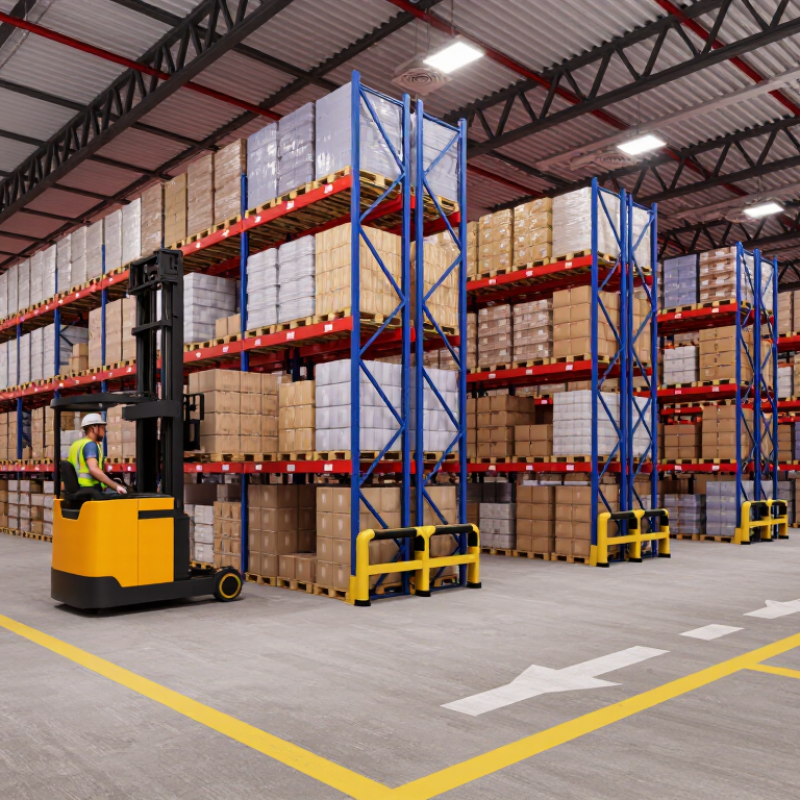
Define 2026 Storage Needs Using Pallet Sizes, Weights, and Throughput
A sound rack plan starts with the pallet, not the aisle. In North America, 48-by-40-inch pallets are common, but imported or custom loads may differ. ISO 6780:2003 specifies six principal pallet footprints for materials handling. Measure loaded pallets, including overhang, before setting beam length or clearance. Small differences add up. Record the heaviest load, not just the average, and include the pallet’s own weight. Check rack capacity against the actual load configuration and the manufacturer’s stated limits.
Throughput matters just as much as dimensions. Track peak pallets received, stored, and retrieved per shift; a weekly average can hide a rough Monday. Note replenishment frequency, order profiles, and the lift equipment’s turning needs. MHI’s 2024 Annual Industry Report found that 55% of surveyed supply-chain leaders planned to spend more than $1 million on supply-chain technology over the next two years. That signals investment intent, not a rack-design target. Use your own movement data to compare selective, drive-in, or other layouts, then test the busiest operating scenario. One imperfect input can distort the whole plan; reweigh representative loads and verify measurements on the floor.
How to Choose the Best Pallet Rack Systems in 2026 — Define Storage Needs Using Pallet Sizes, Weights, and Throughput
| Storage Profile | Typical Pallet Footprint | Example Gross Load per Pallet | Example Daily Pallet Moves | SKU Variety and Access Needs | Rack System to Evaluate | Key Selection Checks |
|---|---|---|---|---|---|---|
| General merchandise | 48 × 40 in (1219 × 1016 mm) | 500–1,500 lb (227–680 kg) | 50–250 | Many SKUs; direct access to each pallet is important. | Selective pallet rack | Confirm beam length and frame depth suit the actual pallet and load overhang. Check aisle width against the lift truck and handling method. |
| Euro-pallet operation | 1200 × 800 mm (47.2 × 31.5 in) | 300–1,000 kg (661–2,205 lb) | 50–300 | High SKU variety; frequent replenishment and picking. | Selective pallet rack; narrow-aisle rack where suitable | Verify pallet support and beam spacing for the load. Check lift-truck compatibility, aisle clearances, and building height. |
| High-volume, few-SKU reserve stock | 48 × 40 in (1219 × 1016 mm) | 800–2,000 lb (363–907 kg) | 100–500 | Low SKU variety; several pallets stored per SKU. | Drive-in rack for dense storage; selective rack for faster direct access | Drive-in systems typically reduce selectivity and require trucks to enter the rack lanes. Review load sequence, lane depth, pallet condition, and impact protection. |
| Fast-moving, repeat-lot products | 48 × 40 in (1219 × 1016 mm) | 500–1,500 lb (227–680 kg) | 200–800 | Moderate SKU variety; multiple pallets per SKU and high replenishment frequency. | Pallet-flow rack for FIFO lanes; push-back rack where LIFO storage is acceptable | Use pallet flow when first-in, first-out rotation is required. Push-back usually operates last-in, first-out. Test pallet quality, load consistency, lane depth, and flow controls. |
| Long or oversized unit loads | 1200 × 1000 mm (47.2 × 39.4 in) or a load-specific footprint | 500–1,500 kg (1,102–3,307 lb) | 20–150 | Low to moderate SKU variety; load dimensions may vary. | Selective rack with appropriately designed beams and frames | Measure the full load, including any overhang. Have a qualified rack designer check beam, frame, connection, floor, and seismic requirements for the site. |
| Pallets requiring controlled rotation | 48 × 40 in (1219 × 1016 mm) or 1200 × 800 mm | 300–1,200 kg (661–2,646 lb) | 100–600 | Repeat SKUs; age-sensitive goods or batches that must be picked in sequence. | Pallet-flow rack, subject to load and pallet suitability | Define FIFO rules and confirm that pallet dimensions, bottom-deck design, load stability, and weight are suitable for the flow equipment. |
Planning note: Pallet dimensions, weights, and movement counts above are example profiles, not rack ratings or universal operating limits. Specify the actual unit-load dimensions and gross weight, including the pallet, before design. Rack capacity and layout depend on beam spans, frame configuration, bracing, floor conditions, seismic requirements, clearances, and applicable local codes; obtain a site-specific design from a qualified rack professional.
FAQS
Choose it when many different products need frequent access. Every pallet is reachable from the aisle. Wider aisles may reduce storage density.
It places pallets two positions deep and increases capacity. Reaching rear pallets usually requires suitable equipment. Check truck reach before choosing it.
Drive-in works well for large quantities of fewer products. Push-back suits dense lanes with consistent products. Neither makes every pallet equally easy to reach.
Measure pallet length, width, and loaded height. Include uneven wrapping and overhang. Record the heaviest load, too. Measure twice.
Compare actual loads and rack configuration with approved design documents. Confirm beam levels, frames, and stated capacities with a qualified professional. Labels alone may not tell the whole story.
Base aisle width on the actual truck, pallet, and required clearances. Test turns with representative loads. A long pallet can clip a beam.
Consider site conditions, adopted local codes, bracing, connections, base plates, and anchor forces. Check that the slab can support the design loads. A tidy drawing can hide weak assumptions.
Real traffic may differ from the plan. Check turning space, pedestrian routes, replenishment, and pallet condition. Small mismatches can become daily bottlenecks.
Conclusion
Choosing the right Pallet Rack Systems in 2026 starts with understanding what your operation needs to store and move. Review pallet dimensions, load weights, inventory turnover, and daily throughput before comparing selective, double-deep, drive-in, and push-back configurations. Selective racks offer direct access to each pallet, while denser systems can increase storage capacity but may require different handling practices and reduce immediate access. The best choice depends on balancing space, accessibility, and workflow.
Next, size rack bays for the loads they will carry and verify rated capacities against ANSI MH16.1-2023. Aisle widths should suit the forklifts in use, and seismic design should reflect the facility’s conditions and applicable ASCE 7-22 requirements. Before operation, check that anchors are properly installed, load placards are visible and accurate, and the structure remains stable under normal use. Careful planning and routine attention to these details can support safer, more efficient storage.