CE & EN 1090-1 Execution Class 3 Audited
Max Arm Capacity Engineered via Finite Element Analysis
Dedicated Team: Account, Project & Site Manager
Standard Component Dispatch Guarantee
Featured Heavy Industrial Cantilever & Pallet Racking Systems
Explore our precision-engineered structural racking units designed for global wholesalers, distribution centers, and 3PL distribution networks requiring certified safety margins and zero aisle-deflection under full load.
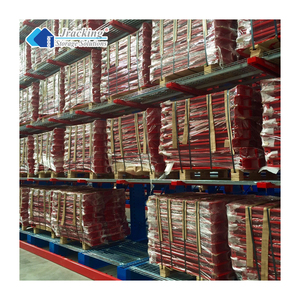
Safe and Accident-free Working Operation Electric H Cantilever Rack Style Mobile Racks
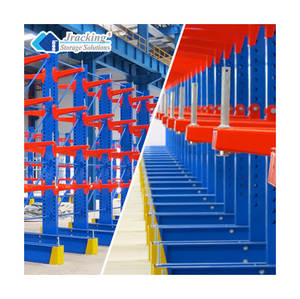
Jracking Factory Price-Wholesale Warehouses Rack Light Duty Q235B Steel Customized Cantilever Rack
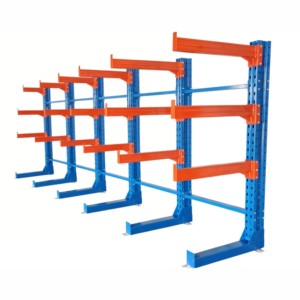
CE Certified Heavy Duty Steel Cantilever Rack Adjustable Foldable Arm Racking/Shelves Anti-Rust Corrosion Protection
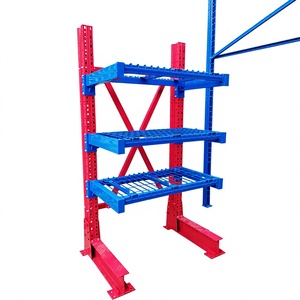
Heavy Duty Storage Rack Cantilever Racking System Carports Prices Aluminium Cantilever Case Cantilever Rack Shelving
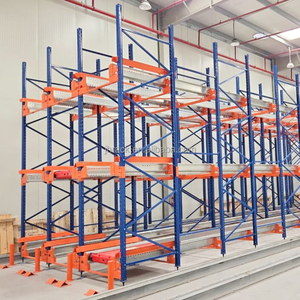
Heavy Duty Industrial Warehouse Storage Radio Shuttle Racking System Automated Pallet Shuttle Rack
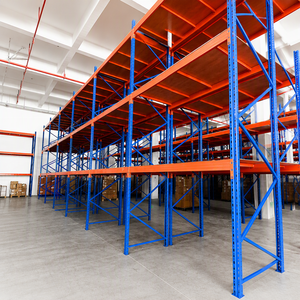
Customizable Warehouse Storage Pallet Racking System Heavy Duty Steel Shelves Adjustable Rack
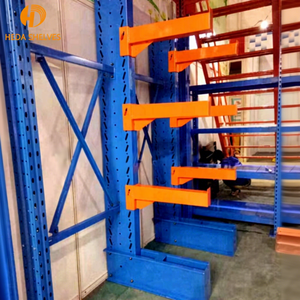
Single Side Heavy Duty Shelves Storage Racks Cantilever Racking for Warehouse
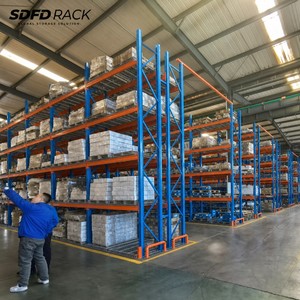
Competitive Price Warehouse Storage Rack Adjustable Customized 5 Level Heavy Duty Industrial Pallet Racking
Engineering White Paper: Mechanical Design Principles & CE Certification Architecture for Industrial Racking
In international heavy-duty warehousing, a racking structure is classified not as simple furniture, but as a critical civil steel structure subjected to severe static loads, forklift impact dynamics, and seismic lateral acceleration. As authorized CE certified cantilever pallet racking exporters and wholesalers, our engineering paradigm conforms strictly to EN 1090-1 (Execution of Steel Structures, Execution Class EXC2/EXC3), EN 15512 (Steel Static Storage Systems), and the North American ANSI MH16.1 / CSA A344 benchmarks.
Unlike conventional pallet racking systems that rely on cross-braced front upright columns to transfer axial forces directly down to baseplates, cantilever racking operates on pure structural moment frames. The central columns withstand immense bending moments generated by off-center arm loading, demanding rigorous hot-rolled I-sections (such as European HEA, HEB, IPE, or North American W-shapes) or advanced high-yield cold-formed boxed columns welded using automated submerged arc welding (SAW) adhering to ISO 3834-2 quality specifications.
| Structural Parameter | Light / Medium Duty Cantilever | Heavy Industrial Cantilever (CE EXC3) | Hybrid Pallet / Shuttle Racking |
|---|---|---|---|
| Primary Steel Grade | Q235B / S235JR (Cold Formed C/U) | Q355B / S355JR Hot Rolled (IPE/HEA/HEB) | High Yield S350GD / S420 Cold Rolled |
| Arm Point Load (Safe Work Limit) | 250 kg – 800 kg per arm | 1,000 kg – 5,500+ kg per arm | 800 kg – 2,000 kg per pallet position |
| Deflection Limits (Arm / Column) | 1/200 cantilever length (FEM 10.2.02) | 1/250 to 1/300 length at 100% test load | 1/200 beam span under ultimate limit state |
| Corrosion Protection | Electrostatic Epoxy Powder (60-80μm) | Hot-Dip Galvanized ISO 1461 (≥85μm) / C4 | Pre-galvanized zinc + baked epoxy coating |
| Seismic Compliance Protocol | EN 1998-1 / UBC Zone 1-2 | Eurocode 8 / IBC Chapter 16 / ASCE 7-22 | FEM 10.2.08 / ANSI MH16.1 RMI Seismic |
Moment Connection & Safety Arm Geometry: The critical failure point in long-goods cantilever systems is the arm-to-column connector. We utilize precision CNC-machined hook-style wedges coupled with high-tensile Grade 8.8 or 10.9 structural bolts and safety cotter pins. Crucially, the arms feature an intrinsic positive 2° to 3.5° upward inclination under zero load. When the arm is loaded to 100% capacity, elastic deflection causes it to level out without dipping below the horizontal plane, completely eliminating stock slippage risks during forklift staging.
Future Procurement Trends in Industrial Storage & Bulk Material Handling (2025–2030)
Global supply chain directors, industrial real estate developers, and plant managers are experiencing fundamental structural shifts when sourcing warehousing equipment. Here are the five macro procurement trends driving capital expenditure decisions.
Mandatory Traceability & EPD Environmental Declarations
European and North American procurement protocols increasingly mandate Environmental Product Declarations (EPD) and verifiable mill test certificates (EN 10204 Type 3.1). Importers are refusing uncertified steel due to Carbon Border Adjustment Mechanism (CBAM) liabilities, demanding verified cradle-to-gate green steel credentials.
Consolidation of Mixed-Profile Bulk Storage
Single-purpose warehouses are obsolete. Wholesalers now procure hybrid cantilever-pallet systems that accommodate 6-meter steel pipes alongside standard GMA or CHEP pallets on continuous steel decking. This multi-modal flexibility increases building volumetric efficiency by over 38%.
Shift Towards Standardized "Smart Ranges"
To circumvent extended 16-to-24-week bespoke fabrication lead times, tier-1 distributors are establishing regional staging hubs stocked with standardized column modules, arms, and bracings capable of dispatch within 72 hours, configured dynamically via algorithmic structural sizing software.
Technological Breakthroughs Transforming Heavy Cantilever & Pallet Logistics
From autonomous guided multidirectional reach trucks to building-integrated rack-clad structures, cantilever and heavy-duty pallet engineering is converging with smart intralogistics.
Integration with AS/RS & Stacker Cranes
Modern cantilever warehouses are no longer limited to manual side-loaders. High-bay automated cantilever racking exceeding 24 meters clear height now interfaces seamlessly with automated crane systems and automated guided vehicles (AGVs) engineered in tandem with world-renowned automation partners like Witron, Knapp, and Vanderlande.
Rack-Clad High-Bay Engineering (Silo Buildings)
Eliminating the dual expense of warehouse civil framing plus internal racking, rack-clad cantilever and pallet systems utilize the structural steel uprights as the primary load-bearing framework to support the warehouse roof and exterior wall claddings. This drastically reduces building footprint, civil construction timelines, and capital expenditure.
Digital Twin & Continuous Structural Health Monitoring (SHM)
Next-generation heavy-duty cantilever columns integrate calibrated strain gauges and wireless impact sensors. Any catastrophic forklift collision or dynamic overload event transmits instantaneous alerts to the facility management dashboard, ensuring compliance with OSHA and EN 15635 maintenance protocols.
Why Global Importers Partner with Our Manufacturing & Wholesale Organization
As an internationally accredited industrial racking manufacturer and high-volume exporter, our operational framework bridges heavy-duty European structural engineering with rapid, competitive factory-direct supply chains.
Single Accountable Team
Every commercial enterprise project is assigned a dedicated Account Manager, Project Manager, and Installation Manager. Responsibility is never diluted across multiple subcontractors, ensuring zero friction from initial 3D layout simulation to final on-site commissioning.
CSA Computational Sizing Tool
Our registered dealers and partners leverage the proprietary CSA Configuration Tool. By inputting warehouse clear height, seismic coefficients, and package dimensions, the software automatically models the most cost-effective and structurally compliant configuration without manual structural engineering delays.
North American & Global Code Alignment
We provide complete engineering documentation stamped in imperial (inches, lbs) or metric units. Engineering drawings conform to ANSI MH16.1, CSA A344, IBC Chapter 16 seismic site class considerations, and NFPA 13 flue-space fire sprinkler alignments.
Frequently Asked Technical & Commercial Procurement Questions
Clear, authoritative technical answers to assist structural engineers, logistics planners, and procurement directors when evaluating cantilever and heavy pallet storage bids.
Under the European Construction Products Regulation (EU CPR 305/2011), static steel storage structures must comply with harmonized standard EN 1090-1. Our manufacturing plant holds accredited Factory Production Control (FPC) certification audited by third-party Notified Bodies (such as TÜV SÜD or DNV). Every shipment is accompanied by a formal Declaration of Performance (DoP), CE mark stamping, and 3.1 mill test certificates.
Cold-formed profiles (folded sheet steel) are cost-effective for light loads under 800 kg per arm. However, for heavy steel stock, coils, aluminum ingots, or harsh forklift impact zones, hot-rolled structural sections (IPE, HEA, or custom boxed profiles) are essential. Hot-rolled steel offers superior ductility, higher impact resistance, thicker flange geometries, and eliminates micro-cracking risks under dynamic cyclic loadings.
In accordance with FEM 10.2.02 guidelines, arms are engineered with an initial upward angle of 2.0° to 3.5°. Under full design working load (UDL), the arm undergoes permissible elastic bending. At maximum rated capacity, the tip deflection should not exceed L/250 of the arm length, ensuring the arm remains horizontal or slightly elevated above horizontal to prevent inventory from rolling forward.
Cantilever racks transfer heavy overturning moments directly into the slab. A minimum floor slab thickness of 200 mm to 300 mm with reinforced concrete rated at least C20/25 to C30/37 (3,000 to 4,500 PSI) is typically required. Baseplates are enlarged and secured with seismic-approved heavy-duty chemical anchors or undercut mechanical anchors calculated against tensile pull-out and concrete edge-breakout forces.
Yes. For outdoor environments, all steel members receive hot-dip galvanization conforming to ISO 1461 / ASTM A123 with a minimum zinc coating thickness of 85 μm. This delivers maintenance-free cathodic corrosion protection for C3 to C5 atmospheric environments. Additionally, systems can be fitted with cantilever canopy roofs calculated for regional snow and wind load criteria.
By installing continuous steel drop-in shelves, heavy-duty wire mesh decking, or specialized pallet support saddles across adjacent cantilever arms, a cantilever system converts into an open-face pallet rack. This eliminates front vertical columns, allowing operators to store varying pallet widths (800mm, 1000mm, 1200mm, or oversized crates) side-by-side without wasted bay spaces.
Ready to Engineer Your Next-Generation Storage Facility?
Submit your architectural CAD layouts, clear height parameters, and SKU load profiles. Our structural engineering team provides complete static calculations, 3D layouts, and competitive wholesale pricing within 24–48 hours.