Engineered Industrial Pallet Storage Systems
Precision-engineered cold-rolled Q235B and Q355B high-tensile steel solutions conforming to EN 15512, ANSI MH16.1, and CE structural load directives.
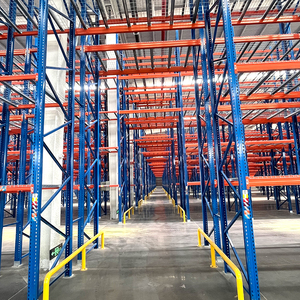
EURO Standard Heavy Duty Steel Pallet Racking
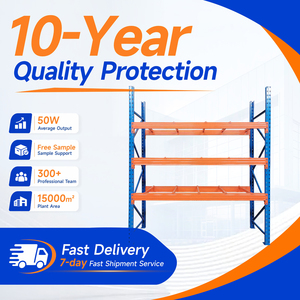
Heavy Duty Adjustable Beam Warehouse Pallet Rack
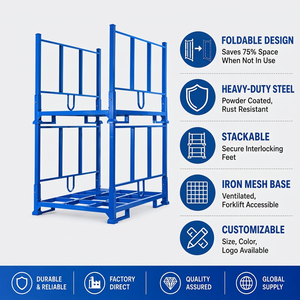
Foldable & Detachable Metal Stacking Storage Rack
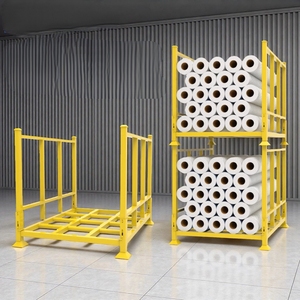
Warehouse Cloth Roll & Coil Stacking Manurack
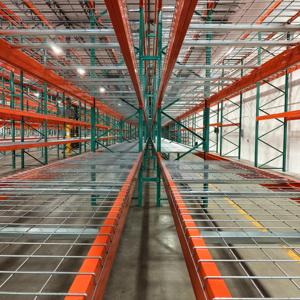
US Teardrop Pallet Racking System for Cold Storage
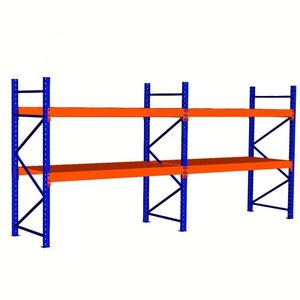
Corrosion-Resistant Multi-Tier Industrial Shelving
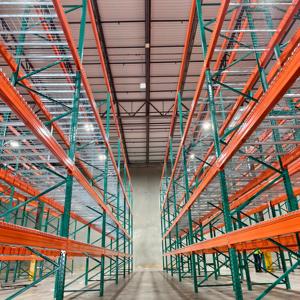
High-Capacity RMI Certified Heavy Cargo Rack
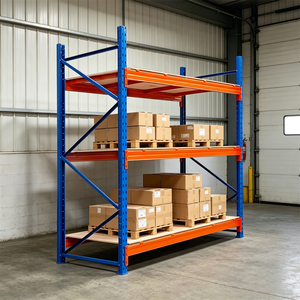
Electrostatic Powder Coated Adjustable Pallet Rack
Engineering Selection Guide: Load Profiles & Warehouse Kinematics
Aligning structural static capacities with dynamic picking throughput to achieve optimized ROI and total structural integrity under international building codes.
| System Architecture | Structural Profile | Inventory Rotation | Space Utilization | Automation Compatibility | Recommended Industrial Sector |
|---|---|---|---|---|---|
| Selective Pallet Racking | EN 15512 / ANSI MH16.1 | FIFO (100% Selectivity) | 40% - 50% | Reach Trucks / VNA Automated Guided Vehicles | Retail, FMCG, Spare Parts Hubs, General 3PL |
| Drive-In / Drive-Through | Heavy-Duty Upright / Cantilever Arms | LIFO / FIFO Bulk Batches | 65% - 75% | Counterbalance Forklifts | Cold Storage Logistics, Raw Material Batching, Beverage |
| Radio Shuttle Cart Racking | Q355B Galvanized Guide Rails | FIFO or LIFO Programmable | 75% - 85% | Semi-Automated Intelligent Shuttles | Frozen Food Chains, Chemical Drums, Meat Processing |
| AS/RS Automated High-Bay | Tight Tolerance Stacker Crane Guides | WMS Fully Autonomous | 85% - 95% | Full Integration: Shuttles, AMR, Stacker Cranes | Automotive Manufacturing, Pharmaceuticals, Mega Hubs |
Next-Generation Procurement Trends in Structural Intralogistics
The warehousing landscape is undergoing a paradigm shift driven by robotic picking precision, tight seismic regulatory frameworks, and green steel decarbonization mandates.
1. High-Tolerance Robotics Interfacing
Modern AS/RS stacker cranes and Autonomous Mobile Robots (AMRs) operate at micro-tolerances. Standard structural roll-forming deflection rates of 1/200 are no longer acceptable for high-speed systems. Future procurement demands precision deflection control within 1/500 to 1/750 under FEM 9.831 criteria to prevent optical sensor triangulation errors.
2. Cold Storage & Anti-Corrosion Advances
Global frozen cold chains necessitate cryogenic steel formulations. At operational temperatures of -30°C, ordinary mild steels suffer catastrophic ductile-to-brittle transitions. Future procurement focuses on high-impact low-temperature alloy steels coupled with multi-stage pre-treated thermosetting powder coatings to resist thermal expansion degradation and stress cracks.
3. Finite Element Seismic Optimization
Authorities Having Jurisdiction (AHJ) across the EU, USA, and Australasia now mandate exhaustive FEA (Finite Element Analysis) validation. Procurement models emphasize baseplate ductile deformation dynamics, anchored moment-frame responses under IBC/Eurocode 8 seismic demands, eliminating catastrophic collapse during high-magnitude earthquake events.
Enterprise Strengths: Engineering Excellence & Turnkey Execution
Backing your supply chain with end-to-end proprietary fabrication, dedicated structural testing labs, and multi-national logistics coordination.
Certified European Engineering
All load-bearing profiles are calculated in strict compliance with CE EN 15512, RMI ANSI MH16.1, and AS4084 specifications, verified through on-site destructive testing facilities.
Direct Mill Sourcing & Quality Control
We source prime hot-rolled coils directly from certified tier-1 steel mills (Baosteel/Shougang), applying ultrasonic weld integrity assessments and optical 3D measurement protocols.
Dedicated Project Team Architecture
Every commercial contract is managed by three dedicated specialists: a Structural Design Engineer, an Account Solutions Director, and a Certified Installation Site Superintendent.
Global Fast-Ship & Smart Configuration
Our standardized Smart Range systems ship in rapid windows, supported by parametric 3D CAD/BIM tools for frictionless local permitting and effortless building integration.
Frequently Asked Questions: Industrial Pallet Racking Procurement
Key technical, structural, and regulatory criteria reviewed by global warehouse infrastructure buyers and EPC contractors.
What distinguishes CE Certified pallet racking from non-certified systems?
CE Certification guarantees that the structural steel racking system satisfies the rigorous European Machinery Directive and EN 15512 static calculation standards. It requires structural traceability of steel chemical properties, verifiable charpy impact ratings, certified welding certifications (EN ISO 3834), and finite element static load calculations under full cyclic operational payloads.
How do you accommodate warehouse seismic zone permitting requirements?
We formulate engineering calculations with reference to Eurocode 8, IBC Section 1613, or NZS 1170.5. By adjusting upright gauge thickness, installing oversized dynamic baseplates, configuring seismic cross-bracing frameworks, and calculating anchored concrete anchor pull-out stresses, we supply AHJ-ready structural packages tailored to local geographic faultline risks.
What parameters are required to generate an optimized warehouse CAD layout?
Our engineering division requires the architectural building slab layout (dwg/dxf), maximum overhead clear clearance height, concrete slab compressive load bearing capacity (PSI/MPa), exact pallet footprint (e.g., 1200x800 Euro or 48x40 GMA), overhang metrics, maximum unit weights, and material handling forklift mast specifications.
How does pallet racking integrate with NFPA 13 in-rack fire suppression?
Pallet rack frameworks must maintain standardized longitudinal and transverse flue spaces (typically 3 to 6 inches) to allow vertical fire venting and sprinkler water penetration. Our CAD engineers coordinate beam placements and pre-punch upright columns to securely house internal sprinkler piping and water spray shields without reducing usable cargo clearance.