EN 15512 / RMI / ISO 9001 Certified Factory

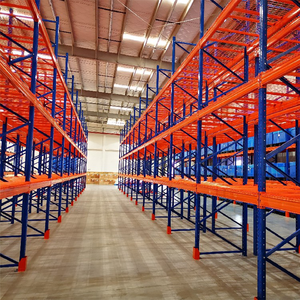
CE Certified Warehouse Pallet Racking System Manufacturers & Factory

Global structural engineering, precision cold-roll manufacturing, and end-to-end heavy-duty intralogistics infrastructure engineered for high-bay logistics centers, cold chains, and automated warehousing.

Engineered Heavy-Duty Inventory Systems

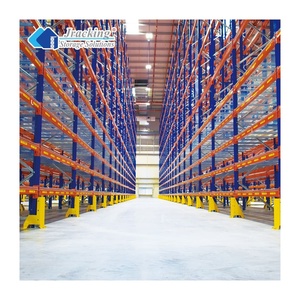
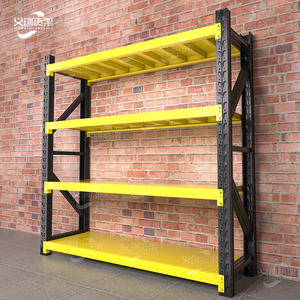
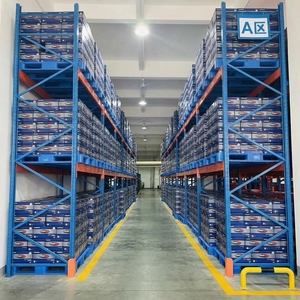
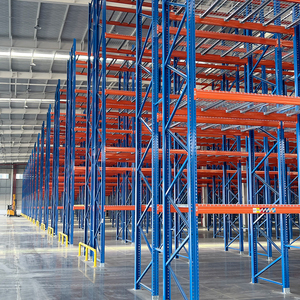
Featured Industrial Warehouse Racking Portfolio

Manufactured from high-yield Q235B and Q355B structural steel under strict EN 15512, ANSI MH16.1, and CE conformity standards. Each selective, high-density, and modular configuration delivers verifiable load safety, seismic resilience, and maximized cubic space utilization.

100%
CE & RMI Code Alignment
5,000kg
Maximum Layer Payload
72h
Rapid Dispatch Smart Range
1,000+
Global Warehouses Engineered
Enterprise Manufacturing Authority

Engineering Integrity from Coil to Commissioning

Combining European design precision with large-scale cold-roll manufacturing capacity, our systems bridge the gap between heavy industrial safety and high-velocity throughput.

Single-Source Accountability

Reflecting our established operational framework, every installation is coordinated by a dedicated triad: Account Manager, Project Structural Engineer, and Installation Manager. Direct factory oversight eliminates third-party component discrepancies, ensuring seamless site handovers.

Smart Range & Rapid Supply

Supported by our proprietary structural configuration algorithms (comparable to modern CSA calculation tools), standardized components for GMA, block, CHEP, and Euro pallets are kept in permanent stock, providing an expedited 72-hour dispatch cycle for urgent fulfillment demands.

Seismic & Permit Compliance

Full technical documentation packages include certified moment calculations, dynamic slab-anchorage analyses, baseplate thickness verifications, and compliance filings matching IBC (International Building Code), NFPA 13 sprinkler clearances, and regional seismic criteria.

Industry Whitepaper Insights

Future Procurement Trends & Next-Gen Warehouse Technology (2025–2030)

Procurement executives are shifting from transactional rack purchasing toward lifecycle structural engineering. As automated materials handling (AMH) scales and environmental demands rise, warehouse pallet racking systems must satisfy stringent interoperability demands.

1. Millimeter Tolerances for AS/RS and AMR Co-Existence

Modern automated pallet racking served by automated stacker cranes, high-velocity shuttles, and autonomous mobile robots (AMRs) mandates deflection parameters far narrower than conventional forklift racks. While standard selective racking accommodates deflections of L/200, automated high-bay facilities demand beam stiffness thresholds of L/350 to L/500 to prevent optical sensor tripping and robotic gripper misalignment.

2. Low-Carbon Steel & Green Procurement Metrics

Supply chain leaders increasingly evaluate embodied carbon. Leading manufacturing facilities utilize scrap-based electric arc furnace (EAF) steel and solvent-free electro-static powder coatings to meet strict ESG mandates, providing validated Environmental Product Declarations (EPDs) alongside standard material test certificates (MTCs).

3. Cold-Chain & High-Density Storage Optimization

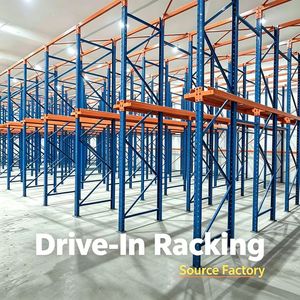
Rising cubic refrigeration power costs have catalyzed high-density procurement. Systems like semi-automated pallet shuttle channels and drive-in racks maximize usable cold room volume up to 85%, significantly mitigating heat transfer losses through compact floor footprint minimization.

4. Structural Health Monitoring (SHM) Integration

Future-ready industrial racks are migrating toward IoT-enabled safety. Embedded strain gauge sensors and acoustic impact detection collars communicate forklift collisions directly to warehouse management systems (WMS), enabling predictive beam maintenance before micro-fissures progress into catastrophic rack collapse.

Technical Selection Matrix: Structural Systems vs Operating Environments

Racking Architecture Space Density Stock Access Inventory Principle Forklift Compatibility Applicable Standards
Selective Pallet Racking Baseline (40-50%) 100% Immediate FIFO (First-In, First-Out) Standard Counterbalance, Reach EN 15512, ANSI MH16.1
Drive-In Racking System High (Up to 85%) Lane Dependent LIFO / FILO Bulk Narrow-Chassis Counterbalance EN 15620, CE Mark
Pallet Shuttle System Ultra-High (Up to 90%) Automated Lane Configurable FIFO / LIFO Any Standard Forklift FEM 10.2.02, CE Industrial
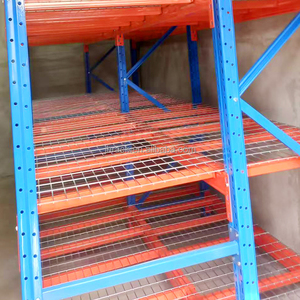
Wire Mesh Deck Racks Flexible Medium 100% Selective FIFO Selective Standard Forklifts, Order Pickers NFPA 13 Fire Sprinkler Certified
Automated High-Bay AS/RS Maximum Vertical Computer Controlled Dynamic WMS Driven Automated Stacker Crane / Shuttles DIN 18800, Eurocode 3
Expert Procurement Guidance

Frequently Asked Questions on Heavy-Duty Pallet Racking

Direct structural and commercial answers written by factory engineering teams to address common procurement and safety inquiries.

What specific certifications guarantee structural legitimacy in industrial racking?

A legitimate industrial manufacturer must supply full testing certificates matching EN 15512 (European standard for steel static storage systems), factory production control certificates according to EN 1090-1 CE Marking, and material traceability via Mill Test Certificates (EN 10204 3.1). For North American projects, alignment with RMI (ANSI MH16.1) and Canadian CSA A344 structural standards is paramount for municipal permit approvals.

Why choose drop-in wire mesh decking over solid timber or steel panels?

Wire mesh decking allows light penetration, eliminates dust accumulation, and critically adheres to NFPA 13 sprinkler penetration standards. In the event of a facility fire, open wire grids permit overhead sprinkler suppression water to cascade freely to low levels, avoiding dangerous "water shadow" effects caused by solid decking.

How are pallet rack load beams engineered against catastrophic failure?

Load beams utilize double-C profile interlocking shapes (box beams) cold-formed and seamlessly robotically welded. The end connectors feature three or four high-strength claws with precision teardrop or diamond punching, secured with automatic safety locking pins that resist dislodgement forces exceeding 5,000 N caused by accidental upward forklift operator impact.

What site documentation is needed to begin an engineered rack quotation?

To produce an exact, permit-ready layout, our engineering department requires: building architectural CAD drawings showing column spacings, clear height under trusses, concrete floor slab specifications (thickness, compressive strength, rebar mesh details), pallet dimensions (Width x Depth x Height including cargo overhang), maximum pallet weights, and operational forklift aisle turning radii.

Direct Engineering Consultation

Optimize Your Facility Cubic Storage & Safety Compliance

Connect directly with our structural engineering team. Submit your warehouse layout for complete load calculations, seismic analysis, and factory-direct pricing under full CE conformity standards.

Contact Us