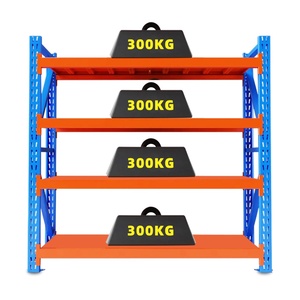
Customized Plated Wire Shelf Metal Heavy Duty Warehouse Shelving
- Open mesh design for NFPA sprinkler penetration
- Chrome plated & zinc-coated finish
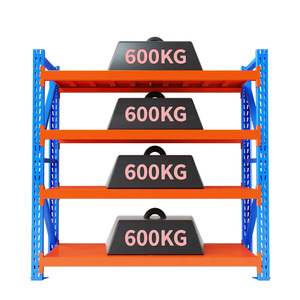
- Load: 300kg – 800kg per level
Direct factory fabrication meeting rigorous CE, AS 4084, and ANSI MH16.1 specifications. Manufactured with high-yield Q235B and Q355B cold-rolled structural steel.
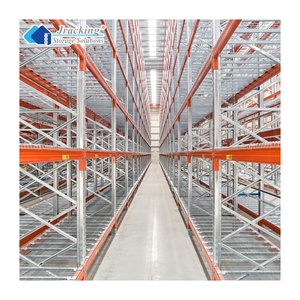
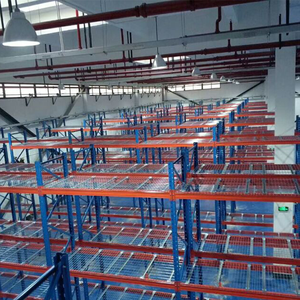
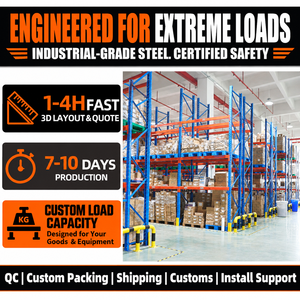
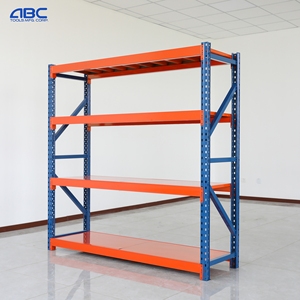
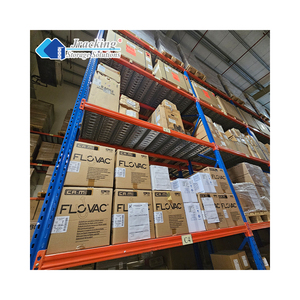
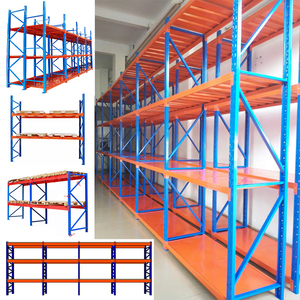
Industrial storage racking serves as critical vertical infrastructure within modern logistics hubs. As a premier Chinese manufacturer and global exporter, our engineering methodology centers on finite-element-modeled cold-formed steel sections tailored to resist localized buckling, torsional flexure, and dynamic seismic shocks.
We source prime, virgin cold-rolled coil steel exclusively under metallurgical standards Q235B and high-tensile Q355B (comparable to ASTM A36 and ASTM A572 Grade 50). Upright profiles are cold-formed through continuous CNC rolling mills with up to 26 precision forming stations. This gradual deformation preserves grain boundary integrity, avoiding stress crystallization while delivering unmatched load-to-weight structural ratios.
Structural Reliability Notice: Every beam connector assembly undergoes cyclic shear and moment load testing according to ANSI MH16.1 (RMI) and EN 15512 codes, ensuring connection stiffness parameters (Cartesian rotational springs) are accurately factored into overall frame stability calculations.
Surface treatment utilizes automated 9-stage pre-treatment tunnels—including shot blasting, zinc phosphating, and deionized water rinsing—followed by thermosetting epoxy-polyester electrostatic powder coating. This process provides a uniform dry film thickness (DFT) of 70–90 microns, verified by 500-hour neutral salt spray tests (ASTM B117) to withstand high-humidity cross-docking environments and sub-zero cold-storage facilities.
Evaluate load capabilities, spatial density factors, and handling equipment interactions to select the ideal storage configuration for your operational profile.
| Storage System Type | Typical Beam Load | Storage Density | SKU Selectivity | Aisle Requirements | Primary Standards |
|---|---|---|---|---|---|
| Selective Pallet Racks | 1,000 – 4,500 kg / level | Baseline (40% Floor) | 100% Direct Access | 2.8m – 3.5m (Reach/Counterbalance) | RMI MH16.1, AS 4084, EN 15512 |
| Drive-In / Drive-Through | 1,000 – 2,000 kg / pallet | Ultra-High (75% Floor) | FILO / FIFO (Batch) | Forklift travels inside lanes | FEM 10.2.07, AS 4084 |
| Push Back Racking | 1,000 – 1,500 kg / cart | High (65% Floor) | FILO (2–6 Pallets Deep) | Standard counterbalance aisles | ANSI MH16.1, EN 15512 |
| Automated AS/RS & Shuttle | 500 – 1,800 kg / position | Maximum (85% Cube) | 100% Automated Fast Access | 1.4m – 1.8m (Crane / AMR tracks) | FEM 9.831, DIN EN 528 |
| Galvanized Boltless Shelving | 200 – 800 kg / shelf | Medium (Carton Picking) | 100% Manual Picking | 0.9m – 1.2m (Manual / Order Picker) | ISO 9001, CE Machinery |
International warehousing operations are evolving beyond basic storage. Modern corporate procurement must balance automation integration, regional building code compliance, and volatile raw-material cycles.
The rapid deployment of Autonomous Mobile Robots (AMRs), automatic guided vehicles (AGVs), and automated storage and retrieval systems (AS/RS) requires rack fabrication tolerances far tighter than traditional forklift systems. Floor slab leveling, upright plumbness limits of 1/1000, and beam deflection under full static payload not exceeding L/200 are now compulsory project baselines.
Municipal jurisdictions throughout North America (IBC/RMI), Europe (Eurocodes), and Australasia (AS 4084) enforce stringent structural permitting. Buyers increasingly bypass trading intermediaries to partner directly with Chinese manufacturers capable of providing certified PE (Professional Engineer) stamps, Finite Element Analysis (FEA), and dynamic response spectrum seismic designs.
With ocean freight representing a decisive component of landed unit cost, sophisticated manufacturers employ intelligent 3D container bundling software. Modular upright splicing, nested roll-formed profiles, and custom steel strapping allow up to 26–28 metric tons to be safely unloaded from a single 40ft High Cube container without surface abrasion or structural deformation.
Cross-border cold-chain fulfillment for pharmaceutical and fresh food sectors has driven surging demand for pre-galvanized components and Sendzimir continuous zinc-coated steel. Modern facilities require corrosion guarantees exceeding 15 years under condensating, sub-zero warehouse conditions where typical wet-spray paints blister and deteriorate.
Large-scale 3PL distribution centers requiring 5,000+ pallet bays demand transparent mill certification. Tier-1 enterprise buyers secure long-term contractual steel index pricing directly with primary Chinese mills (Baosteel, Shougang) through strategic factory alliances, shielding multi-phase capital projects from sudden market spikes.
European and American carbon compliance frameworks (e.g., CBAM) are making environmental product declarations (EPDs) a competitive necessity. Certified low-emission electric arc furnace (EAF) steel sourcing, lead-free powder formulations, and zero-effluent water recycling loops represent the new standard for world-class manufacturing plants.
For more than two decades, our manufacturing infrastructure has combined robust heavy engineering with refined European automated production standards. Operating across modern production plants covering over 80,000 square meters, we bridge the gap between cost-effective Chinese volume fabrication and the tight tolerances required by international material-handling contractors.
We execute non-linear static second-order (P-Delta) structural simulations for every project, factoring in slab load bearing, dynamic acceleration, and specific live-load configurations.
Engineered responses addressing load capacities, compliance protocols, steel metallurgy, freight containerization, and site installation.
Connect directly with our senior application engineering team to receive full structural load charts, technical specifications, and factory-direct project quotes.