High-Performance Industrial Shelving & Racking Units
Explore our export-grade storage architectures built to withstand maximum weight profiles, seismic stresses, and intense supply chain cycles across worldwide distribution centers.
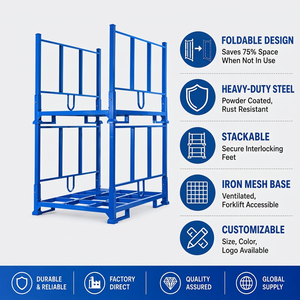
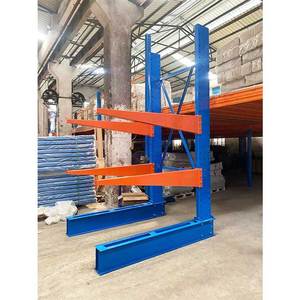
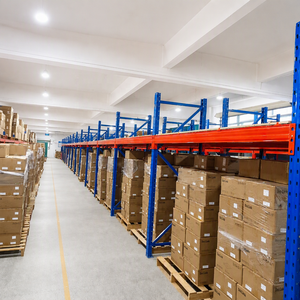
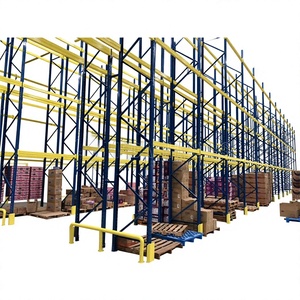
Engineering Structural Integrity: Industrial Shelving & Racking Dynamics
A rigorous examination of metallurgy, seismic engineering standards, and space optimization metrics for international logistics hubs and enterprise-grade distribution facilities.
Material Metallurgy, Structural Load Bearing, and Seismic Resiliency
In modern industrial facilities, the selection of heavy-duty industrial shelving units is a critical structural decision that impacts supply chain safety, personnel welfare, and inventory continuity. Standard warehouse shelving often fails under the cumulative strain of mechanical loading cycles and localized impact stresses. As a top industrial shelving supplier and exporter from China, our manufacturing methodology centers around certified Q235B and high-yield Q355 structural steel grades, ensuring high tensile threshold performance, minimal deflections, and enhanced elasticity under cyclic fatigue.
For international supply contracts serving the United States, Canada, Australia, and the European Union, standard baseline designs are engineered against strict regulatory frameworks. Our production integrates structural parameters defined by ANSI MH16.1 (Specification for the Design, Testing and Utilization of Industrial Steel Storage Racks by RMI), together with CSA A344 guidelines for Canadian jurisdictions. Every cold-roll-formed upright column and high-strength step beam undergoes continuous FEA (Finite Element Analysis) stress modeling. Baseplates are customized to dissipate torsional moments and seismic vertical loads, adhering strictly to International Building Code (IBC) seismic classification categories (A through F) to facilitate municipal fire and building permit sign-offs.
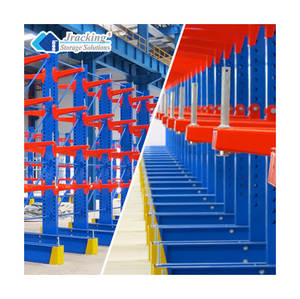
Furthermore, precision surface protection is achieved through advanced automated shot-blasting followed by thermo-cured electrostatic epoxy-polyester powder coating. This ensures an anti-corrosion barrier with salt-spray resistance exceeding 500 hours, keeping long-span shelves, teardrop uprights, and heavy cantilever arms fully protected in harsh operating environments such as sub-zero cold chains and tropical maritime hubs.
Future Procurement Trends in the Global Material Handling Sector
Procurement directors and supply chain engineers are no longer sourcing storage racks merely based on per-ton steel quotes. The global landscape is pivoting toward sophisticated total-cost-of-ownership (TCO) assessments, automated interoperability, and end-to-end supply chain transparency. Analyzing current international tender requests reveals several decisive procurement trends:
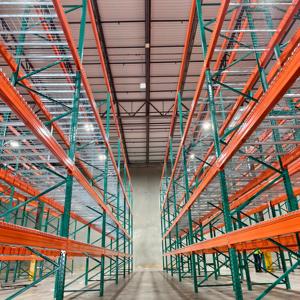
1. Teardrop Compatibility & Universal Interlocking Standards: For North American distribution networks, procurement teams prioritize 100% interoperability with established US 2-inch teardrop punch profiles. Sourcing interchangeable beams and upright frames enables warehouse owners to integrate high-density selective racks into their existing infrastructure without needing proprietary re-tooling.
2. Modular Scalability for Robotic Fulfillment (AMR/AGV Readiness): As automated mobile robots and autonomous picking vehicles displace conventional forklift traffic, industrial shelving must maintain sub-millimeter tolerances. Future procurement demands strict floor flatness tolerances (superflat floor compliance), unyielding deflection ratios (below 1/200th of clear span length under maximum pallet loads), and engineered aisle clearance profiles that prevent robotic navigation blind spots.
3. Decoupled Supply Chains and Strategic Reseller Inventories: Global logistics disruptions have highlighted the vulnerability of single-node lead times. Tier-one buyers are establishing strategic partnerships with Chinese OEM/ODM suppliers capable of offering standardized "Smart Range" components. By warehousing modular sub-assemblies in bonded facilities or local branch hubs (such as regional fulfillment depots in the US and Europe), suppliers can cut project turnaround down to rapid 72-hour delivery windows for fast-moving components.
Technology Evolution: From Static Cantilevers to Smart AS/RS Infrastructures
The industrial shelving industry is undergoing rapid technical evolution. Historically dominated by static structural angles and welded brackets, modern shelving is now an active structural component of integrated Warehouse Management Systems (WMS) and automated logistics ecosystems:
Evolution of High-Density Shuttle Solutions: Traditional drive-in racking systems, while dense, suffer from slower throughput and forklift collision risks. The transition toward semi-automated pallet shuttle systems allows four-way battery shuttles to run deep within storage channels on precision guide rails. This architecture supports both FIFO (First In, First Out) for date-sensitive pharmaceuticals and perishable food distribution, as well as LIFO (Last In, First Out) for bulk homogeneous industrial cargo.
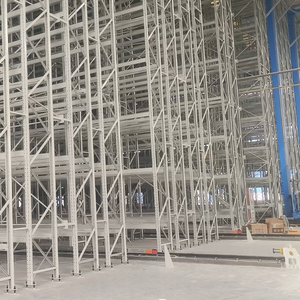
High-Bay Miniload and Robotic Cube Systems: For small-goods picking and multi-tier e-commerce operations, traditional hand-loaded boltless shelving has evolved into multi-level mezzanine racking, open-face miniload structures, and cube-based robotic systems like ROBORACK. Built with high vertical accuracy, these micro-fulfillment rack structures integrate directly with high-speed stacker cranes, high-acceleration carton conveyors, and automated tote handling systems capable of thousands of picks per hour.
Integrated Life-Safety and Structural Health Monitoring: Next-generation industrial shelving installations incorporate real-time strain-gauge load sensors and impact-deflection indicators on vulnerable upright posts. In combination with standardized NFPA 13 in-rack fire sprinkler flue channel designs, these systems safeguard warehouse teams while significantly reducing structural failure hazards caused by forklift column strikes.
Why Leading Global Warehouses Partner With Us
Blending world-class manufacturing scale with rigorous European and North American engineering practices. We manage every phase from structural design to site-ready handover.
End-to-End Accountable Team
Every industrial project is assigned three dedicated professionals: an Account Manager, a Senior Structural Project Engineer, and an Installation Specialist, ensuring responsibility is never lost between sub-contractors.
Strict International Code Compliance
Our structures strictly conform to ANSI MH16.1 (RMI), CSA A344, and EN 15512 international criteria. Complete engineering documentation, calculation packs, and PE-stamped load capacity ratings are available for permit submission.
Smart Range 72-Hour Rapid Delivery
By producing standardized beam, upright, and cantilever geometries, our "Smart Range" modular production line enables fast-track logistics and 72-hour standard dispatch for key components to keep your site on schedule.
Automated Systems Integration
Trusted by global logistics leaders (such as Witron, Knapp, and Vanderlande), our rack designs feature tight manufacturing tolerances compatible with AS/RS stacker cranes, AGVs, and robotic sorting lines.
Global Pallet Standardization
Whether accommodating standard 48"×40" GMA pallets, CHEP blocks, Euro pallets, or non-standard industrial skids, our custom roll-forming lines craft components to your exact volumetric specifications.
Full Safety & Protection Suite
From heavy-gauge wrap-around upright column protectors and end-of-aisle crash barriers to OSHA/EN-compliant capacity warning plaques, we provide integrated safeguards for long system service life.
Frequently Asked Questions About Industrial Shelving Procurement
Direct technical answers addressing structural certification, pallet standards, import logistics, and warehouse layout optimization.
What technical parameters are needed to generate an engineered layout quote? +
How do your racking systems ensure compliance with North American codes (RMI / CSA)? +
What is the functional difference between FIFO and LIFO racking layouts? +
Can you produce custom OEM/ODM roll-formed sections for teardrop uprights? +
How are shipping volumes packed to prevent damage during ocean transit? +
How does high-density automated shuttle racking compare to traditional selective racking? +
Accelerate Your Facility's Storage Efficiency
Partner with an established industrial shelving manufacturer and exporter from China. Connect with our technical engineers today for layout design reviews, seismic load simulations, and full product pricing.