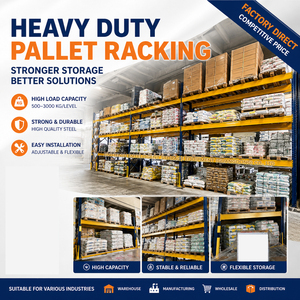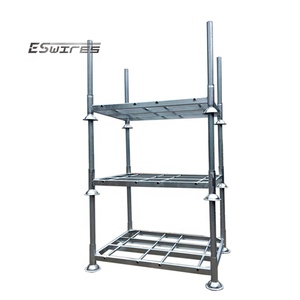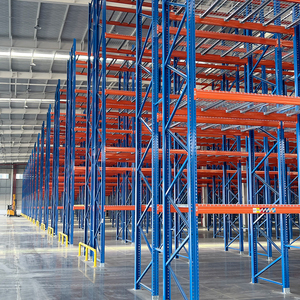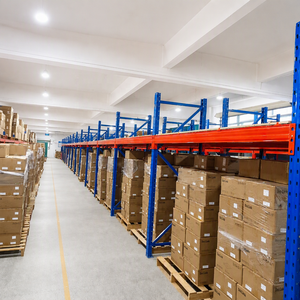
Direct OEM/ODM Heavy-Duty Storage Engineering

China Top Pallet Rack Shelving Factories & Wholesalers

Global Logistics Infrastructure Whitepaper: Certified High-Bay Structural Engineering, Automated AS/RS Tolerances & Strategic Direct-Factory Supply Chains

Precision Engineered Systems

Industrial Pallet Racking & Heavy-Duty Storage Solutions

Direct factory procurement portfolio conforming to ISO 9001, CE, AS 4084, and ANSI MH16.1 standards. Each structure is manufactured using high-tensile Q235B and Q355B cold-rolled structural coils from tier-one mills.

50,000+

Annual Metric Tons of Q235B/Q355B Processed

100%

Full Weld Ultrasonic & FEA Stress Testing

±0.5mm

Automated Roll-Forming Section Tolerance

72h

Fast-Track Engineering & Drawing Turnaround

Global Supply Chain Intelligence

Strategic Sourcing Dynamics: Procuring Industrial Racking from China

An engineering analysis of structural steel metallurgy, international compliance standards, total cost of ownership (TCO), and export risk mitigation for supply chain directors.

Cold-Formed Metallurgy & Steel Sourcing

The structural integrity of pallet racking starts at the steel coil level. Top-tier Chinese manufacturers exclusively procure from sovereign primary mills such as Baosteel, Shougang, and Ansteel, rejecting scrap-reprocessed billets. High-yield Q235B (yield strength ≥ 235 MPa) and Q355B (yield strength ≥ 355 MPa) cold-rolled structural steel guarantee predictable tensile limits and uniform grain boundaries.

Continuous continuous-roll-forming lines equipped with multi-station CNC profiling rollers preserve the yield ratio without inducing micro-fractures in the post profile's critical bend radii. This ensures buckling capacity remains consistent across extreme vertical load distributions.

Q235B / Q355B Grade Mill Test Certificate (MTC) EN 10204 3.1 Standard

Global Structural Code Compliance

International procurement requires strict conformity to destination building codes. Industrial racks are classified as civil structures under many municipal jurisdictions. Top Chinese exporters execute engineering designs matching ANSI MH16.1 (RMI standard in North America), AS 4084 (Australian Steel Storage Racking Code), and EN 15512 (European European Storage Racking Standard).

Seismic zoning modeling incorporating Equivalent Lateral Force (ELF) analysis ensures beam-to-column connector lock pins resist uplift forces, while oversized footplates with specialized chemical wedge anchors maintain anchoring integrity in high-magnitude seismic events.

ANSI MH16.1 (RMI) AS 4084:2023 FEM 10.2.02

Packaging & Container Cubing Optimization

International ocean freight accounts for up to 25% of landing costs if nesting is poorly calculated. Premium tier factories utilize automated 3D loading simulations to stack upright frames and teardrop/box beams down to minimal clearance envelopes.

Uprights are nested with specialized timber dunnage and heavy-duty steel strapping to prevent surface abrasion during sea voyages. Heavy-duty zinc-galvanized parts are treated against white rust during transit through humid equatorial passages, ensuring unpackaged parts arrive factory-fresh.

3D Load Simulation High-Cube Efficiency Anti-Abrasion Packaging
Logistics 4.0 & Advanced Technology

Emerging Trends Shaping Warehouse Storage & Racking Architecture

From automated high-bay racking holding robotic shuttles to eco-friendly powder metallurgy: how modern manufacturing addresses next-generation intralogistics.

Integration with AS/RS & Autonomous Shuttles

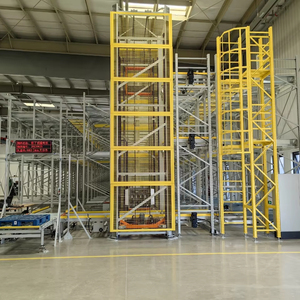
Manual forklift selective racks are increasingly upgraded to 4-Way Radio Shuttle and AS/RS (Automated Storage and Retrieval System) architectures. Stacker cranes moving at speeds exceeding 4 m/s demand racking deflection limits under dynamic load strictly controlled to L/400 or higher.

Precision manufacturing guarantees rail tolerances within ±1.0 mm along a 100-meter aisle, preventing automated guided vehicles (AGVs) and shuttle robots from sensor faults or mechanical derailment.

4-Way Shuttle Racks AS/RS High Tolerances Deflection Limit L/400

Eco-Friendly Surface Coatings & Low-Carbon Steel

Global Carbon Border Adjustment Mechanisms (CBAM) are prompting Chinese tier-1 factories to adopt EAF (Electric Arc Furnace) recycled green steel. Modern electrostatic powder coating lines have eliminated VOC emissions, replacing traditional wet paints with thermosetting polyester powders cured at 200°C.

This automated coating process achieves a uniform 70–90 μm film thickness that withstands 500+ hours in ASTM B117 salt spray tests, offering superior rust protection in cold storage (-30°C) without toxic degreasers.

ASTM B117 Salt Spray Zero-VOC Powder Line Cold Storage -30°C Grade

Digital Twin Structural Monitoring (IoT Racks)

Modern warehouse safety is evolving toward embedded fiber-optic or piezo strain gauges mounted directly onto critical upright bases and beam connectors. Real-time deflection measurements signal forklift impact stresses before structural fatigue can cause collapse.

Chinese factories are partnering with European and North American integrators like Witron, Knapp, and Vanderlande to pre-drill cableways and sensor mounting tabs during roll-forming, simplifying on-site sensor commissioning.

Strain Gauge Ready Integrator Pre-Drilled Predictive Maintenance
Structural Selection Blueprint

Engineering Comparison: Warehouse Storage Systems

A multi-variable technical evaluation matrix designed to assist operations managers and procurement engineers in matching warehouse topology with material handling machinery.

Racking Architecture Space Utilization SKU Selectivity Inventory Flow Standard Load / Level Compatible Handling Equipment
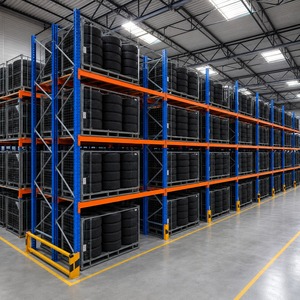
Selective Pallet Racking Standard teardrop or 75mm pitch Moderate (~40%) 100% Immediate FIFO (First-In, First-Out) 1,000 – 4,500 kg Counterbalance, Reach Trucks, VNA
Drive-In / Drive-Through Deep-lane continuous storage High (~75%) Low (Batch Access) LIFO (Drive-In) / FIFO (Drive-Thru) 1,000 – 2,000 kg Standard Reach Truck, Counterbalance
4-Way Pallet Shuttle System Automated high-density lanes Ultra-High (~85%) Channel Dependent Both FIFO & LIFO Configurable 500 – 2,000 kg Autonomous Shuttle Cart + Forklift / Lift
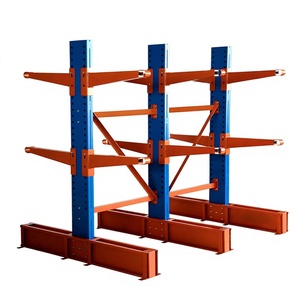
Heavy-Duty Cantilever Unobstructed frontal opening Application Specific 100% for Long Loads Non-Palletized Access Up to 6,000 kg / Arm Side Loader, Multi-Directional Forklifts
Automated AS/RS High Bay Rack-supported or standalone Maximum (~90%+) 100% Automated Software / WMS Controlled 500 – 3,000 kg Automated Stacker Crane / Rail Shuttle
Manufacturing Capabilities

Why Global Brands Partner with Our Manufacturing Facilities

Combining European structural engineering rigour with scalable Chinese production capacity, delivering end-to-end accountability from raw coil processing to final on-site installation handoff.

Single-Point Account & Project Management

Every commercial order is managed by an experienced triumvirate: a dedicated Technical Account Manager, a bilingual Senior Project Manager, and an on-site Installation Field Director. This tripartite command eliminates communication gaps between engineering calculations and factory floor rolling schedules.

Projects receive tailored shop drawings in both imperial and metric formats, ensuring compliance with local architectural and fire safety permit requirements.

Dedicated PM Team CAD/BIM Revizto Models Turnkey Execution

Tier-1 Integrator Proven Interoperability

Our structures operate alongside automation equipment from global tier-1 integrators including Witron, Knapp, Vanderlande, and TGW. The beam connections, floor-anchor flatness tolerances, and rail deflection limits are calibrated for smooth autonomous shuttle and crane operation.

Every beam connector features precision robotic weld beads inspected via ultrasonic non-destructive testing (NDT), eliminating cold-weld failures under continuous vibrating dynamic loads.

Integrator Certified Robotic Laser Welding NDT Ultrasonic Weld Test

72-Hour Rapid Response & Smart Range Logistics

For distributors and material handling dealers, our standardized Smart Range program maintains substantial pre-rolled inventory of standard pallet frame uprights and box beams. These are pre-engineered to match universal CHEP, block, and Euro pallet footprints.

Standardized configurations ship within a rapid 72-hour fulfillment cycle, allowing wholesalers to address sudden distribution center expansions or emergency replacement needs without project-delaying lead times.

72-Hour Quick-Ship Standardized Component Stock Wholesale Dealer Ready
Procurement Knowledge Base

Frequently Asked Questions: Global Industrial Racking Procurement

Objective, engineer-written answers addressing structural calculations, regulatory certifications, international logistics, and factory audit practices.

What are the key differences between Chinese steel grades Q235B/Q355B and international standards like ASTM A36 or S355?

Chinese standard steel grades Q235B and Q355B (governed by GB/T 700 and GB/T 1591) correspond closely with ASTM A36/A1011 (North America) and EN 10025 S235JR/S355JR (Europe). Specifically, Q235B yields a minimum of 235 MPa with controlled carbon content (≤ 0.20%), balancing ductility and cold-formability during roll profiling.

Q355B provides a minimum yield strength of 355 MPa, making it ideal for tall upright columns where high buckling resistance without excessive gauge thickness is required. Top export factories provide full EN 10204 3.1 Mill Test Certificates (MTC) verifying chemical ladle analysis and Charpy impact values at 20°C for every production heat number.

How do Chinese factories design racking to satisfy ANSI MH16.1 (RMI) and regional seismic codes?

Compliance with North American RMI (ANSI MH16.1) requires a dual-axis structural analysis that considers second-order P-Delta effects, beam-to-frame connector rotational stiffness (F-values), and local upright perforations. Leading Chinese export manufacturers employ finite element analysis (FEA) software calibrated against full-scale physical stub-column and cyclic connector tests.

For seismic areas (such as the American West Coast, Japan, or New Zealand), baseplates are thickened, bolt hole anchors are repositioned away from slab cut joints, and heavier horizontal-diagonal bracing trusses are installed to manage lateral drift limits defined by local IBC (International Building Code) statutes.

What surface treatment should be specified: Electrostatic Powder Coating or Hot-Dip Galvanizing (HDG)?

The choice is primarily driven by operational environment and humidity conditions. Electrostatic Epoxy-Polyester Powder Coating (70–90 μm) is the standard for ambient dry distribution centers, offering cost efficiency, color customization (e.g., high-visibility orange beams and cobalt blue frames), and impact resistance against typical forklift maneuvers.

Hot-Dip Galvanizing (HDG conforming to ISO 1461 / ASTM A123) is required for outdoor yards, chemical storage, and blast freezers where condensation causes electrolytic corrosion. HDG components receive a metallurgical zinc-iron alloy coating (≥ 65 μm) that provides sacrificial galvanic protection, preventing internal tube corrosion over decades.

How do you protect pallet racking from freight damage during container transit?

Heavy steel components can shift during transit if improperly packed. Professional export packing uses engineered nesting bundles: upright frames are nested face-to-face separated by corrugated paper or dense polyethylene foam spacer pads to prevent metal-to-metal friction and paint scratching.

Beam hook connector clips are wrapped with protective bubble film, and bundles are bound with high-tensile steel straps tensioned over corner guards. Heavy-duty timber dunnage skids are strapped underneath to allow direct access for 3-ton container ramp forklifts at the destination port, avoiding boom-reach damage.

What critical checks should be included in an on-site factory audit checklist before signing a supply contract?

An effective factory audit covers five key technical areas: (1) Raw Material Verification: Direct procurement contracts and Mill Test Certificates from accredited steel producers. (2) Roll-Forming Quality: Number of forming stages (18–24 stages for uprights are required to avoid residual steel stress) and optical laser tolerance checks. (3) Welding Line Automation: Use of multi-axis robotic welding cells for beam end-connectors versus manual stick welding. (4) Pre-treatment Line Chemistry: Multi-stage washing, iron or zinc phosphating/silane wash before powder baking to prevent premature paint peeling. (5) In-House Mechanical Testing Lab: Universal tensile testing machines, coating thickness gauges, and weld penetration cross-section microscopes.

Engineering Your High-Performance Facility

Direct factory prices, complete FEA structural calculations, and turnkey support for warehouse layouts, logistics distributors, and systems integrators worldwide.

Compliant with RMI & EN Standards Direct Mill-Certified Steel End-to-End Project Engineering