China Top Push Back Pallet Racking Manufacturers & Wholesalers

Precision Heavy-Duty Structural Engineering, Multi-Deep Trolley Kinematics, and Direct Wholesale Supply Chains for High-Throughput Global Warehouses

Engineered Equipment Catalog

High-Performance Pallet Racking & Industrial Storage Solutions

Explore our heavy-duty warehouse storage systems manufactured to ANSI MH16.1, CSA A344, and FEM standards. Engineered for harsh distribution environments, extreme load capacities, and seamless logistical operation.

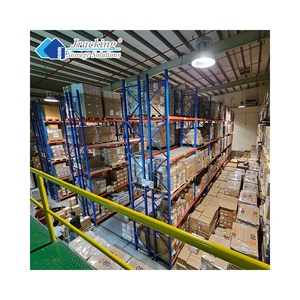
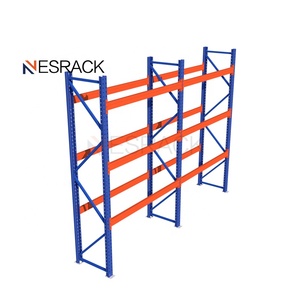
5-Layer Selective Deno Heavy Duty Steel Electrostatic Powder Coated 5-Layer Selective Pallet Racking System

Deno Heavy Duty Steel Electrostatic Powder Coated 5-Layer Selective Pallet Racking System 2000mm Length Warehouse Storage

Q235B Cold-Rolled 2000mm Bay Length Electrostatic TGIC
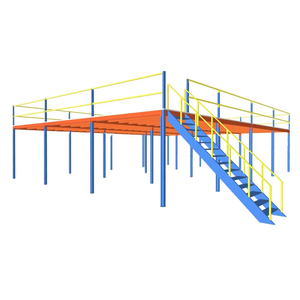
Industrial Platform Industrial Steel Mezzanine Floors Powder Coated Warehouse Shelves and Platform Storage Racks

Industrial Steel Mezzanine Floors Powder Coated Warehouse Shelves and Platform Storage Racks for Stacking Racks

Multi-Tier Usability Heavy Duty Decking IBC / OSHA Rated
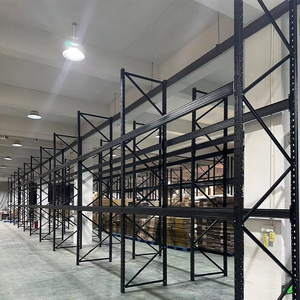
EU Certified Standard Jracking NEW EU Standard Heavy Duty Selective Steel Pallet Racking Systems

Jracking NEW EU Standard Heavy Duty Selective Steel Pallet Racking Systems for Warehouse Storage

FEM 10.2.02 Adjustable 75mm Pitch Beam Interlock Pin
NFPA Fire Safety Wire Mesh Deck Pallet Racking Corrosion Resistant Dust Leakage Prevention

Wire Mesh Deck Pallet Racking Corrosion Resistant Dust Leakage Prevention 5-Layer Heavy Duty Warehouse Storage

Flue Space Cleared Zinc-Galvanized Finish 1200kg Shelf Deck
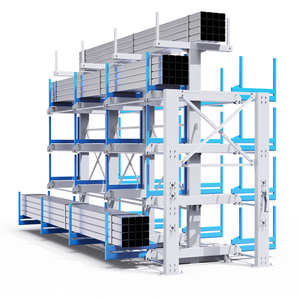
Long Goods Cantilever Telescopic Cantilever Rack Custom Made for Heavy Duty Metal Pipe Storage Applications

Telescopic Cantilever Rack Custom Made for Heavy Duty Metal Pipe Storage Applications

Crank Out Extension Structural Bar Profile Up to 5000kg Arm
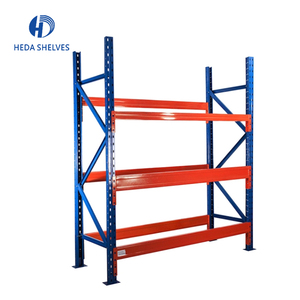
Heavy-Duty Factory Heavy Duty Rack Warehouse Storage Rack, Pallet Racking Manufacturer

Heavy Duty Rack Warehouse Storage Rack, Pallet Racking Manufacturer

Custom Upright Gauge Automated Roll-Form Rigid Frame Bracing
High Payload 4000kg Mracking Heavy Duty Industrial Palletized Racking with a Capacity of 1000-4000kg

Mracking Heavy Duty Industrial Palletized Racking with a Capacity of 1000-4000kg Industrial Storage Racking

Q355B High-Yield Box Beam Structure Reinforced Footplates
Selective Dynamic Industrial Racks Selective Pallet Racking System Steel Storage Rack Heavy Duty Warehouse Rack

Industrial Racks Selective Pallet Racking System Steel Storage Rack Heavy Duty Warehouse Rack

Modular Configuration Impact Guard Uprights Direct Access Logic
90%+
Space Utilization Rate
6-Deep
Maximum Cart Nesting
1500kg
Rated Load Per Trolley
0.05%
Cold Roll Tolerance Limit
Technical Whitepaper

Push Back Pallet Racking: Kinematics, Mechanics, and Engineering Physics

An in-depth structural exploration of dynamic cart carriage systems, progressive slope calculations, and steel stress limits designed to revolutionize high-density accumulation warehouses.

Nested Cart Structural Kinematics

Push back pallet racking operates through a precision-engineered cascading trolley mechanism mounted on inclined structural steel guide channels. When the initial unit load is deposited via forklift, it rests on the premier top cart. Staging subsequent pallets involves carefully nudging the previous unit backward along a calibrated grade (typically 2.5% to 3.5% inclination), systematically revealing lower, nested nested carts underneath. This eliminates the necessity for standard counterbalanced forklifts to ever physically enter storage aisles, mitigating upright frame impact risks by over 80% compared to traditional drive-in racking.

Q355B Certified Cold-Formed Steel

High-density dynamic accumulation systems demand exceptional metallurgical yield strengths. Premier Chinese push back manufacturers employ certified hot-rolled coil and cold-formed structural steel (primarily Q355B and ASTM A572 Grade 50 equivalent) featuring minimum yield points exceeding 355 MPa. The integration of precision laser-notched connector tabs, robotic dual-pulse MIG welding, and continuous automated roll-forming lines maintains member straightness within 1/1000 of span length. This rigidity prevents track deflection under fully laden 1500kg pallets, completely arresting cart binding or wheel track derailing.

Optimized Gravity Return & Braking

The mathematical calibration of push-back track pitch represents the operational heartbeat of storage safety. If inclination is too shallow, heavy pallets fail to coast smoothly down to the pick face when the forward load is retrieved; if the pitch is excessively steep, unit loads accelerate aggressively toward the aisle boundary, placing dynamic kinetic shock forces on terminal stop pins and forklift masts. Advanced Chinese manufacturers incorporate heavy-duty shielded, sealed bearing rollers with internal hydraulic or centrifugal braking cart regulators, ensuring safe terminal velocity under variable ambient thermal ranges down to -30°C.

Comparative Logistics Analysis

High-Density Storage System Architecture Matrix

A rigorous quantitative benchmark comparing Push Back configurations against Selective, Drive-In, Gravity Pallet Flow, and Radio Shuttle AS/RS technologies.

Storage System Type Operational Rotation Aisle Footprint Density SKU Selectivity Index Forklift Damage Vulnerability CAPEX per Pallet Position
Push Back Pallet Racking (2-6 Deep) LIFO (Last-In, First-Out) High (75% - 85%) Moderate to High (Per Lane) Low (Zero Aisle Entry) Moderate ($85 – $145)
Standard Selective Pallet Racking FIFO or LIFO Direct Low (40% - 50%) 100% Immediate Direct Access Moderate (Narrow Aisle Turning) Lowest ($45 – $75)
Drive-In / Drive-Through Racking Strict FILO / Strict FIFO High (75% - 82%) Extremely Low (Per Bay) Critical (High Mast/Upright Collision) Low-Moderate ($65 – $95)
Pallet Flow / Gravity Roller Racking Strict FIFO (First-In, First-Out) Maximum (85% - 92%) Moderate (Per Lane) Low (Dedicated Input/Output Aisles) High ($160 – $260)
Radio Shuttle Automation Racking FIFO / LIFO Software-Switch Maximum (88% - 95%) High (WMS Automated Dispatch) Lowest (Robotic Shuttle Run) Highest ($220 – $380)
Market Projections 2025–2030

Emerging Procurement & Engineering Trends in Pallet Racking

Strategic analysis of smart warehouse convergence, cold chain surge, circular decarbonization, and robotic integration shaping the next decade of wholesale procurement.

Automation Synergy

AMR & Autonomous Forklift Synergy

Modern push back systems are shifting toward micro-tolerance alignment plates designed for automated guided vehicles (AGVs) and autonomous reach trucks. Chinese factories are integrating laser-guided docking crossbeams to enable unmanned pallet feeding and retrieval.

Cold Chain Dominance

Sub-Zero Cryogenic Alloy Coatings

With rapid global expansion in frozen food and pharmaceutical logistics, push back systems increasingly demand low-temperature certified steel free from cold embrittlement. Formulations include low-carbon alloys and specialized synthetic greases operational to -35°C.

Decarbonization

Certified Low-Carbon Steel & EPD

Global multi-nationals require certified Environmental Product Declarations (EPD). Tier-1 Chinese manufacturers utilize green electric arc furnace (EAF) steel and zero-VOC electrostatic powder recovery loops to satisfy ESG-driven procurement mandates.

Seismic Engineering

Nonlinear FEA Dynamic Modeling

Procurement directors in earthquake-prone regions (US West Coast, Japan, Chile, New Zealand) now specify high-ductility baseplates and structural tubular uprights tested via dynamic seismic simulation programs under stringent IBC and AS4084 guidelines.

Direct Manufacturer Authority

Why International Wholesalers Partner with Leading Chinese Manufacturers

From initial finite element stress modeling to precision export containerization, discover the industrial strengths behind our engineered warehouse storage solutions.

Global Engineering Code Compliance

Our manufacturing protocols rigorously observe international regulatory rack standards. Whether your project necessitates compliance with ANSI MH16.1 (Rack Manufacturers Institute - RMI) for North American operations, CSA A344 for Canadian jurisdictions, AS4084-2023 for Australasia, or FEM 10.2.02 / EN 15512 throughout the European Union, our structural team provides certified calculation packages, stamping support, and verified deflection tolerances (L/200 standard).

Complete Turnkey Project Management

We eliminate intermediate transactional friction through dedicated tripartite engineering coordination. Every enterprise order is directed by a dedicated Account Lead, an experienced Project Structural Engineer, and an on-demand Installation Logistics Specialist. From initial CAD/BIM drawing approval and pallet interaction clearances down to final punch-list auditing, accountability remains completely centralized with the direct manufacturer.

Export Packaging & Ocean Logistics

Heavy upright frames and multi-tier cart assemblies require careful export protection to survive intermodal shipping. Our factories utilize custom steel pallet cradles, heavy-gauge plastic strapping, edge corner guards, and high-density shrink wrapping to shield high-gloss electrostatic powder coatings from saltwater corrosion and transit vibration. Beams and uprights are systematically indexed to guarantee seamless on-site unloading and rapid mechanical erection.

Procurement Clarity

Push Back Pallet Racking: Frequently Asked Questions

Actionable, engineer-verified answers addressing technical specifications, mechanical maintenance, slope parameters, and global procurement procedures.

Q What is the optimal lane depth for a Push Back Pallet Racking installation?

Push back pallet racking is engineered from 2 to 6 pallets deep. The optimal depth depends on your SKU velocity and pallet quantity per product line. The sweet spot for warehouse operations is 3 to 4 pallets deep. Configurations beyond 4-deep require larger forklift push forces (the truck must push against three or four heavy pallets up an inclined slope simultaneously) and require specialized heavy-duty nested cart wheel bearings to ensure smooth rolling without binding.

Q How does Push Back Racking prevent cart derailment and pallet jams?

High-grade Chinese push back systems feature precision interlocking nested carts equipped with mechanical safety tabs that physically hook beneath the flange of the structural steel guide channels. This captive cart design makes vertical lift-off or wheel jumping impossible during irregular forklift nudges. Additionally, front safety stops and rear travel limits prevent over-travel, ensuring balanced alignment across the entire dynamic stroke.

Q Can Push Back Racks handle varied pallet dimensions (GMA, Euro, CHEP)?

Yes. Custom trolley welded carriage frames are tailored to your target pallet footprints. While selective racking accommodates multiple pallet types on standard wire decking, push back systems must match the specific bottom runner/skid profile of your pallets (e.g., North American 48"x40" GMA, European 1200x800mm, or Australian 1165x1165mm). Solid sheeted top carts or custom runner channels can be specified to prevent broken or missing baseboards from snagging during cart travel.

Q What vertical clearance (clear height) is lost to cart inclination?

Because push back carts nest on an inclined plane (approximately 2.5% to 3.5% pitch), each lane accumulates vertical slope height from front to back. In a typical 4-deep system, the back of the track is roughly 120mm to 160mm higher than the front load beam. Furthermore, the nested cart stack occupies 150mm to 200mm of vertical beam profile. Engineers account for these variables during initial CAD profile generation to prevent top-tier interference with warehouse ceiling clearance or fire sprinkler heads.

Q How do NFPA 13 fire sprinkler codes apply to multi-deep Push Back Racks?

Multi-deep push back systems create wide storage footprints that can block overhead sprinkler water penetration. Under NFPA 13 guidelines, push back racks exceeding 20 feet (6.1m) in height or deeper than 3 pallets often require longitudinal and transverse flue space protection. Our engineering team incorporates structural flue spacers and factory-prepped mounting brackets for in-rack sprinkler pipe integration directly into the roll-formed uprights.

Q What routine maintenance is required for dynamic push back cart tracks?

Push back racking has minimal moving parts compared to motorized automated systems, making it very reliable. Recommended semi-annual maintenance includes: visual inspection of track channels for debris or foreign objects; checking sealed bearing rotation on all trolley wheels; verifying torque on anchor bolts and beam safety pins; and ensuring the forward structural stops remain undamaged by forklift impacts.

Q How does cold storage affect push back trolley mechanics?

In sub-zero cold storage facilities down to -30°C, conventional lubricating grease in standard roller bearings freezes, increasing rolling resistance and preventing pallets from coasting down to the pick face. For refrigerated and blast freezer facilities, we specify low-temperature synthetic lubricants, stainless steel axle pins, and cryogenic-certified steel to maintain smooth gravity return without freezing.

Q What lead times and shipping packaging can overseas buyers expect?

Standard fabrication lead times from our Chinese production facilities range from 20 to 35 business days depending on tonnage and project customization. Upright frames are pre-assembled or shipped knockdown (KD) for ocean container optimization (saving up to 40% in sea freight). All push back carts are strapped and crated in heavy-duty modular steel frames to prevent track warping or surface damage during transit.

Transform Your Warehouse Density & Throughput Today

Partner directly with China's leading heavy-duty push back racking manufacturers. Submit your CAD layout, pallet specifications, and throughput targets for a complete engineering analysis and factory-direct wholesale quotation.