75%
Max Storage Density Increase
2-6 Deep
Configurable Lane Nesting
1,500 KG
Load Capacity Per Trolley Layer
72-Hour
Fast OEM Engineering Turnaround
Engineered Industrial Rack Systems
Explore our heavy-duty industrial storage line. Designed for maximum cubic utilization, rigorous seismic compliance, and seamless operational flow across wholesale fulfillment operations.
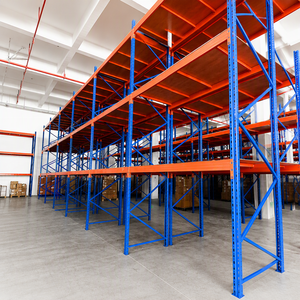
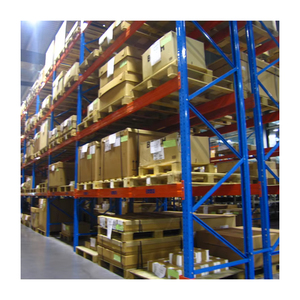
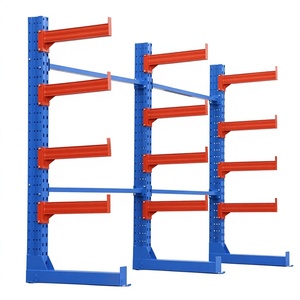
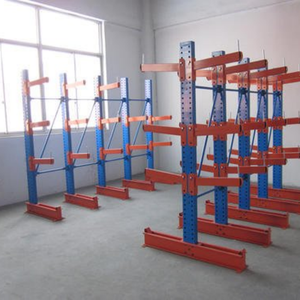
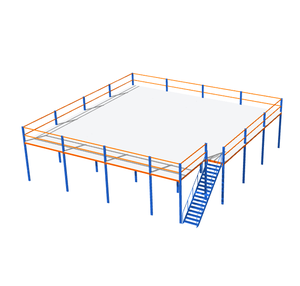
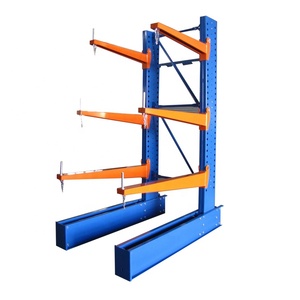
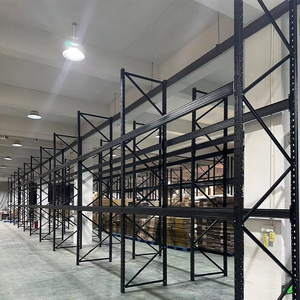
Architectural Overview: Push Back Racking Kinematics & Structural Integrity
Push back rack systems (dynamic high-density accumulation storage) represent one of the most mechanically sophisticated static-dynamic hybrid storage infrastructures in contemporary warehousing. Operating strictly on a Last-In, First-Out (LIFO) inventory dispatch rotation, these systems accommodate dynamic pallet nesting across precision-inclined structural rails. Unlike drive-in systems where forklift operators enter physical rack upright lanes, push back systems confine all forklift activities to the front staging aisle, slashing aisle transit requirements by up to 45% and virtually eliminating forklift-to-column impact hazards.
From an OEM/ODM manufacturing perspective, our push racks integrate nesting carrier carts constructed from cold-rolled structural steel (Q235B / Q355B grades) equipped with sealed, low-resistance flanged steel bearings. As each pallet load is pushed backward on dedicated structural tracks, it forces the successive cart back along an engineered gravitational gradient (typically between 1.5% and 2.2% declivity). This gradient is calculated precisely using proprietary kinematics equations to mitigate gravity acceleration while ensuring self-starting rollback during retrieval.
| Structural Parameter | Standard Specification | OEM/ODM Heavy-Duty Customization | Engineering Standard Compliance |
|---|---|---|---|
| Storage Lane Depth | 2 to 4 Pallets Deep | 5 to 6 Pallets Deep (Reinforced Multi-Cart) | ANSI MH16.1 / RMI Guidelines |
| Rated Capacity per Pallet | 500 kg - 1,000 kg (1,100 - 2,200 lbs) | Up to 1,500 kg (3,300 lbs) per pallet position | EN 15512 / FEM 10.2.02 |
| Trolley Wheel Assembly | Machined steel wheels with shielded bearings | Stainless steel bearings for cold-storage (-30°C) | ISO 9001 / CE Certified Sub-assemblies |
| Upright Column Profile | Omega profile 80mm - 100mm face | High-torsion boxed & web-reinforced 120mm profile | ASTM A1011 / Structural Carbon Steel |
| Finish & Protection | Electrostatic thermoset epoxy powder (60-80μm) | Hot-dip galvanized (HDG) to ASTM A123 / ISO 1461 | Corrosion Protection Rating ISO 12944 C3/C4 |
Wholesale & Industrial Procurement Trends in Dynamic Storage (2025-2030)
Modern supply chains are navigating critical headwinds: real estate lease cost hyper-inflation, rising cold-chain operational expenditures, and the rapid centralization of fast-moving consumer goods (FMCG) distribution centers. The procurement dynamics for industrial storage systems have shifted decisively toward systems that maximize footprint efficiency without introducing complex electrical dependencies.
Cubic Density Prioritization
Warehouse developers increasingly mandate storage density coefficients above 65%. Push back systems minimize dead aisle space, converting traditional selective racking aisle configurations into dense accumulation matrices without requiring specialized reach trucks.
Zero-Carbon Cold Chain Fitment
With blast-freezer square-footage commanding up to 300% premium overhead compared to ambient space, non-motorized push racks have become the preferred standard. Eliminating motor drives ensures zero electrical breakdown risks at sub-zero operating environments (-30°C).
Seismic Engineering & PE Stamping
Procurement directors across the US, Canada, and seismic-active regions worldwide demand factory-certified finite element analysis (FEA) modeling. B2B rack sourcing contracts require turnkey validation against high Spectral Response Accelerations (Ss/S1).
Next-Generation Technological Evolutions in Push Rack Manufacturing
As material handling technologies advance, push rack engineering is rapidly evolving past simple steel rail fabrication. Current R&D is focused on three critical technological frontiers:
Magnetic Eddy-Current Dampening
For deep lanes (5-6 pallets deep), traditional mechanical friction brakes are being replaced by non-contact neodymium magnetic eddy-current decelerators, eliminating mechanical wear and delivering smooth, controlled deceleration during inventory extraction.
Low-Tolerance Automated Profiling
Advanced CNC roll-forming lines with continuous laser micrometer calibration guarantee profile straightness within ±0.5mm across 12-meter continuous vertical sections, enabling seamless integration with automated guided vehicles (AGVs).
Integrated IoT Cart Monitoring
Smart optical and low-frequency RF sensors integrated directly into cart wheel assemblies transmit real-time telemetry on cart positioning, bearing operational wear, and impact force vectors directly to cloud warehouse management systems (WMS).
Enterprise Manufacturing Capabilities & OEM/ODM Excellence
With decades of structural engineering experience serving Tier-1 global logistics companies, 3PL distributors, and manufacturing leaders, our integrated manufacturing footprint provides distinct competitive advantages for wholesale distributors and systems integrators:
Single-Source Responsibility
Every engineering phase is supervised by a dedicated Account Manager, Project Engineer, and Installation Quality Specialist. Eliminate the communication friction of managing separate component subcontractors.
Automated Dynamic Modeling & CSA Tools
Our proprietary engineering tools compute load distributions, deflection limits, and pallet rollback dynamics instantly. We convert facility CAD blueprints into production-ready structural models within 72 hours.
Smart Range 72-Hour Rapid Fulfillment
For high-turnover manual rack components, standardized frame uprights, beam assemblies, and nested cart modules are held in continuous buffer inventory, supporting 72-hour warehouse dispatch for dealer networks.
Frequently Asked Questions for Wholesale B2B Procurement
Technical guidance and answers to common engineering questions faced by procurement managers and warehouse facility engineers.
Q1: How does push back racking compare to drive-in systems in operational throughput?
While drive-in racking achieves comparable raw cubic density, push back racking reduces pallet loading and extraction cycles by up to 50%. Lift truck operators never navigate inside the physical rack framework; carts push back mechanically from the aisle face, significantly lowering rack upright collision damage and maintenance costs.
Q2: Can your push back rack systems accommodate diverse pallet footprints simultaneously?
Yes. Through our custom OEM/ODM cart engineering, we build multi-configuration nesting cart platforms compatible with standard North American GMA pallets (48" × 40"), European EUR-pallets (1200mm × 800mm), industrial CHEP blocks, and non-standard custom perimeter bases on the same track assembly.
Q3: What floor slab load parameters are required before installing deep push back racks?
Because push back systems concentrate multi-pallet loads over tighter footprint perimeters, post loads (point loads) are significantly higher than standard selective racking. We supply detailed anchoring baseplate engineering, point load distribution tables, and anchor bolt embedment data to verify compliance with your concrete slab thickness and rebar specifications.
Q4: How do push back systems perform in cold storage and blast freezer facilities?
Push back racks are ideally suited for cold chain applications down to -30°C. We fit all carts with low-temperature synthetic lubricants, hermetically sealed stainless steel ball bearings, and cold-formed structural steel profiles treated with high-durability hot-dip galvanizing to eliminate rust and bearing seizure.
Q5: What documentation and compliance certifications do you supply for municipal building permits?
Every OEM/ODM export shipment includes comprehensive structural calculation reports, load capacity plaques compliant with ANSI MH16.1 / OSHA 1910.176(b), full assembly drawings, material test certificates (MTRs), and seismic qualification data stamped for AHJ approval.
Accelerate Your Facility Storage Density Today
Partner directly with a proven OEM/ODM manufacturing facility. Contact our storage systems engineering team to request custom layout drawings, load calculations, and comprehensive wholesale pricing.
Get Catalog