Engineered Warehouse Storage Racks & Automated Systems
Precision-fabricated utilizing premium Q235B and structural-grade high-tensile steel. Designed to fully comply with ANSI MH16.1 (RMI), CSA A344, and FEM 10.2.02 international load bearing regulations.
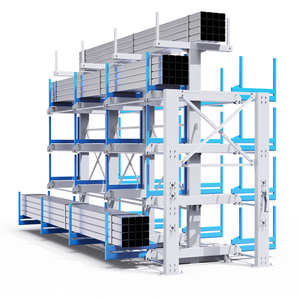
Telescopic Cantilever Rack Custom Made for Heavy Duty Metal Pipe Storage Applications
Engineered with mechanical extension arms for overhead crane loading of structural tubing, bar stock, and raw profiles.
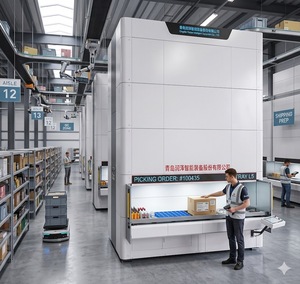
Smart Vertical Storage for E-commerce Warehouse Goods-to-Person Picking
High-density dynamic buffer modules optimized for automated tote shuttles and rapid micro-fulfillment center picking rates.
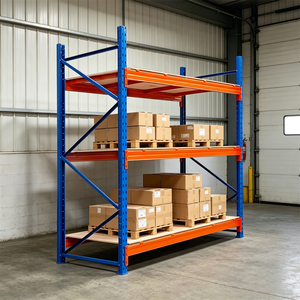
Powder Coated Heavy Duty Rack Industrial Warehouse Storage Pallet Racking Adjustable Industrial Shelves
Epoxy polyester electrostatically finished upright frames and step beams designed for selective unit load inventory control.
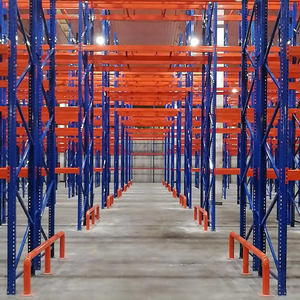
Small Hardware Component Dedicated Metal 5-Layer Heavy Duty Automatic Access Shelf System Warehouse Racking System for Parts
Precision miniload integration structure configured with subdivided drop-in metal bins for high-SKU tooling retrieval.
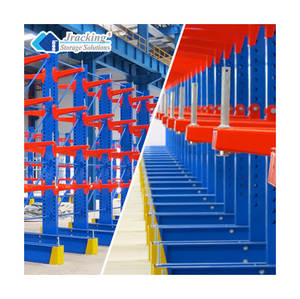
Jracking Factory Price-Wholesale Warehouses Rack Light Duty Q235B Steel Customized Cantilever Rack
Modular column-and-arm assemblies configured for long-span timber, trim profiles, and PVC materials with no front column obstruction.
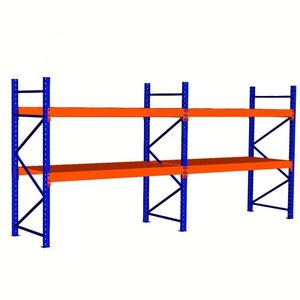
Industrial Steel Racks & Shelving System Heavy-Duty Adjustable Pallet Racking with Multi-Tier Shelves and Corrosion Protection
Corrosion-resistant multi-tier design featuring cold-formed punch profiles tailored for damp environments and heavy pallet staging.
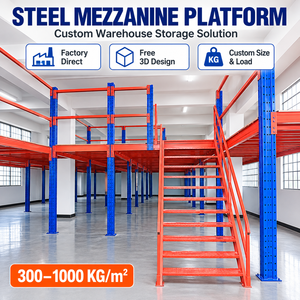
Heavy Duty Steel Mezzanine Floor System for Warehouse Storage with Customized Industrial Platform
Engineered free-standing platforms and rack-supported second-level workspaces maximizing overhead volumetric facility footprints.
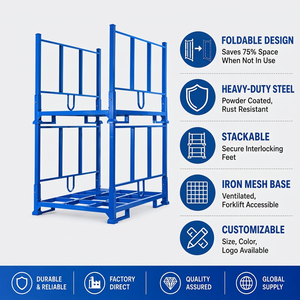
OEM Customization Foldable Movable Portable Metal Pallet Detachable Stacking Storage Rack 400kg Capacity
Collapsible industrial stillage racks configured for flexible staging bays, return logistics, and seasonal dynamic overflow storage.
Future Procurement Trends in Industrial Storage (2025–2030)
Global supply chain shocks, accelerating e-commerce fulfillment speeds, and real estate cost pressures are reshaping how chief procurement officers and logistics executives invest in steel racking assets.
Life-Cycle Costing Over Upfront Price
Global procurement teams have moved past evaluating racking on steel ton cost alone. Modern evaluation matrices weigh steel grade yield point (Q235B vs. Q355B vs. SS400), micro-crack resistance in roll-formed profiles, anti-fatigue epoxy finishes, and structural damage mitigation accessories to calculate 15-year TCO.
Digital Twins & Structural Health Monitoring (SHM)
Next-generation racking infrastructure incorporates IoT strain gauges and ultrasonic impact monitors at high-traffic aisle entry points. Procurement policies increasingly dictate native compatibility with Warehouse Management Systems (WMS) to log forklift collisions and alert safety managers before frame failure occurs.
Standardized Decoupled Systems
To guard against international shipping logjams, multinational corporations are specifying modular, standard-profile beams and upright columns that allow cross-compatibility between European (FEM/EN), North American (RMI), and Asian Pacific standard installations without re-engineering baseplate fixtures.
Technological Developments Reshaping Pallet Rack Engineering
As automated material handling outpaces manual forklift operations, storage rack manufacturing tolerances have shifted from fractional inches to sub-millimeter precision.
| Storage Architecture | Structural Tolerances | Seismic & Load Dynamic | Optimal Logistics Environment |
|---|---|---|---|
| Selective Pallet Racking | Standard (±3.0mm) | Static point loading with basic R-factor moment frames | General 3PL, FMCG regional hubs, high SKU rotation |
| Automated High-Bay AS/RS | Ultra-Tight (±1.0mm) | Dynamic horizontal acceleration & mast sway absorption | Dark warehouses, 24/7 cold storage, automated automotive DCs |
| Radio Pallet Shuttle | High (±1.5mm) | Rail deflection control under high-speed shuttle transit | Food & beverage processing, deep-freeze cold chain facilities |
| Heavy Telescopic Cantilever | Precision Machined | Asymmetrical cantilever arm deflection and torsion stress | Steel pipes, extrusion bars, aerospace metal fabrication |
| Structural Mezzanine Systems | AISC / EN1993 Standard | Live floor loading, vibration mitigation, point wheel loads | Multi-tier order picking, assembly mezzanine workstations |
Why Global Enterprises Partner With Us for Critical Storage Assets
Combining European structural engineering excellence with an agile, high-capacity international supply chain, we deliver certified high-performance racking across the Americas, Europe, and the Middle East.
European Engineering Pedigree
Originated with decades of deep structural expertise through our NEDCON development lineage, our storage structures undergo rigorous finite element method (FEM) dynamic stress modeling to withstand extreme operational seismic shifts and peak load cycles.
Comprehensive Code Compliance
All structural drawings, beam connection designs, and concrete floor anchorage plans are engineered in accordance with ANSI MH16.1 (RMI) for the US, CSA A344 for Canada, and EN 15512 specifications. We provide PE-stamped calculation packages ensuring smooth local building permit approval.
Tri-Tier Dedicated Project Execution
Every industrial project is assigned an accountable triumvirate: a dedicated Account Director, Structural Project Engineer, and On-Site Installation Field Manager. This structural continuity eliminates communication gaps from initial blueprint conception through final crane load tests.
Fast-Track "Smart Range" Inventory
To assist material handling dealers and emergency distribution expansions, our Harrison, Ohio logistics hub and primary fabrication plants maintain pre-configured stocks of GMA-pallet compatible beams, teardrop uprights, and accessories dispatched within 72 hours.
Proprietary Automated CSA Configuration Tool
Authorized integrators and enterprise partners leverage our advanced automated sizing tool to generate structurally certified rack bills of material in minutes. The algorithm computes load-dependent steel thickness and deflection margins without manual drafting overhead.
Trusted by Global Automation Integrators
Our structures operate as the steel backbone for global intralogistics system leaders including Witron, Knapp, TGW, and Vanderlande. From robotic miniloads to shuttle storage cubes, we manufacture to tolerances that keep robots operating without interruption.
Industrial Pallet Racking Procurement FAQ
Crucial structural engineering, load safety, and local building code questions clarified by our senior storage infrastructure engineering group.
Q Which industrial storage racking system provides the absolute highest spatial density?
For high-throughput, homogeneous unit loads, Pallet Shuttle Systems and Automated High-Bay Crane Racking (AS/RS) deliver the peak cubic space utilization by eliminating standard forklift operating aisles. While drive-in racking provides high static density on a FILO (First-In, Last-Out) model, automated shuttle platforms operate across both FIFO and LIFO modes without requiring lift trucks to drive inside the steel rack superstructure, mitigating upright collision risks.
Q How do ANSI MH16.1 (RMI) and CSA A344 standards influence rack steel selection?
ANSI MH16.1 (in the United States) and CSA A344 (in Canada) govern the design, cold-forming tolerances, and testing protocols of industrial steel storage racks. They dictate specific load combinations, including dead weight, live storage loads, vertical impact, and site-specific seismic accelerations under ASCE 7 / IBC regulations. Our engineering calculations explicitly size column baseplates, anchor embedments, and beam connector locks to guarantee that maximum allowable steel deflection stays below L/180 of the clear span.
Q What critical building specifications are required before commissioning a structural rack design?
An engineer-approved layout requires five primary inputs: 1) CAD layout showing building column grid and clear height to lowest obstructions (HVAC, lighting, trusses); 2) Concrete floor slab data (thickness, concrete compressive strength f'c, reinforcing rebar layout, and subgrade modulus k); 3) Exact pallet dimensions, pallet type (GMA 48"x40", block, Euro), and maximum gross load weight; 4) Sprinkler hydraulic design data (NFPA 13 in-rack versus ESFR ceiling limits); and 5) Local building code seismic spectral parameters (Ss and S1 coefficients).
Q What is the operational distinction between FIFO and LIFO pallet dynamics?
FIFO (First-In, First-Out) ensures that the earliest manufactured or received pallet load is dispatched first. This setup is mandatory for perishables, cold-chain operations, pharmaceutical items, and time-stamped consumer goods. Gravity-fed Pallet Flow and carton flow systems are natural mechanical FIFO mechanisms. LIFO (Last-In, First-Out) fits non-perishable bulk goods, heavy machinery parts, or long-shelf-life raw inventory, allowing high-density deep-lane storage with a single front loading and unloading face.
Q Can your pallet racking integrate directly with autonomous robotic systems (AMR/AGV)?
Yes. Our engineering division designs specialized robotic pick interfaces, AS/RS crane racking, and autonomous mobile robot (AMR) high-density grid frameworks. We design structural uprights and guidance track rails to withstand dynamic acceleration forces, cyclic vibrational fatigue, and tight operational clearance tolerances required by leading automation integrators worldwide.
Accelerate Your Facility Expansion with Certified Engineering
Whether you require standard GMA selective pallet racks under our 72-hour Smart Range delivery, custom telescopic cantilever arms for raw metals, or high-bay AS/RS engineering, our cross-functional team delivers turn-key execution.