Industrial Racking & High-Tolerance Storage Systems
Direct manufacturer solutions engineered to ANSI MH16.1, CSA A344, and FEM 10.2.02 quality guidelines.
Executive Whitepaper: Strategic Sourcing of Longspan Racking
Understanding structural yield thresholds, seismic anchoring resilience, and supply chain scalability.
As modern distribution facilities face exponentially increasing SKU proliferation and real estate inflation, structural industrial storage systems—specifically longspan shelving, wide-span racking, and multi-tier mezzanine frameworks—have transitioned from passive hardware into mission-critical supply chain architecture. Sourcing from a Tier-1 longspan racking manufacturer requires assessing engineering depth, metallurgy certifications (such as structural Q235B and European standard S235JR/S355MC cold-rolled coil), seismic compliance, and deflection integrity under asymmetrical dynamic loads.
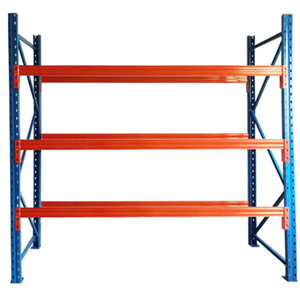
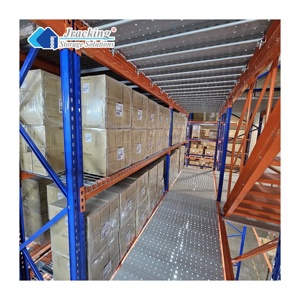
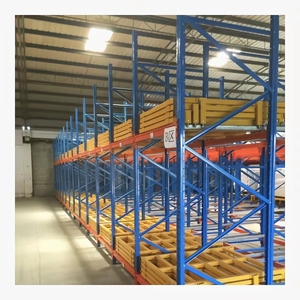
A true commercial longspan system bridges the operational gap between light-duty slotted angle shelving and heavy-duty structural pallet racks. Engineered to handle uniformly distributed loads (UDL) typically ranging from 300 kg to over 1,500 kg per level, longspan racking relies on optimized step-beam or box-beam profiles connected via multi-prong connectors into teardrop or upright punchings. When qualifying the top 10 longspan racking manufacturers and global factories, procurement officers must look beyond the initial purchase price and evaluate total cost of ownership (TCO), continuous deflection tolerance (L/200 standard), and compliance with Rack Manufacturers Institute (RMI) ANSI MH16.1 specifications or EN 15512 standards.
Certified Yield & Deflection
Strict structural integrity checks ensuring uprights and step-beams maintain safe elastic limits without permanent plastic deformation under full maximum capacity ratings.
Seismic Engineering Rigor
Baseplate dimensions, heavy anchor bolt patterns, and frame bracing engineered to withstand zone-specific seismic accelerations and IBC structural code mandates.
Automated Robotic Interfacing
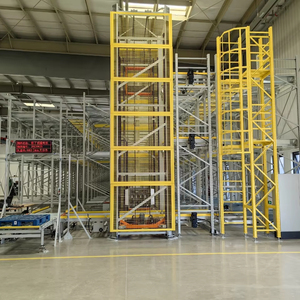
Micron-level roll-forming consistency tailored for smooth interaction with autonomous mobile robots (AMR), automatic guided vehicles (AGV), and AS/RS stackers.
Engineering Parameters: Longspan & Pallet Racking Benchmarks
Standardized physical criteria for heavy-duty manual, push-back, and automated selective installations.
| System Architecture | Typical Load Threshold (UDL) | Material Specification | Standard Pitch / Adjustability | Primary Industrial Application |
|---|---|---|---|---|
| Heavy-Duty Longspan Shelving | 300 kg – 1,200 kg / level | Q235B / S235JR Cold-Rolled | 50mm / 75mm Pitch Adjustable | Carton Picking, E-commerce, MRO Stores |
| Selective Pallet Racking | 1,000 kg – 4,500 kg / level | High-Strength Carbon Structural Steel | 50mm / 76.2mm (3-inch) Pitch | General Distribution, FMCG, 3PL Pallets |
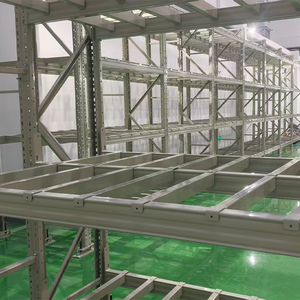
| Push-Back Pallet System | Up to 1,500 kg / pallet position | Precision Nested Rolling Carts / Rails | Engineered Incline Tracks | High-Density LIFO, Cold Storage Facilities |
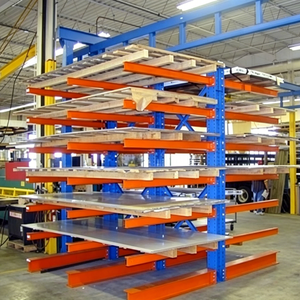
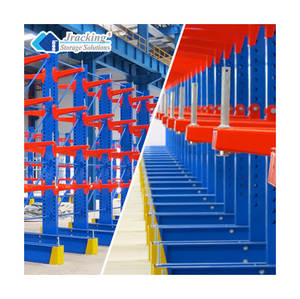
| Cantilever Longstock Racks | 500 kg – 3,000 kg / cantilever arm | Heavy Welded or Tapered I-Beams | 100mm Pitch Pinhole Assembly | Tubes, Steel Pipes, Timber & Sheet Stock |
| Automated AS/RS High-Bay | Custom Unit Load (up to 30m height) | Tight Tolerance Machined Profiles | Continuous System-Guided Calibration | 24/7 Automated High-Density Operations |
Future Procurement Trends in Industrial Storage
Anticipating structural, digital, and environmental evolutions shaping warehouse design through 2030.
1. Convergence of Longspan with AMR Pickers
The traditional distinction between manual hand-loaded shelving and automation is disappearing. Future-proof procurement favors wide-span racking profiles designed with clear horizontal access corridors and low-profile shelf fronts that allow robotic grippers and Goods-to-Person (G2P) shuttles to pick directly from totes without beam lip interference.
2. Digital Twins & Structural IoT Health Monitoring
Enterprise logistics hubs are increasingly specifying integrated load sensors, impact monitors, and RFID stress-gauges within frame baseplates. Real-time telemetry detects structural strain, forklift impacts, and rack overload situations before micro-fractures compromise facility safety, feeding data directly into the warehouse management software.
3. Decarbonized Steel & Eco-Finishes
Global supply chains demand documented ESG compliance. Leading factories are shifting to high-yield steel coils manufactured via low-carbon electric arc furnaces (EAF) paired with heavy-metal-free, low-VOC electro-deposition and powder coating lines that pass extreme salt spray testing without ecological degradation.
Enterprise Strengths & Factory Capabilities
End-to-end execution combining European engineering standards with streamlined manufacturing scale.
NEDCON Storage Racking Solutions B.V. and its specialized manufacturing network combine advanced European storage engineering with direct global production muscle. By integrating every phase of project delivery under one accountable team—including your dedicated Account Manager, Project Manager, and Installation Manager—we eliminate third-party miscommunication, minimize lead times, and deliver turnkey compliance for both the United States, Canada, and global distribution jurisdictions.
One Accountable Engineering Group
No finger-pointing between roll-formers, engineering consultancies, and on-site riggers. From initial CAD structural calculations to city building permit sign-offs, our internal engineering department manages the complete envelope.
Smart Range & 72-Hour Rapid Dispatch
For certified resellers and urgent retrofits, our standardized Smart Range modular system guarantees high-demand uprights, box beams, and drop-in wire mesh decks are ready for staging and dispatch within 72 hours.
Strict Code Compliance (RMI & CSA A344)
All fabricated upright frames and beam brackets are analyzed against North American structural provisions, taking into account soil-structure interaction, anchor pull-out stresses, and NFPA 13 in-rack fire suppression clearances.
Frequently Asked Questions: Racking Procurement & Compliance
Authoritative technical guidance compiled by senior structural storage engineers.
Load capacity must be verified through physical strain testing combined with finite element analysis (FEA) per ANSI MH16.1 or EN 15512 standards. Beam deflection under uniformly distributed load (UDL) should not exceed length/200 (L/200). Never purchase racks relying on uncertified steel or generic load tables without certified PE stamping for your specific seismic zone.
Teardrop punchings are the universal standard across North America, offering rapid interchangeability across diverse accessory ecosystems. Proprietary slot or keyhole designs often provide superior torsional rigidity and tighter structural engagement for ultra-dense or high-bay AS/RS systems where deflection tolerances are exceptionally strict.
FIFO (First In, First Out) uses gravity flow racks or dual-aisle pallet flow setups to guarantee immediate inventory rotation, making it essential for pharmaceuticals, food, and perishables. LIFO (Last In, First Out)—utilized in push-back and drive-in systems—minimizes required aisle space, achieving up to 75% higher cubic storage density for bulk, non-perishable goods.
Local building departments and fire marshals typically require PE-stamped structural calculations, anchor bolt tension/shear verification, concrete slab strength certification (often minimum 4,000 psi), egress aisle layout plans, and NFPA 13 sprinkler clearance verification before issuing an operational permit.