Engineered Warehouse Shelving & High-Density Pallet Racks
Explore our industrial-grade storage systems, precision-machined to accommodate high static payloads, heavy dynamic traffic, and seamless automation interfaces across modern logistics facilities.
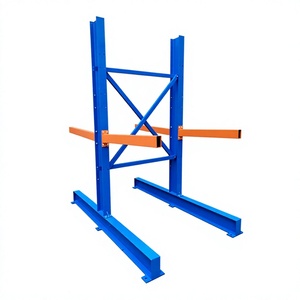
Customized Heavy Duty Adjustable Cantilever Racks Anti-corrosion Protection Cantilever Racking
Hot-dip galvanized and powder-coated adjustable cantilever arms engineered for timber, structural steel profiles, and non-standard long-load outdoor/indoor storage.
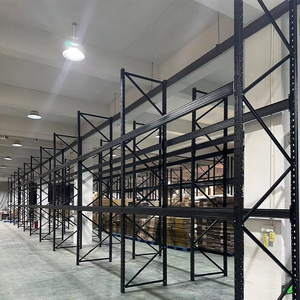
Wire Mesh Deck Pallet Racking Corrosion Resistant Dust Leakage Prevention 5-Layer Heavy Duty Warehouse Storage
Reinforced 5-layer wire mesh decks designed to maximize overhead fire sprinkler penetration (NFPA 13), prevent small-box drop through, and support irregular pallets.
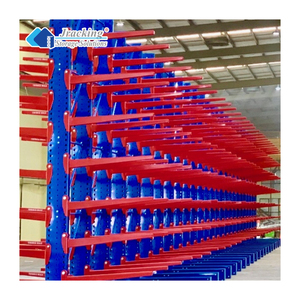
CE-Certified Industrial Warehouse Storage Shelves Heavy-Duty Cantilever Racking System for Cold Storage Pipe Storage
Sub-zero metallurgical steel formulation preventing low-temperature embrittlement, customized for heavy industrial pipe storage, tubing, and bar stocks.
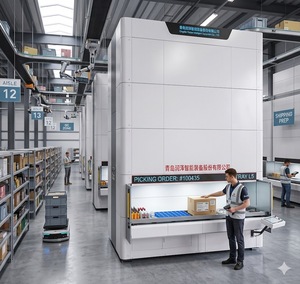
Smart Vertical Storage for E-commerce Warehouse Goods-to-Person Picking
Ultra-dense multi-tier shelving engineered with integrated guide rails for high-velocity order fulfillment, picking carts, and autonomous mobile robot (AMR) navigation.
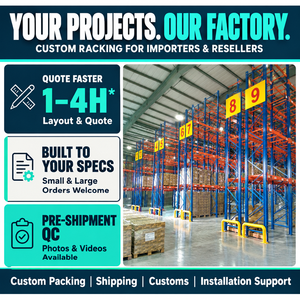
Building Material Pallet Racking Heavy Duty Steel Rack for Long Load and Board Pallets
Structural C-channel steel framing designed for drywall, sheet metal panels, insulation rolls, and excessive concentrated point loads in heavy building supply depots.
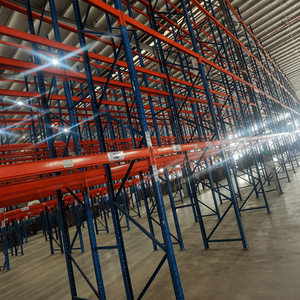
Factory Price Heavy Duty Industrial Racking System Durable Steel Selective Pallet Racks for Warehouse
Versatile 100% selective beam configuration accommodating all GMA, Euro, and block pallet profiles, offering unlimited forklift accessibility and rapid installation.
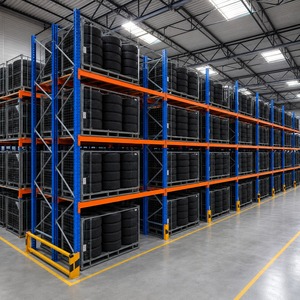
Racks Industriales Storage System Steel Storage Rack Porta Paletes Schwerlastregal for Factory Storage
International export-grade uprights engineered under EN 15512 and ISO standards, ensuring resilient pallet buffering for automotive and machinery assembly plants.
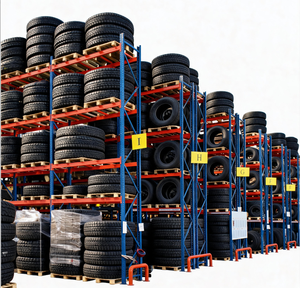
Custom Heavy Duty Industrial Pallet Racking Load Capacity Warehouse Pallet Shelving Q235 Steel Beam Type Adjustable Powder Rack
High-yield Q235B cold-rolled steel step beams with 50mm/75mm pitch adjustability, epoxy electrostatic finish, and 4-hook connectors with integrated safety locks.
1. The Global Logistics Paradigm: Selecting Tier-1 Storage Infrastructure
Modern distribution facilities and fulfillment hubs are undergoing a structural shift driven by surging industrial real estate costs, supply chain vulnerabilities, and hyper-velocity SKU throughput demands. Warehouse racking is no longer a commoditized static steel asset; it serves as the foundational skeleton for an operation's entire material handling ecosystem. Specifying warehouse pallet shelving systems demands rigorous structural analysis balancing cubic volume utilization, selective accessibility, seismic safety codes, and compatibility with emerging automation hardware.
Industrial facility planners must determine whether their operational velocity favors 100% accessibility (Selective Pallet Racking), ultra-high volumetric density (Drive-in or 4D Radio Shuttle systems), or high-turnover FIFO buffering (Dynamic Gravity Flow Racking). Selecting the improper racking architecture cascades into chronic bottlenecks, poor floor utilization, elevated forklift collision risks, and premature facility expansion expenditures.
Engineering Principle: Floor space cost per square foot in primary industrial corridors has increased by over 45% since 2021. Upgrading from traditional wide-aisle selective racking (yielding ~40% floor cubic utilization) to narrow-aisle (VNA) or high-density automated shuttle racking increases cubic utilization to 75%–85%, deferring capital investment in additional real estate.
| Racking Architecture | Inventory Flow | Floor Space Utilization | SKU Selectivity | Ideal Application Scenario |
|---|---|---|---|---|
| Selective Pallet Racks | FIFO / LIFO | 40% – 50% | 100% Direct Access | FMCG, 3PL Warehousing, High SKU variance |
| Drive-In / Drive-Through | LIFO (FILO) | 65% – 75% | Low (Batch picking) | Cold storage, Seasonal inventory, Bulk materials |
| Semi-Automated Pallet Shuttle | Configurable FIFO/LIFO | 80% – 88% | Medium (Channel-level) | Frozen food distribution, Beverage manufacturing |
| Heavy-Duty Cantilever Racks | Direct Unobstructed | 50% – 60% | 100% Length-wise | Lumber, Steel beams, PVC pipes, Sheet goods |
| Unit-Load AS/RS Racking | Software Controlled | 85% – 95% | 100% Programmed | Lights-out 24/7 fulfillment centers, High-bay hubs |
2. Tier-1 Racking Manufacturers & Wholesalers: Top 10 Evaluation Criteria
When selecting from the top 10 global warehouse pallet shelving manufacturers and wholesale distributors, procurement executives must look beyond ex-factory steel tonnage pricing. Structural failures in industrial racking lead to catastrophic inventory loss, operational downtime, and life-safety hazards. Top-tier manufacturers are vetted according to the following ten technical criteria:
1. Metallurgy & Certified Steels
Utilization of certified Q235B, Q355B, or high-strength ASTM A1011 cold-rolled steel with verified mill test certificates ensuring reliable yield stress and elongation metrics.
2. Structural Design Compliance
Engineered strictly to ANSI MH16.1 (RMI standard), CSA A344 (Canada), and EN 15512 (FEM Eurocode) specifications, backed by finite element analysis (FEA).
3. Tight Manufacturing Tolerances
Roll-forming lines operating within ±0.5mm upright profile tolerances, critical for high-bay crane runs and robotic shuttle docking reliability.
4. Surface Finish & Corrosion Defense
Automated 7-stage pre-treatment, electrostatic epoxy powder coating (60–80 microns), or hot-dip galvanizing to resist chemical abrasives and sub-zero humidity.
5. Beam Connector Integrity
High-moment connection 3-pin or 4-pin riveted beam end connectors with automatic mechanical locking pins resisting dynamic uplift forces from fork trucks.
6. Engineering Document Packages
Stamped PE (Professional Engineer) structural calculations, slab punch-shear analysis, anchor bolt pullout certifications, and comprehensive permit documentation.
7. Wholesale Rapid Dispatch Programs
Maintaining high-volume standard frame and beam stock programs (like our Smart Range) capable of shipping standard pallet modules within 72 business hours.
8. Tri-Party Account Management
Every major project is managed by three dedicated specialists: Account Manager, Structural Project Engineer, and On-site Installation Manager.
9. Proven Automation Integration
Direct track record interfacing racking steel with leading automation providers including Witron, Knapp, TGW, and Vanderlande.
3. Future Procurement & Technological Trends (2025–2035)
The industrial shelving industry is evolving rapidly away from static, standalone installations toward integrated, intelligent infrastructure. Enterprise buyers are shifting their capital expenditure models based on the following key macro trends:
A. Hybrid Robotic Compatibility (AMR & Stacker Integration): Modern selective and vertical racking systems are increasingly pre-engineered with floor-level navigation corridors, QR/bar-code fiducial markers, and precise beam spacing to support Autonomous Mobile Robots (AMRs) executing goods-to-person picking operations. As warehouse operators phase in automation incrementally, racking must accommodate both standard manual counterbalance reach trucks today and autonomous shuttles tomorrow.
B. High-Cube Vertical Optimization (Up to 45 Meters): Escalating urban land values are driving warehouse clear heights from standard 32-foot clearances to 100+ feet (cladded rack-supported buildings where the racking structure itself supports the facility's roof and external walls). This requires sophisticated wind-load, seismic-dissipation, and tight vertical deflection tolerances (L/200 deflection limits).
C. Intelligent Safety Monitoring & IoT Strain Gauges: Emerging procurement contracts for Fortune 500 logistics hubs now incorporate wireless load and impact sensors installed on critical aisle end-frames. These sensors instantly alert facility directors to forklift impacts or beam overloading, preventing progressive rack collapses and maintaining structural health audit logs automatically.
4. Corporate Manufacturing Superiority & EPC Turnkey Delivery
Partnering with our global manufacturing operations provides wholesale distributors and commercial warehouse clients with an integrated supply chain advantage. Rooted in world-class European engineering and delivered across North American and global operations, our technical capabilities include:
Integrated In-House Engineering & Digital Configuration: Through our proprietary digital design and CSA Configuration tools, our engineering teams model site-specific geometries within hours. We ensure precise floor-load distribution, minimum aisle clearance calculations, and strict compliance with NFPA 13 longitudinal and transverse flue space requirements for in-rack fire suppression.
Proven Tier-1 Integrator Trust: Our automated storage solutions, miniload AS/RS structures, and dynamic flow systems operate in mission-critical environments for global industry leaders like DHL, Siemens, CEVA Logistics, Vanderlande, Witron, and Scania. Whether your facility manages fragile cold-chain pharmaceuticals or heavy industrial cast parts, our systems guarantee zero-tolerance deflection and long-term durability.
The Wholesale Dealer Program: Authorized material handling distributors leverage our "Smart Range" catalog for standard pallet components, enabling 72-hour fast-track fulfillment, comprehensive technical submittals, and factory-direct volume pricing to win competitive regional tenders.
5. Warehouse Racking Procurement & Engineering FAQ
Critical structural, permitting, and design questions frequently encountered by plant managers, logistics directors, and procurement specialists:
What essential data is required to generate a certified warehouse racking layout and quotation?
How do seismic design categories impact the engineering of pallet racking systems?
What is the structural difference between roll-formed steel and structural channel racking?
How do NFPA 13 fire sprinkler regulations affect pallet rack flue space design?
What certifications ensure workplace safety and structural warranty compliance?
Ready to Engineer Your High-Efficiency Warehouse?
Connect with our technical storage engineers today for custom CAD layout designs, structural calculations, and volume wholesale pricing.
Get a Quote