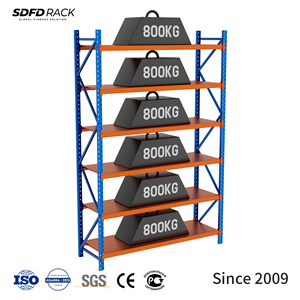
Factory Direct Catalog
High-Performance Industrial Storage Rack Solutions
Manufactured using certified high-tensile structural coil steel, tested under simulated seismic loadings, and customizable across high-density selective, push back, cantilever, and automated layouts.
Executive Industry Whitepaper
The Evolution of Industrial Racking: Strategic Procurement & Technological Convergence
An in-depth structural analysis of modern high-bay storage dynamics, total cost of ownership (TCO) benchmarks, and regulatory alignment in North American warehouse retrofits.
Next-Generation Procurement Trends in Logistics Infrastructure
Industrial warehousing across North America and Europe has entered a paradigm shift. Rising real estate acquisition costs, urban last-mile logistics constraints, and persistent skilled labor shortages have pushed procurement teams away from static, single-tier selective racking toward integrated cubic optimization systems. Corporate supply chain directors no longer procure steel racks simply as static commodities; they evaluate racking arrays as integral kinetic sub-structures designed to interface seamlessly with Autonomous Mobile Robots (AMRs), Automated Storage and Retrieval Systems (AS/RS), and modern Warehouse Management Systems (WMS).
Key procurement shifts include moving from standard roll-formed columns to hybrid structural steel configurations in critical impact zones, demand for specialized low-temperature alloys in cold-chain logistics, and standardized compatibility with 48" × 40" GMA pallet geometries. Furthermore, procurement officers are increasingly prioritizing end-to-end accountability where engineering validation, factory fabrication, permit-ready calculation stamping, and field installation management are handled by a single dedicated supply chain entity.
Engineering Structural Integrity: ANSI MH16.1 & Seismic Deflection Analysis
Structural safety in industrial pallet racking represents an exacting discipline where structural dynamics, soil-slab interaction, and localized seismic risk profiles converge. Under the Rack Manufacturers Institute (RMI) standard ANSI MH16.1 and Canadian standard CSA A344, rack systems must withstand severe dynamic stress without catastrophic joint failure or disproportionate frame collapse.
Critical engineering considerations engineered into our production lines include beam-to-column connector moment capacities, upright post perforations calibrated to minimize local buckling, and comprehensive torsional stiffness calculations. In high seismic zones across the American West Coast and Canada, seismic baseplate sizing and specialized epoxy wedge anchor bolt arrays are calculated to distribute dynamic shear forces evenly into the building’s post-tensioned concrete slab, satisfying stringent International Building Code (IBC) permit filing requirements.
| Racking Architecture | Inventory Logic | Cube Density Index | Throughput Velocity | Ideal Application Scenario |
|---|---|---|---|---|
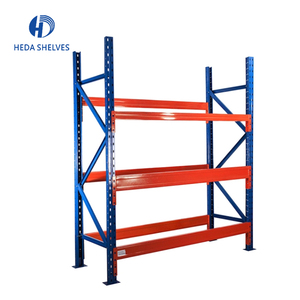
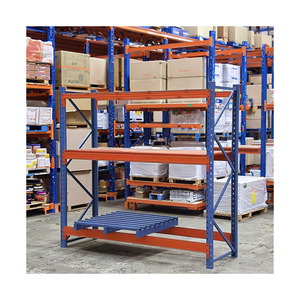
| Selective Pallet Racking | 100% Direct Access (FIFO) | Baseline (Moderate) | High Velocity | Broad SKU distribution centers, FMCG fulfillment, retail transit hubs. |
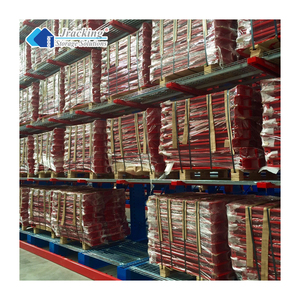
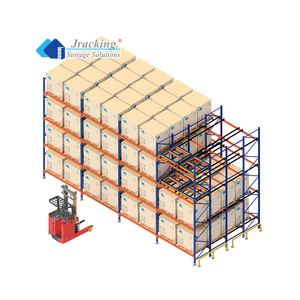
| Push Back Racking (2-6 Deep) | Gravity nested carts (LIFO) | High (+45% vs Selective) | Medium to High | Multi-pallet SKU batches, buffer storage areas, dry grocery distribution. |
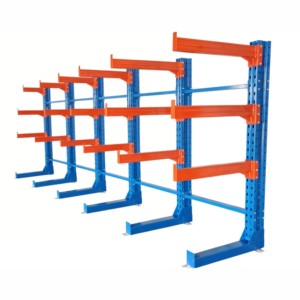
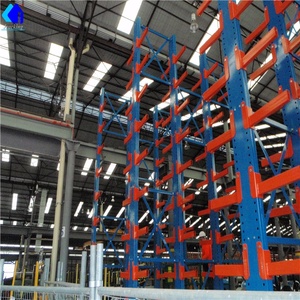
| Electric Mobile Cantilever | Direct Access via Moving Base | Exceptional (+85% floor gain) | Controlled / Batched | Structural steel, long profile extrusions, timber yards, heavy industrial stock. |
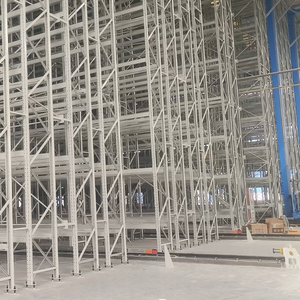
| Pallet Shuttle / AS/RS High-Bay | Autonomous Shuttle (FIFO/LIFO) | Maximum Vertical Density | Continuous 24/7 Operations | Cold storage, frozen facilities (-30°C), automated mega-fulfillment hubs. |
Future-Proofing Warehouses: Robotics, Flue Space Compliance & NFPA 13
As vertical clearances climb above 40 feet in modern distribution facilities, fire suppression geometry under NFPA 13 dictates structural bay layout. Maintaining continuous longitudinal and transverse flue spaces is not simply a compliance issue; it is vital for warehouse operating licensure and property insurance underwriting. Our structural systems incorporate fixed mechanical pallet stops, wire mesh decking, and integrated sprinkler drop channels that maintain continuous 3-to-6-inch flue corridors while preserving high beam load capacities.
Simultaneously, the arrival of autonomous mobile sorting robots and robotic reach trucks requires millimetric tolerance control. Our roll-forming lines operate under computerized dimensional checks, guaranteeing that beam sag ratios do not exceed 1/180th of the span, thus eliminating crane scanning errors and pallet misplacement in automated operations.
Factory & Engineering Edge
Why Tier-1 3PLs and Material Handling Dealers Partner With Us
From initial CAD layout modeling to automated production lines and comprehensive permitting support, our team ensures complete operational integrity.
Single-Team Project Accountability
Every industrial project is assigned a tripartite management team: a dedicated Account Manager, a certified Structural Project Manager, and an on-site Installation Manager. No fragmented communication or outsourced buck-passing.
Rapid 72-Hour Smart Range Supply
For high-turnover manual racking installations and urgent warehouse expansions, our Smart Range program provides standardized beams, frames, and wire decking dispatched within a rapid 72-hour window.
Automated CSA Safety Sizing Engine
Our dealer and engineering partners leverage our digital configuration engine, which automatically designs and checks pallet load geometries against regional safety factor standards, ensuring optimal steel distribution.
Full Automation Interoperability
Engineered for high-bay stacker cranes, 2D pallet shuttles, and miniload AS/RS. Trusted across international logistics networks with successful integration alongside system integrators like Witron, Knapp, and Vanderlande.
Certified North American Building Compliance
Comprehensive engineering calculations stamped for local building authority (AHJ) permitting, factoring in IBC seismic coefficients, concrete anchor pull-out limits, and OSHA structural collision tolerances.
Comprehensive Lifetime Asset Protection
We supply continuous lifecycle maintenance support, structural load capacity signage, modular column wrap protectors, heavy-duty end-of-row guard rails, and factory re-profiling packages.
Procurement & Engineering FAQ
Frequently Asked Questions on Industrial Pallet Racking Systems
Detailed technical answers addressing load calculations, standard specifications, fire codes, and commercial logistics execution.
What technical parameters are required to calculate pallet racking structural capacity?
To size upright frames and step/box beams accurately, structural engineers require: (1) Unit load weight per pallet including cargo and pallet tare weight; (2) Exact pallet dimensions (width, depth, height) and type (e.g., standard 48"×40" GMA, CHEP, Euro, or custom steel skids); (3) Building clear height beneath lighting and fire suppression lines; (4) Concrete slab thickness, compressive strength (psi/MPa), and reinforcing bar schedule; (5) Local geographic seismic acceleration data (Ss, S1 parameters); and (6) Material handling equipment lift mast clearances and aisle turning radiuses.
How do you guarantee compliance with ANSI MH16.1, CSA A344, and local building permits?
Every project layout undergoes rigorous finite element structural analysis referencing the American National Standard ANSI MH16.1 and Canadian CSA A344 specifications. Our structural calculations account for dead loads, live pallet loads, forklift impact factors, and site-specific seismic shear values. We prepare and supply certified, PE-stamped (Professional Engineer) documentation and calculation packages ready for submission to local Authorities Having Jurisdiction (AHJ) across all US states and Canadian provinces.
When should a distribution center choose Push Back or Pallet Shuttle over Selective Racking?
Selective pallet racking offers 100% immediate selectivity, ideal for facilities handling thousands of diverse SKUs with low pallet quantities per SKU. When warehouse floor space is limited, real estate lease rates are premium, or cold storage operating costs are elevated, high-density systems become financially superior. Push Back racking (2 to 6 pallets deep) increases cubic storage capacity by 40–50% by eliminating aisles. Pallet Shuttle systems provide deep-lane density up to 20+ pallets deep with autonomous cart transfer, supporting both FIFO and LIFO rotation while eliminating forklift entry damage into rack lanes.
What are the NFPA 13 sprinkler and flue space requirements in pallet rack systems?
Under NFPA 13 guidelines, back-to-back rack arrangements require continuous longitudinal flue spaces (typically 3 inches wide) and transverse flue spaces between pallet loads (typically 6 inches wide). These gaps ensure vertical heat venting to rapidly activate ceiling sprinkler heads and enable downward water penetration during a thermal event. Our factory incorporates engineered back-to-back row spacers, fixed pallet back-stops, and open wire mesh decking to guarantee that flue spaces remain clear and fully compliant during daily operations.
How does your factory support wholesale dealers, distributors, and integrators?
We provide our global distributor network with comprehensive OEM/ODM manufacturing capability, protective territory pricing, unbranded marketing technical collateral, and direct access to our Smart Range 72-hour fast delivery supply chain. Wholesale partners also gain access to our automated digital configuration tool, allowing sales engineers to rapidly quote, configure, and structurally validate standard rack layouts for rapid commercial bidding.