Certified Industrial Storage Systems & Heavy Duty Racks
Explore precision-fabricated warehouse racking manufactured from certified high-tensile Q235B and Q355B structural steel, tailored for bulk wholesalers, industrial distributors, and automated logistics hubs worldwide.
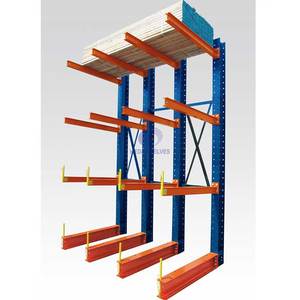
- Application: Timber, Pipe, Steel Rods
- Arm Capacity: 500 – 1,800 kg/arm
- Compliance: CE / EN 1090 / ISO9001
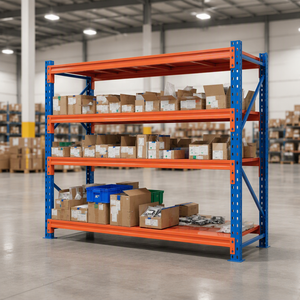
- Bay Load: Up to 24,000 kg
- Beam Length: Custom (2,300–3,900 mm)
- Pitch Adjust: 50 mm / 75 mm
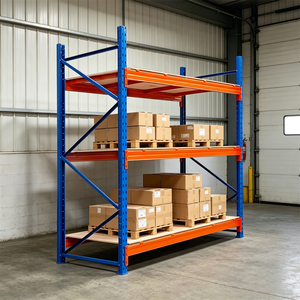
- Finish: Thermo-hardened Epoxy
- Layer Capacity: 1,000 – 4,500 kg/level
- Upright Profile: 80/90/100/120 mm
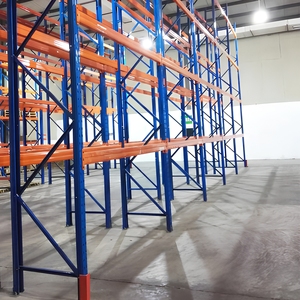
- Payload: 1,000 – 3,000 kg/level
- Stacking: 2 to 6 Vertical Tiers
- Safety Factor: 1.65:1 (RMI Standard)
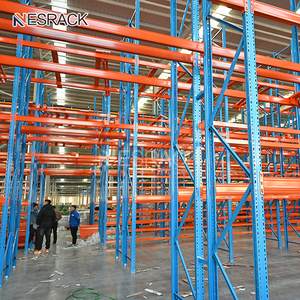
- Configuration: 5 Layer Modular Set
- Aisle Width: 3.0 – 3.5 m Standard
- Pallet Fit: GMA 48x40, Euro 1200x800
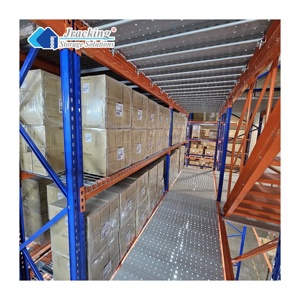
- Standard: EN 15512 Logistics Ready
- Beam Section: Box / Double-C Welded
- Protection: Base & Post Armor Guard
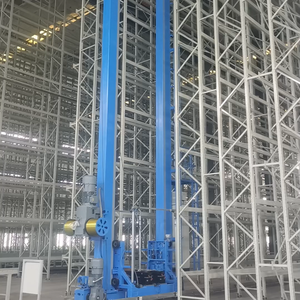
- Delivery: Container Batch Wholesale
- Clear Height: Custom up to 14 Meters
- Anchor Bolting: M12 / M16 Hilti Approved
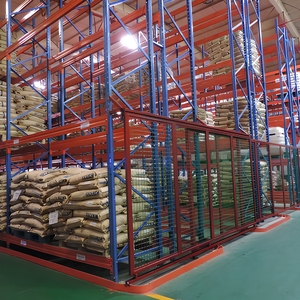
- Resistance: Galvanized & Coated
- Cold Storage: Rated down to -30°C
- Beam Locks: High-Strength Safety Pins
Engineering Comparison: Selecting Your Storage Architecture
Optimizing warehouse cubic volume requires balancing direct SKU accessibility, material handling equipment (MHE) cycle time, floor load density, and capital investment.
| Racking Topology | Flow Mechanism | Volumetric Efficiency | Direct Accessibility | Dominant Use Case |
|---|---|---|---|---|
| Selective Pallet Racking | Direct Access | 40% – 50% | 100% Instant Access | FMCG, 3PL logistics, dynamic SKU distribution, low-density retail stores. |
| Drive-In / Drive-Through | LIFO / FILO (FIFO option) | 65% – 75% | Restricted Access | Cold storage, raw material bulk staging, seasonal inventory buffer. |
| Radio Pallet Shuttle | Automated FIFO / LIFO | 80% – 88% | Channel Automated | Deep-lane high-throughput, cold store freezers, beverage bottling plants. |
| Heavy-Duty Cantilever | Non-Pallet Direct Access | Variable Linear | 100% Clear Access | Extruded aluminum, timber lumber, structural pipes, conduit, bar stock. |
| Automated AS/RS High-Bay | System Directed (Stow/Crane) | 90% – 95% | 100% via Crane Cycle | 24/7 automated fulfillment, heights up to 40m, high land-cost hubs. |
Structural Engineer's Recommendation on Flue Space & Fire Safety
Under NFPA 13 regulations and local fire authority mandates, multi-row pallet racks must maintain continuous longitudinal (back-to-back) and transverse (bay-to-bay) flue spaces of at least 6 inches (152 mm). Incorporating rigid rack backstops and precision pallet stops during the structural engineering phase prevents carton intrusion into the vertical flue, ensuring effective in-rack sprinkler operation and mitigating building code non-compliance delays during local permitting.
Procurement & Engineering Trends Reshaping Industrial Storage (2025–2030)
B2B industrial procurement directors and global EPC warehouse contractors face evolving compliance mandates, robotic integration pressures, and raw material volatility.
1. Convergence of AMR & Racking Tolerances
Autonomous Mobile Robots (AMRs) and automated fork trucks require racking manufacturing tolerances tighter than ±1.0 mm across plumb line and level beam spans. Exporters must utilize laser-calibrated roll-forming lines to prevent automated sensor aborts during robotic bin extractions.
2. Cold-Chain & Ultra-Low Temp Storage Surge
Global vaccine distribution and rapid cold-chain grocery fulfillment have driven immense demand for racks certified down to -30°C. Standard carbon steels suffer from low-temperature embrittlement; leading wholesalers specify micro-alloyed steel formulated with impact toughness at sub-zero temperatures.
3. Rigorous Seismic Certification (IBC / UBC)
Permit offices across North America, Australasia, and seismic-active global logistics zones enforce stringent IBC seismic coefficients. Procurement managers require FEA (Finite Element Analysis) stress simulations, high-ductility baseplate configurations, and pre-stamped Professional Engineer (PE) documentation.
Advanced Manufacturing: The Metallurgy Behind Industrial Durability
A racking structure is an engineered load-bearing asset. Our automated continuous roll-forming mills, robotic CO2 shielded welding, and thermo-hardened electrostatic powder finishing lines deliver unmatched longevity.
Continuous CNC Roll-Forming Lines
Our upright columns feature cold-formed profiles with multi-bend ribs, providing elevated section modulus (Wx) and torsional stiffness without adding unnecessary dead weight. High-speed CNC punching ensures pinpoint pitch accuracy for 50 mm, 75 mm, and 76.2 mm teardrop beam connections.
Interlocking Connector Hooks & Safety Pins
Welded beam connectors integrate heavy-duty 3, 4, or 5-claw interlocking hooks stamped from high-strength plate steel. Every beam connection utilizes an engineered spring-steel lock pin, resisting up to 1,000 kg of accidental upwards displacement caused by forklift driver mishandling.
High-Adhesion Corrosion Pre-treatment
Steel profiles undergo an automated 7-stage surface preparation line incorporating alkaline degreasing, zinc phosphate passivation, and high-purity water rinses prior to electrostatic powder deposition, achieving 1,000+ hours in ASTM B117 salt spray testing without film delamination.
Why Tier-1 System Integrators & Wholesalers Partner With Us
Combining European engineering excellence, dedicated North American branch support, and massive factory production throughput to support complex industrial installations.
Dedicated Account, PM & Installation Teams
Every industrial project is assigned a tri-tier management team consisting of an Account Manager, a Senior Project Engineer, and an Installation Superintendent. You enjoy unified single-source accountability from initial layout consultation through final seismic sign-off.
72-Hour Rapid Smart Range Stock Dispatch
For standard warehouse components, selective uprights, and universal teardrop beams, our regional stock centers maintain complete Smart Range inventories ready to ship within 72 hours, protecting dealers from costly client project downtime.
Turnkey Automation Integrator Compatibility
Our structures interface seamlessly with leading global AS/RS crane suppliers and automated handling integrators (including Witron, Knapp, Vanderlande, and TGW). We engineer beam deflective tolerances within strict L/500 thresholds under maximum working load.
Container Export Optimization & Bundling
Exporting structural steel demands rigorous logistics planning. We pack upright frames in nested steel bundles with protective dunnage, optimize 40ft High Cube container cube volume to 98% utilization, and deliver pre-sorted installation hardware directly to site docks.
Proprietary CSA Engineering Configuration Tool
Our approved resellers utilize automated CSA software tools to rapidly model upright buckling limits, floor anchor shearing capacities, and beam deflections based on real-time site coordinates, producing permit-ready BOMs and structural documentation within hours.
Frequently Asked Questions by Industrial Storage Buyers & Wholesalers
Authoritative technical answers to common queries regarding pallet rack design, safety certifications, seismic anchoring, and export logistics.
Q: Which standards govern rack design for U.S. and Canadian projects?
In the United States, structural rack engineering is governed by ANSI MH16.1 ("Specification for the Design, Testing and Utilization of Industrial Steel Storage Racks"), developed by the Rack Manufacturers Institute (RMI) and referenced directly in the International Building Code (IBC). In Canada, storage racks are engineered and certified under the CSA A344 series standard. Our engineering team supplies project-specific structural calculations and PE-stamped drawings fully compliant with these national codes and local AHJ (Authority Having Jurisdiction) requirements.
Q: How is the maximum permissible beam deflection calculated under maximum safe working load?
Under both RMI and European FEM 10.2.02 codes, the maximum vertical elastic deflection of a loaded rack beam must not exceed L/180 of the clear span length for conventional forklift-operated selective racking (e.g., a 2,700 mm beam is limited to 15.0 mm maximum deflection). For automated AS/RS applications and automated shuttle systems, deflection is restricted to tighter limits of L/300 or L/500 to guarantee optical sensor alignment and crane gripper safety.
Q: What is the functional difference between roll-formed and structural steel racking?
Roll-formed racking is fabricated from high-yield cold-rolled steel coils, offering economical modularity, adjustable clip-in beams, and fast installation, making it the dominant choice for FMCG warehouses, e-commerce centers, and general 3PL operations. Structural steel racking is hot-rolled using structural C-channels with bolted connections, offering significantly higher impact resistance against heavy forklifts—ideal for brutal industrial settings, lumber yards, food freezers, and heavy manufacturing.
Q: What warehouse information is required to generate a formal quote and structural CAD layout?
To produce an engineered proposal and optimized floor layout, please provide: (1) Architectural CAD or PDF layout showing column grid spacing, usable clear height, overhead obstacles, and dock doors; (2) Pallet dimensions (Length × Width × Height including load overhand) and gross maximum weight; (3) Pallet style (GMA 48x40, CHEP, Euro, or custom skid); (4) MHE forklift specifications (reach truck, counterbalance, VNA) and turning radius; and (5) Site zip code for local seismic and wind data calculations.
Q: How do you prevent corrosion and premature steel degradation in sub-zero cold storage facilities?
Cold storage freezers (-25°C to -30°C) generate condensation and ice cycling during defrost operations. We mitigate corrosion through continuous hot-dip galvanizing (complying with ASTM A123 / ISO 1461 with minimum 60–85 μm zinc thickness) on frame uprights, or specialized heavy-duty thermosetting polyester powder coatings applied over iron-free zinc phosphating pre-treatments, maintaining structural integrity across decades of thermal cycling.
Q: How are overseas container shipments packaged to eliminate damage during ocean freight transit?
Heavy steel components are vulnerable to shifting and bending in maritime transport. Our export bundling protocols include: cross-stacked frame nesting separated by heavy vulcanized dunnage strips, heavy-gauge steel strapping with edge corner protectors, and shrink-wrapped moisture barriers. Small components, footplates, safety pins, and anchor bolts are crated in labeled fumigated wooden boxes (ISPM-15 compliant) with barcode packing slips matching project assembly blueprints.
Transform Your Warehouse Volume Into an Engineered Asset
Whether you require a full turnkey automated high-bay installation, factory-direct container shipments for bulk distributor stock, or certified structural calculations for upcoming municipal permits, our structural engineering team is ready to assist.