Certified Factory-Direct Industrial Storage Systems
Manufactured to strict structural tolerances, supporting international seismic classifications, automated handling integration, and multi-deep pallet operations.
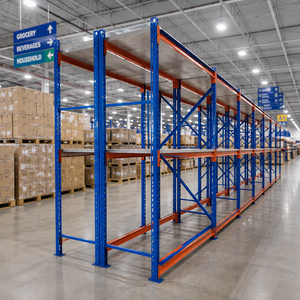
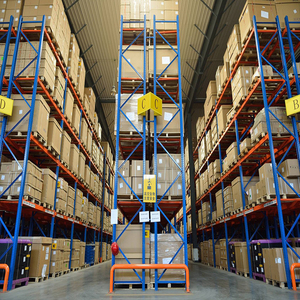
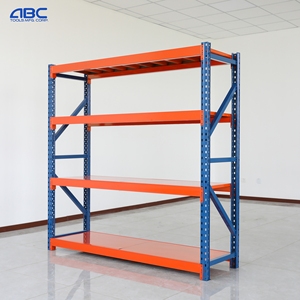
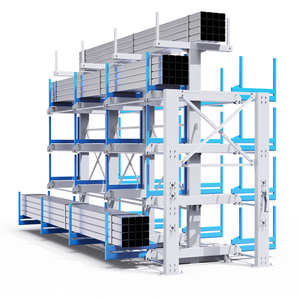
1. The Mechanical Architecture of Push Back Racking Systems
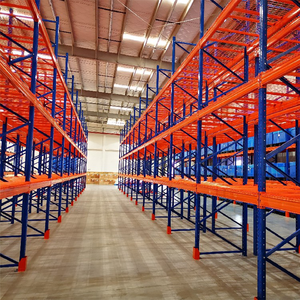
Modern logistics real estate commands unprecedented capital premiums, compelling warehouse directors, supply chain VPs, and intralogistics architects to extract optimum volumetric density from cubic warehouse footprints. In this context, Push Back Racking Systems represent an engineering apex in high-density Last-In, First-Out (LIFO) material handling. Operating on an inclined nested carriage architecture or heavy-duty steel roller bed principle, push back racks provide storage depths ranging from 2 to 6 pallets deep per lane while retaining independent operational accessibility for every vertical level.
Unlike drive-in racking topologies—where forklift operators must physically negotiate narrow rack upright channels, introducing cumulative mast impact hazards and structural fatigue risks—push back racking confines forklift transit entirely to external access aisles. When loading, the forklift places the initial pallet onto the uppermost nested steel cart. As the subsequent pallet arrives, the forklift mast pushes the first unit back along precision-inclined structural steel channels, exposing the secondary nested cart. During unloading, gravitational kinetic energy gently glides subsequent pallets forward to the pick face at a engineered velocity controlled by mechanical speed dampeners, hydraulic braking stops, and fail-safe safety catches.
Leading global manufacturers utilize high-tensile structural steel profiles (ASTM A572 Grade 50 or European EN 10025 S355JR equivalents), ensuring that cart wheel assemblies, ball bearings, and welded chassis withstand dynamic wheel loadings exceeding 3,000 lbs (1,360 kg) per pallet position under continuous multi-shift distribution cycles.
| Storage Topology | Volumetric Density | SKU Selectivity | Forklift Cycle Time | Structural Damage Risk |
|---|---|---|---|---|
| Push Back Racking (Nested Cart) | High (Up to 85% footprint utilization) | Level-by-Level Direct Access (LIFO) | Fast (Aisle-confined operations) | Low (Zero upright channel entry) |
| Drive-In / Drive-Thru | Very High (Up to 90% footprint utilization) | Low (Full bay tied to single SKU) | Slow (Deep tunnel driving required) | High (Frequent upright truck collisions) |
| Selective Pallet Racking | Low to Moderate (Aisles consume 50-60%) | 100% Immediate Selectivity | Moderate (Extensive aisle travel) | Low to Moderate |
| Dynamic Gravity Pallet Flow | Very High (FIFO flow) | Lane-by-Lane First-In, First-Out | Fast (Dedicated load & unload aisles) | Low |
2. Technological Shifts & Future Procurement Trends in Push Back Manufacturing
The global intralogistics capital equipment market is undergoing structural changes driven by e-commerce surge fulfillment, cold-chain energy escalation, and automation convergence. Procurement officers evaluating push back factory partners in North America, Western Europe, and Asia-Pacific must align specifications with four macro trends:
Low-Profile High-Clearance Cart Geometries
Traditional nested push-back carriages occupied up to 6–8 inches of vertical beam elevation per level, sacrificing crucial clear vertical height. Modern factories fabricate ultra-slim, cold-formed low-profile multi-level nested carts with staggered axles, recovering up to 12 inches of total vertical clearance across a 4-high system and unlocking an extra horizontal beam tier.
Sub-Zero & Blast Freezer Metallurgical Formulations
Cold storage facilities incur massive operational kilowatt expenses per cubic meter. Modern push back procurement trends favor specialized low-temperature metallurgical alloys and polyurethane cart wheels with permanently lubricated cryogenic bearings engineered to operate flawlessly at -30°C without mechanical seizing.
AGV & AMR Pallet Interface Compatibility
While push back racking has historically been forklift-dependent, next-generation manufacturing specifications incorporate optical sensor-friendly centering guides, front-stop laser alignment targets, and tapered cart ramps to interface seamlessly with heavy Autonomous Mobile Robots (AMRs) and automated counterbalanced AGVs.
Digital Structural Health Monitoring (IoT Embedded)
Tier-1 exporters are embedding piezoelectric strain sensors and wireless impact telemetry nodes within critical frame baseplates and cart landing bumpers. Facility managers receive real-time structural overload alerts and collision telemetry directly onto their enterprise WMS dashboards.
Surface Engineering: Eco-Hot Galvanizing vs. Polymer Hybrids
Standard solvent coatings are being phased out. Enterprise procurement contracts mandate heavy hot-dip galvanization conforming to ASTM A123 or high-durability electrostatic thermoset antimicrobial powder coatings for food, pharmaceutical, and high-humidity supply chain hubs.
Standardized 'Smart Range' Rapid Deployment
Lead times of 16 to 24 weeks are unviable in high-velocity 3PL tenant turns. Leading exporters deploy modularized 'Smart Range' pre-engineered carriage modules that configure instantly via automated CSA layout software, shipping standard 2-deep to 5-deep bays in rapid turnarounds.
3. Why Industry Leaders Partner With Our Global Export Group
Rooted in European structural racking precision and tailored for comprehensive North American and global operating mandates, our factory and engineering group delivers an unbroken accountability continuum from site slab analysis to final municipal permit handover.
Full RMI ANSI MH16.1 & CSA A344 Compliance
All load-bearing uprights, nested carriages, and bolted cross-ties are engineered per ANSI MH16.1 (U.S.) and CSA A344 (Canada) standards. Calculations include local seismic zone acceleration mapping (IBC / ASCE 7) to guarantee smooth municipal building permit approvals.
Dedicated 3-Expert Accountability Team
Every industrial project is overseen by three assigned professionals: an Account Manager, Project Engineer, and On-Site Installation Field Director. Responsibility never fractures across third-party subcontractors or freight brokers.
Automated Systems Integrator Synergy
Our heavy structures interface seamlessly with high-throughput material handling technologies engineered by top-tier global integrators including Witron, Knapp, TGW, and Vanderlande—enabling hybrid manual/automated staging centers.
Smart Range Rapid Turnaround Program
For standard 48" x 40" GMA pallets, CHEP units, and Euro pallets, our proprietary CSA calculation tool generates pre-engineered configurations from verified component stock, unlocking rapid dispatch in as fast as 72 hours.
Heavy Structural Steel Cart Fabrication
Unlike light sheet-metal stampings that warp under irregular pallet loading, our push-back carts utilize continuously seam-welded hollow structural steel sections with multi-bearing steel rollers and machined side-thrust guide wheels.
Global Export & Regional Branch Logistics
With operational hubs across North America, Europe, and Southeast Asia (including comprehensive delivery servicing the United States, Canada, Thailand, Malaysia, and Brunei), we manage turnkey international freight, sea container staging, and customs clearance.
4. Frequently Asked Questions: B2B Engineering & Export Verification
Authoritative answers compiled by structural rack engineers for procurement committees, project managers, and logistics facility executives.
What structural parameters dictate whether a 2-deep, 4-deep, or 6-deep push back system is optimal?
The decision hinges upon your warehouse's SKU velocity profile, total pallet count per SKU, and building clear ceiling height. As an engineering baseline, push back racking operates best when an operation maintains 4 to 8 pallets per distinct SKU. If an SKU has only 2 pallets, deep lanes cause honeycombing (inaccessible empty spaces). Mechanically, 2-deep to 5-deep designs use nested steel carts on a graduated incline (~1.5% to 2.5% slope). At 6-deep depths, dynamic roller bed systems (full-width flow tracks) are frequently selected over nested carts to minimize the mechanical stack height at the pick face and lower the pushing resistance forced onto the forklift mast.
How does push back racking achieve compliance with NFPA 13 sprinkler and fire safety standards?
High-density push back systems alter continuous internal flue spaces. Under NFPA 13 regulations, warehouses storing Class I through IV commodities and Group A plastics require distinct longitudinal and transverse flue spaces (typically 3 to 6 inches) to allow thermal updrafts to rapidly activate ceiling sprinkler heads and facilitate downward water penetration. Our engineering team designs push back nested carts with engineered pallet-stop spacers and integrated carriage flues. When total building heights or ceiling sprinkler density mandates require it, we design dedicated horizontal and vertical in-rack sprinkler channels integrated directly into the structural frame uprights and cart clearance levels.
What floor slab tolerances and anchor engineering are required for heavy push-back installations?
Push back racks concentrate enormous dynamic and static point loads into the concrete floor slab due to the multi-deep lane capacity combined with multiple beam levels. Typically, a concrete floor slab thickness of 6 to 8 inches with minimum 3,500–4,000 PSI compressive strength is necessary. Furthermore, because forklift drivers apply horizontal thrust forces when pushing subsequent pallets up the inclined cart rails, baseplates must be designed with oversized anchor bolt patterns (typically 1/2" to 3/4" heavy-duty wedge anchors) to resist combined moment, shear, and uplift forces per ACI 318 Appendix D anchor specifications.
Can push back systems handle non-standard, plastic, or defective wooden pallets safely?
Nested push back carts provide significant safety advantages over conventional open-beam pallet racks and drive-in rails. Because each pallet rests squarely on its own dedicated, structural steel cart frame with welded support cross-members, broken bottom pallet boards or flexible plastic pallets cannot slip between beam channels. However, the factory must be supplied with the exact pallet envelope: GMA 48"x40", CHEP block pallets, plastic perimeter base skids, or Euro pallets (1200x800mm), ensuring the cart wheelbase, outer retaining lips, and entry guide horns are laser-aligned to eliminate cart derailment risks.
What is the typical manufacturing lead time, container export packaging, and on-site assembly duration?
Standard custom-engineered push back projects typically have a factory manufacturing window of 6 to 9 weeks, while standardized Smart Range systems can dispatch in as short as 72 hours. All components are bundle-banded with high-tensile steel strapping, timber dunnage blocks, and moisture-resistant polyethylene shrink-wrap for ocean transits (FCL 40ft High Cube containers). Carriages are shipped pre-assembled with bearings factory-seated and leveled, drastically slashing on-site field assembly time to approximately 1 to 2 weeks for a medium-scale distribution center installation.
Ready to Optimize Your Warehouse Volumetric Capacity?
Submit your CAD building layout, pallet load profiles, and target throughput metrics. Our structural storage engineering department will furnish you with a complete capacity simulation, layout schematic, and factory-direct price quotation.