Enterprise Fleet Systems
Precision-Engineered Heavy Duty Storage Solutions
Explore our turnkey, certified industrial storage racks tailored for extreme load-bearing, cold-chain environments, automated shuttle fleets, and selective picking logistics hubs.
Strategic Procurement Analysis
Engineering Density, Resilience, and High-Throughput Intralogistics
In modern supply chain infrastructures, warehouse storage shelving systems have evolved beyond static metal frames into highly calculated structural assets. Procurement directors, distribution engineers, and enterprise wholesalers operating in North America, Europe, and Asia-Pacific face tightening margins, escalating industrial real estate costs per square foot, and severe labor shortages. The strategic deployment of industrial warehouse racking directly dictates fulfillment velocity, cubic volume utilization, operator life safety, and compatibility with next-generation Autonomous Mobile Robots (AMRs) and Automated Storage and Retrieval Systems (AS/RS).
Selecting an authoritative manufacturer and tier-1 wholesaler requires assessing structural steel ductility, weld fatigue endurance, seismic resistance profiles under IBC (International Building Code), and precise deflection limits. Whether configuring selective pallet frameworks, high-turnover dynamic carton flow setups, or specialized heavy-duty cantilever racks for awkward profiles, high-performance intralogistics demands rigorous mechanical optimization from day one.
"Procurement failure in industrial storage systems rarely stems from raw steel failure—it stems from uncalculated seismic baseplate interaction, improper flue space coordination under NFPA 13 sprinkler guidelines, and tolerances too loose for robotic navigation." — Senior Structural Logistics Specialist
Future Procurement Trends: What Global Supply Chain Leaders Prioritize
As logistics hubs transition from manual lift-truck operation to hybrid and lights-out automated execution, procurement guidelines are experiencing fundamental paradigm shifts:
AS/RS & AMR Deflection Tolerance
Modern AS/RS stacker cranes and picking bots require steel deflection ratios tighter than 1/500th of span under full dynamic load. Wholesalers now mandate mill-certified structural Q235B and high-yield cold-rolled steel to prevent guide-rail jamming.
Seismic Micro-Zoning Calculations
Standard off-the-shelf racking cannot fulfill localized North American and European seismic compliance. Enterprise buyers expect customized finite element analysis (FEA) modeling seismic spectral response acceleration (Ss and S1 parameters).
Rapid-Config Modular Smart Ranges
To hedge fluctuating project schedules, distributors rely on pre-engineered 'Smart Ranges' covering CHEP, GMA 48x40-inch, and Euro pallet profiles, guaranteeing dispatch inside 72 hours through specialized regional wholesale channels.
Technological Evolution: From Static Cold-Rolled Steel to Intelligent Logistics Grids
Historically, industrial shelving functioned purely as passive steel framework designed to keep heavy inventory off concrete slabs. Today, heavy duty warehouse pallet racks represent active kinetic nodes within the digital supply chain. Integrated radio shuttle carts navigate deep-lane drive-in racking using infrared distance measurement, accelerating inventory turnover while eliminating forklift mast collisions inside the rack structure.
Furthermore, surface engineering has advanced significantly. Standard industrial paint coatings succumb to rapid chipping, moisture penetration, and galvanic corrosion in cold storage or coastal distribution hubs. Industry-leading suppliers have instituted electrostatically cured multi-stage thermoset polyester powder coating along with continuous hot-dip galvanization (HDG). These treatments prevent corrosion degradation across temperature differentials from -30°C cold storage to humid ambient climates.
Safety systems have simultaneously modernized. Modern warehouse selective pallet systems utilize laser-cut interlocking drop-in connectors with automatic spring locking pins, reinforced column base plates, and omega-profile cold-formed uprights that disperse concentrated vehicular impact forces away from load-bearing upright axes.
| Storage Architecture | Flow Principle | Volumetric Efficiency | Forklift / Robot Interface | Ideal SKU Profile |
|---|---|---|---|---|
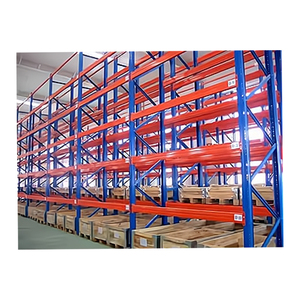
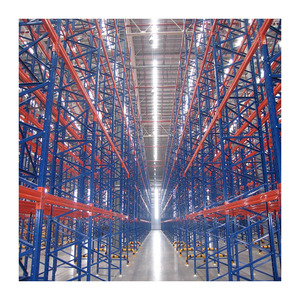
| Selective Pallet Racking | 100% Direct Access | Moderate (40-50%) | Counterbalance, Reach Trucks | High SKU variety, fast-moving consumer items |
| Pallet Shuttle Systems | FIFO or LIFO | Extremely High (85%+) | Automated Kinetic Shuttle Carts | Food & Beverage, cold storage, bulk lots |
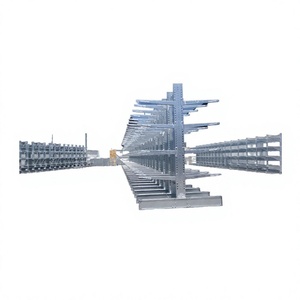
| Heavy Duty Cantilever | Continuous Linear | Custom Geometric | Side Loaders, Multi-Directional Lifts | Pipes, structural timber, steel extrusions |
| Automated Miniload & Roborack | System Directed | Maximum Vertical Density | Stacker Cranes, Autonomous Robots | Small components, e-commerce totes, MRO |
| Gravity Pallet Flow Racks | Strict FIFO | High (70-80%) | Gravity Roller Tracks (Self-braking) | Perishable items, date-sensitive pharmaceuticals |
Enterprise Manufacturing Authority
Why Tier-1 3PLs and Wholesalers Depend On Our Infrastructure
Combining European engineering rigor with North American operational execution to deliver structural systems that lower total cost of ownership (TCO).
Dedicated Triad Project Management
Every commercial client and distributor is supported by a dedicated triad: an Account Manager, Project Manager, and Installation Manager, ensuring clear technical accountability from initial CAD design to certified installation inspection.
Integrated Ecosystem Compatibility
Our heavy-duty steel structures integrate seamlessly with automation equipment from Witron, Knapp, TGW, and Vanderlande, delivering verified tolerances for stacker crane guide rails, shuttle tracks, and sensor targets.
Standardized Reseller 'Smart Range'
For material handling distributors servicing standard GMA 48x40, CHEP, and block pallets, our CSA Configurator Tool automatically models load parameters, guaranteeing 72-hour dispatch for standardized profiles.
Transform Your Facility's Cubic Capacity Today
Send our structural logistics team your building CAD layouts, clear heights, pallet metrics, and throughput goals. We engineer turnkey systems compliant with local building authorities and fire codes.
Inquire Now
Direct Engineering Guidance
Frequently Asked Questions on Storage Racking Procurement
Straightforward answers regarding structural calculations, code certifications, dynamic automation interfaces, and wholesale supply chain timelines.
What international building and fire codes govern industrial warehouse storage rack installations?
In North America, industrial steel storage racks are governed primarily by ANSI MH16.1 (promoted by the Rack Manufacturers Institute - RMI), the International Building Code (IBC), and CSA A344 in Canada. In the European Union, the design standard is EN 15512, alongside EN 15620 for automated tolerances. Critical to municipal approval is compliance with NFPA 13 regulations regarding transverse and longitudinal flue spaces (typically 3" to 6" clearance) to enable unobstructed sprinkler water penetration down to the lowest storage tiers during a thermal event.
How do you calculate the correct beam size, frame depth, and upright gauge for a pallet racking bay?
Bay calculation starts with the unit load. For example, two standard 48" wide × 40" deep GMA pallets weighing 2,500 lbs each demand a 96" beam clear span supporting at least 5,000 lbs per pair with a maximum vertical deflection of L/180 (span divided by 180). Frame depth is typically engineered at 42" to give pallets a 3" overhang front and back on the beams for safe seating. Frame height and steel upright thickness (from 14-gauge up to 10-gauge structural hot-rolled sections) are calculated based on unbraced vertical beam spacing, total bay cumulative weight, and local seismic acceleration values.
What is the functional difference between FIFO and LIFO pallet storage architectures?
FIFO (First In, First Out) guarantees that the earliest inventory put into the system is picked first. This is critical for date-sensitive items, perishable cold storage, dairy, food distribution, and pharmaceuticals. Dynamic Gravity Pallet Flow Racks and FIFO-configured Pallet Shuttle systems enforce this. LIFO (Last In, First Out), also termed FILO (First In, Last Out), is common in standard Drive-In racking and Push-Back configurations where homogenous products with no expiration constraints (such as construction materials, raw plastics, or metal castings) can be accumulated in high-density blocks without requiring dedicated rear unloading aisles.
Can your heavy duty racking frameworks be retrofitted with Autonomous Mobile Robots (AMRs) and AS/RS?
Yes. Many modern distribution centers utilize our high-bay selective, miniload, and open-face frame structures specifically integrated with robotic systems from integrators like Witron, Knapp, and Vanderlande. When engineering for automated systems, tolerances for column perpendicularity, beam leveling, and floor expansion anchor joints are maintained at sub-millimeter precision, exceeding standard manual forklift allowances to prevent machine vision errors and shuttle guide-rail binding.
What information must a warehouse facility manager provide to request an engineered quote?
To rapidly generate an accurate structural layout and code-compliant quotation, our engineering team requires:
1. Architectural CAD or dimensioned PDF floor plans showing building columns, dock doors, electrical rooms, and egress corridors;
2. Clear building height to underside of bar joists or fire sprinkler heads;
3. Concrete slab thickness, compressive strength (PSI), and rebar specifications;
4. Pallet or carton exact dimensions (Width × Depth × Height) including load overhang and maximum gross weight;
5. Environmental variables (such as ambient dry, blast freezer, or outdoor weather-exposed conditions).