Engineered Structural Storage & Heavy-Duty Platform Systems
Direct factory fabrication, precision Q235B/Q355B structural steel engineering, and modular versatility designed to support integrated multi-level mezzanine installations across Querétaro’s primary industrial parks.
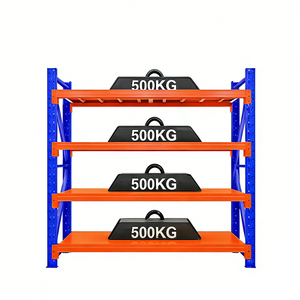 Heavy Duty
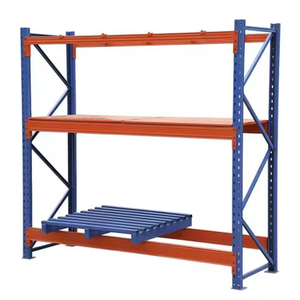
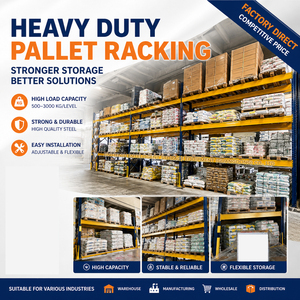 MRO Tooling
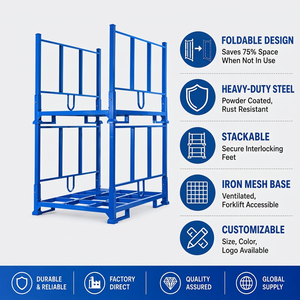 Modular Stack
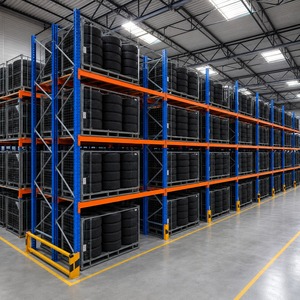 Porta Paletes
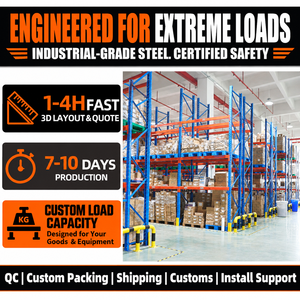 High Density
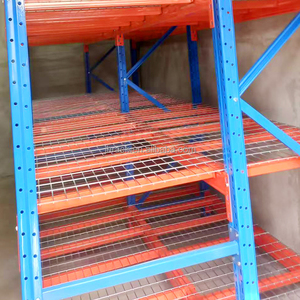 Safety Mesh
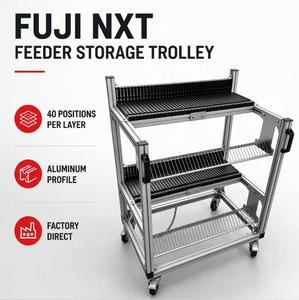
The Querétaro Industrial Landscape: Vertical Scaling in the Nearshoring Era
As the undisputed engine of Mexico’s Bajío manufacturing crescent, the State of Querétaro—anchored by dense industrial clusters in El Marqués, Bernardo Quintana, Parque Industrial Querétaro (PIQ), and the Colón aerospace corridor—faces unprecedented land absorption. Fueled by North American nearshoring, automotive electrification (EV transitions), and aerospace assembly lines, Class-A industrial real estate vacancy rates have dipped below 1.8%, driving lease rates upward to record levels of $6.80 to $8.20 USD per square meter monthly.
For operations managers, warehouse directors, and supply chain vice presidents operating along Federal Highway 57 (the backbone of USMCA freight transit), expanding horizontal footprints has become economically prohibitive or physically impossible. Relocating a live manufacturing cell or expanding warehouse footprint entails lengthy municipal permits, capital-draining lease covenants, and supply chain disruptions.
The definitive solution engineered by leading Chinese structural mezzanine manufacturers is vertical cubic densification. By utilizing internal clear heights ranging from 8.5 to 14 meters typical in modern Bajío industrial buildings (naves industriales), our structural steel mezzanine floors and rack-supported multi-tier platforms convert underutilized headroom into robust, revenue-generating square footage—effectively doubling or tripling facility throughput without adding one cent to the facility's real estate lease footprint.
Architectural Typologies: Structural Steel vs. Rack-Supported Mezzanines
Selecting the correct mezzanine topology depends directly on SKU velocity, floor slab load ratings, material handling equipment (MHE) integration, and structural deflection requirements.
1. Heavy-Duty Structural Steel Mezzanines (Wide-Span)
Constructed utilizing hot-rolled H-beams (Q355B / ASTM A572 Grade 50 equivalent) for main girders and secondary cold-formed C/Z purlins. This structural steel platform provides wide, unrestricted column grids (spans from 6.0m up to 12.0m) on the ground floor. It allows uninterrupted movement of reach trucks, automated guided vehicles (AGVs), and production assembly lines beneath the deck, while the upper platform comfortably supports uniformly distributed live loads (UDL) up to 1,500 kg/m². Perfect for secondary cleanrooms, robotic sorting cells, and corporate supervisory suites.
2. Rack-Supported Multi-Tier Mezzanine Systems
Engineered directly from heavy-duty selective uprights and box beams (Q235B high-tensile cold-rolled steel). Rather than independent structural columns, the racking itself serves as the vertical load-bearing sub-structure. Multi-tier cat-walks, stair towers, and pallet drop gates are integrated at elevations of +2,800mm and +5,600mm. This configuration reduces structural steel consumption by 28% to 35%, delivering the most economical cost-per-pick-face for manual order fulfillment, automotive small-parts picking, and e-commerce tote consolidation.
| System Parameter | Structural Steel Platform (Wide-Span) | Rack-Supported Multi-Tier System | Shelving-Supported Catwalk Floor |
|---|---|---|---|
| Primary Steel Alloys | Q355B (Hot-Rolled I/H Beams) / Q235B Purlins | Q235B Cold-Formed High Tensile Steel | Q235B Formed Sheet Steel Uprights |
| Live Load Capacity (UDL) | 500 – 1,500+ kg/m² (Configurable) | 300 – 800 kg/m² per floor level | 250 – 450 kg/m² walkway load |
| Clear Span Between Columns | Large (6.0m to 12.0m unobstructed) | Constrained by pallet beam bays (2.3m – 3.6m) | Narrow aisle pitch (1.0m – 1.4m) |
| Decking Surface Types | Steel Grating, Checkered Plate, B-Deck + Concrete | Perforated Steel Planks, Anti-Skid Ribbed Steel | Galvanized Solid Steel, Particle Board + Melamine |
| NFPA 13 Fire Sprinkler Permeability | 50%–70% open grating options available | Perforated safety panels satisfy drainage | Open-mesh stair & walkway compliance |
| Primary Mexican Industry Fit | Aerospace sub-assembly, cleanrooms, heavy MRO | Automotive Tier-1 & Tier-2 sub-components | E-commerce, apparel, electronics spares |
Engineered Local Applications in Querétaro's Manufacturing Corridor
How our mezzanine and racking systems integrate into the production lifecycles of Querétaro’s high-precision manufacturing sub-sectors.
Automotive Tier-1 & Tier-2 JIT Sequencing
In complexes like Parque Industrial Querétaro (PIQ) and Parque Industrial Bernardo Quintana, automotive component manufacturers (braking systems, wiring harnesses, interior dashboards) must maintain just-in-time (JIT) sequencing buffers. Installing our rack-supported mezzanines directly above pallet docks allows ground-level line sequencing carts, while overhead mezzanine levels store buffer inventory, mold tooling, and SMT circuit feeder components using dedicated FUJI NXT SMT Feeder Storage Racks.
Aerospace Component Tooling & MRO
Surrounding the Aeropuerto Intercontinental de Querétaro (AIQ) and the Aerotech Industrial Park, aerospace OEMs require zero-vibration, high-rigidity structural mezzanines for turbine component testing, carbon fiber pre-preg storage, and delicate calibration laboratories. Our Q355B hot-rolled structural steel floors with heavy concrete deck finishes isolate sensitive measuring instruments from ground-level forklift vibration, delivering deflections under L/480.
3PL Cold Chain & Cross-Dock Logistics
Facilities located in El Marqués and along Highway 57 managing food-grade and pharmaceutical storage deploy our heavy-duty selective and push-back pallet racks equipped with waterfall wire mesh decking. Integrating multi-tier catwalks provides high-density carton picking without sacrificing thermal efficiency. The open-mesh design ensures uniform chilled airflow from industrial HVAC/cooling blowers while meeting strict insurance standards.
Engineering Compliance: Mexican Seismic & Structural Codes
Designing safe steel structures in central Mexico requires rigorous engineering adherence to local seismic microzonation and industrial labor safety standards.
A warehouse mezzanine floor is a structural civil engineering asset, not mere interior furniture. In Querétaro, structural engineering must address unique geological and seismic parameters. While Querétaro is designated primarily as Seismic Zone A and Zone B (low-to-moderate hazard under the CFE Manual de Diseño de Obras Civiles - MDOC), proximity to regional tectonic intraplate fault lines and varying soil bedrock capacities in El Marqués require rigorous finite-element modeling.
CFE MDOC & NTC Alignment
Our structural engineering team produces fully verified calculations incorporating modal response spectrum analysis. We calibrate dynamic lateral drift limits and anchor bolt shear resistance according to the Normas Técnicas Complementarias (NTC), ensuring structural integrity during dynamic seismic events.
NOM-006-STPS & NOM-002-STPS
Compliance with Mexico’s Secretariat of Labor regulations: NOM-006-STPS-2014 (materials handling safety) and NOM-002-STPS-2010 (fire protection). Mezzanine handrails feature 1,100mm top rails with integrated 150mm kick plates (toeboards), slip-resistant stair treads, and 50% open area grating for automated in-rack fire sprinkler penetration.
Concrete Slab Loading & Anchoring
Standard Bajío industrial slabs measure 150mm to 200mm thick with f'c = 250 to 300 kg/cm² compressive strength. We design enlarged base plates (up to 400x400x20mm) and engineered seismic chemical/expansion anchor arrays (Hilti/Simpson equivalent) to distribute point loads safely, preventing slab shear punch-through.
Direct Factory Advantages: Engineering Precision, Scale & Cost Control
Combining high-capacity automated Chinese steel fabrication with localized project execution across Querétaro.
30% to 45% Landed Cost Optimization
Procuring directly from our high-throughput manufacturing plants eliminates intermediate distributor markups common in Mexico City and Monterrey brokers. Even after factoring ocean container freight from Ningbo/Shanghai to the Port of Manzanillo or Lázaro Cárdenas, terminal handling, and inland bonded transit to Querétaro, our clients achieve verified capital expenditure savings exceeding 30% to 45% compared to regional domestic fabricators.
Certified High-Yield Steel (Q235B & Q355B)
Unlike small fabricators using non-certified local scrap melt, our raw materials are sourced from primary tier-1 steel mills with complete mill test certificates (MTCs). Our cold-formed uprights feature continuous automated roll-forming lines, computerized punch pressing with 0.1mm tolerance, and robotic welding cells that guarantee seam consistency and structural load ratings.
Turnkey BIM & CAD Design Integration
Every project begins with a 3D structural model developed in Tekla and Revit. We coordinate directly with your facility management team, mechanical engineers, and electrical contractors to eliminate spatial clashes with overhead crane rails, bus ducts, HVAC ducting, and building columns prior to steel fabrication.
Turnkey Shipping & Customs Cleared (DDP/CIF)
We provide comprehensive logistics support under Incoterms 2020 (FOB, CIF Manzanillo, or DDP Querétaro). Utilizing Mexico’s IMMEX, PROSEC, or Rule 8a (Regla Octava) import tariff programs, we assist your designated customs broker (Agente Aduanal) in ensuring seamless tariff classification and fast clearance through Mexican Aduanas.
Frequently Asked Questions by Querétaro Logistics Engineers
Clear, direct answers regarding structural engineering, cross-Pacific freight logistics, Mexican customs clearance, and on-site assembly.
What is the typical lead time from design approval to delivery in Querétaro?
Our standard turnaround schedule comprises three predictable phases: 1) Engineering & Fabrication: 15 to 25 calendar days for complete roll-forming, laser cutting, robotic welding, and powder coating. 2) Ocean Freight: 18 to 22 days transit time from Ningbo or Shanghai Port to the Port of Manzanillo or Lázaro Cárdenas. 3) Customs & Inland Haulage: 4 to 7 business days for customs clearance and direct flatbed/container transit via Highway 200/57 into your facility in Querétaro. Total door-to-door project turnaround typically spans 7 to 9 weeks, significantly faster than domestic Mexican steel fabricators facing regional supply backlogs.
How does Chinese Q235B and Q355B steel compare to North American ASTM standards?
Chinese Q235B structural carbon steel corresponds directly to ASTM A36 in mechanical yield strength (yield point ≥ 235 MPa, tensile strength 370–500 MPa), providing optimal ductility and fracture toughness for standard pallet racking and multi-tier uprights. High-strength Chinese Q355B low-alloy steel corresponds directly to ASTM A572 Grade 50 (yield strength ≥ 355 MPa, tensile strength 470–630 MPa). Q355B is utilized for primary structural mezzanine H-beams and long-span girders, ensuring exceptional load capacity while minimizing self-weight on the building's floor slab.
Do your mezzanine designs comply with Mexican safety standards (NOMs) and civil codes?
Yes. Every mezzanine platform engineered for the Mexican market complies with NOM-006-STPS-2014 (Workplace materials handling and storage safety conditions) and NOM-002-STPS-2010 (Fire prevention and protection). Calculations align with the Reglamento de Construcciones para el Estado de Querétaro and seismic parameters governed by the CFE Manual de Diseño de Obras Civiles. We provide detailed 3D anchor bolt layouts, structural deflection calculations (L/360 or L/480 criteria), and PE-stamped calculation dossiers ready for municipal review.
Which flooring surface is best suited for our Querétaro warehouse operations?
We provide four distinct deck configurations tailored to operational requirements:
1) Welded Heavy Steel Bar Grating: Ideal when facility fire codes mandate maximum sprinkler water penetration (open area ≥ 50%) and natural lighting transfer to the lower level.
2) Heavy-Duty Checkered / Diamond Steel Plate: Provides an ultra-durable, slip-resistant surface suited for heavy pallet cart rolling and harsh manufacturing environments.
3) Galvanized Perforated Steel Planks: Interlocking planks offering a non-combustible, smooth-rolling surface with high slip resistance.
4) B-Decking with Concrete Overpour: Delivers superior acoustic dampening, zero floor bounce, and maximum load rating for supervisory offices, laboratory testing rooms, or heavy machine installations.
Can we reconfigure, expand, or relocate the mezzanine system in the future?
Absolutely. Our mezzanine structures feature a 100% modular bolted assembly system with zero field welding required during installation. Connections utilize Grade 8.8 or Grade 10.9 high-tensile structural bolts. If your company expands to a larger industrial facility in El Marqués or moves along the NAFTA logistics corridor, the entire platform—columns, main beams, intermediate joists, decking panels, stair towers, and handrail systems—can be disassembled, transported, and reconfigured with zero loss in structural performance.
How is shipping arranged from China into Querétaro, and what about import tariffs?
We pack all structural elements into standard 40-foot High Cube (40HQ) containers using specialized steel skids, dunnage, and moisture-barrier shrink wrap to eliminate trans-Pacific transit damage. Containers discharge at the Pacific ports of Manzanillo or Lázaro Cárdenas, followed by rail intermodal or bonded truck freight into Querétaro. For Mexican manufacturing companies operating under IMMEX or PROSEC programs, structural storage platforms and tooling racks frequently qualify for preferential tariff treatments. We coordinate packing lists, HS code classifications (Chapter 7308), and origin documentation to streamline customs clearance.
Transform Your Unused Overhead Clearance into High-Throughput Square Footage
Consult with our structural engineering team today. Send us your CAD layout, building clear height, and floor slab specifications to receive a complimentary 3D concept drawing, load analysis, and competitive direct-factory quotation for your Querétaro facility.