PNW Logistics Infrastructure Whitepaper

Galvanized Pallet Racking Suppliers & Exporters for the Portland Market

High-durability hot-dip galvanized & pre-galvanized storage racking systems custom engineered for Multnomah County, Columbia River maritime corridors, sub-zero cold chain facilities, and Pacific Northwest seismic zones.

Industrial Product Showcase

Engineered Heavy-Duty Storage Configurations for Portland & PNW Facilities

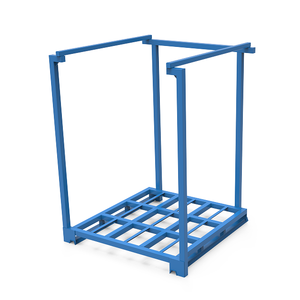
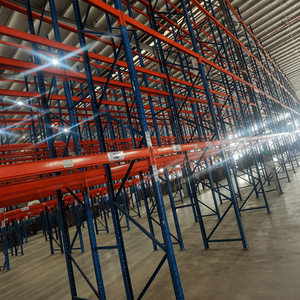
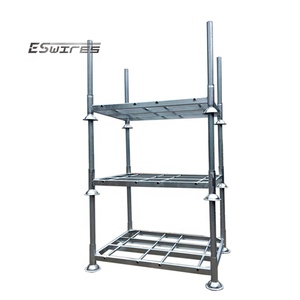
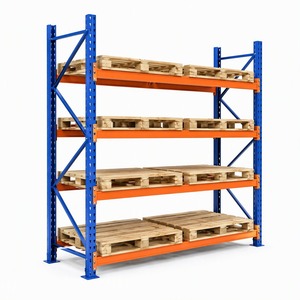
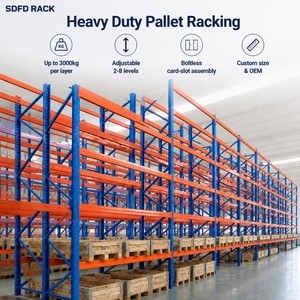
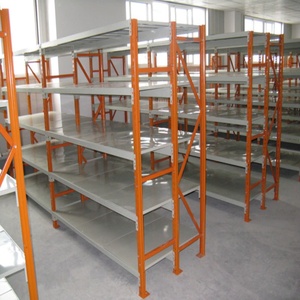
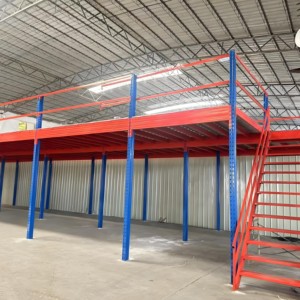
From anti-corrosive structural steel mezzanine lofts to high-density galvanized post stacking racks, explore our factory-tested storage systems engineered to ANSI MH16.1, RMI, and ISO 1461 galvanization standards.

100+

Global deep-water logistics hubs supplied annually across North America & West Coast ports.

72h

Rapid configuration & dispatch service available for standardized Smart Range stock components.

0.35g

Cascadia Subduction Zone seismic design parameter ratings engineered per IBC/OSHPD standards.

25Yrs

Corrosion protection lifecycle expectancy using HDG coatings in maritime river basin humidity.

Pacific Northwest Operational Realities

Why Galvanized Pallet Racking Dominates the Greater Portland Commercial Market

The Portland Metropolitan Area—anchoring key supply nodes such as Rivergate Industrial District, Swan Island, Gresham, Hillsboro, and Troutdale—operates under distinct logistical and environmental pressures. Positioned at the confluence of the Willamette and Columbia Rivers, warehouse operations contend with chronic atmospheric humidity, moisture tracking from frequent precipitation, and significant temperature shifts between river mist and dry summer heating.

Traditional powder-coated mild steel racks, while standard for indoor ambient dry-goods facilities, often succumb to accelerated micro-oxidation when installed in semi-open shipping docks, unconditioned dock bays, seafood and agricultural staging sheds, or high-humidity beverage packaging cellars. Once paint is scratched by forklift tines, creeping rust destabilizes the structural web of the upright.

Hot-Dip Galvanizing (HDG) provides complete metallurgical bonding (zinc-iron alloy layers conforming to ASTM A123 / ISO 1461), delivering self-healing anodic sacrificial protection. For Portland distributors, this guarantees uninterrupted service life, elimination of paint chipping hazards in USDA-inspected food environments, and total resistance to caustic sanitizers.

  • Port of Portland Maritime Staging: Weatherproof exterior storage racks capable of withstanding constant exposure along marine container terminals and roll-on/roll-off docks.
  • Willamette Valley Cold Chain & Agriculture: Blast freezer (-20°F to -40°F) post pallet converters that never flake or degrade under daily high-pressure chemical washdowns.
  • Silicon Forest Tech Distribution: Cleanroom-grade electro-galvanized and zinc-plated racks eliminating airborne paint particulates in precision electronics distribution in Washington County.

Cascadia Seismic Zone Design Engineering

Under Oregon Structural Specialty Code (OSSC) and ASCE 7 seismic maps, Greater Portland resides in high-risk Seismic Design Categories (SDC D0 through D2). Pallet racking structures are classified as building-like non-building structures.

Our exported rack systems include heavy-gauge baseplates (up to 3/4" thickness), oversized seismic anchors (Hilti / Simpson Strong-Tie wedge systems), specialized tubular frame bracing, and certified structural PE stamping tailored specifically for Multnomah, Clackamas, and Washington County permit reviews.
Material Science & Structural Engineering

Engineering Comparison: Galvanized Racking vs. Standard Powder-Coated Systems

Evaluating total lifecycle cost (TCO) and structural durability parameters under Pacific Northwest climate and industrial operations.

Evaluation Parameter Hot-Dip Galvanized (HDG) Pre-Galvanized (Mill Galv) Standard Powder Coated
Corrosion Resistance Mechanism Metallurgical zinc-iron alloy barrier + galvanic sacrificial self-healing Pre-formed zinc layer with exposed cut-edge sacrificial protection Organic polymer surface barrier only; zero cathodic protection if scored
Portland Exterior / Unheated Yards 25+ Years maintenance-free lifespan in rain, river mist, & marine fog Recommended for indoor covered or controlled moisture environments High vulnerability; blistering, peeling, and corrosion creep within 12–24 months
Cold Storage & Blast Freezers (-20°F) Exceptional; no thermal shock brittleness or paint cracking under condensation Optimal for dry sub-zero packaging areas with low washdown intensity Susceptible to condensation entrapment, thermal contraction micro-cracking
Forklift Impact Abrasion Resistance Superlative; zinc-iron alloy layers exceed structural steel base hardness Moderate; surface zinc layer can wear under continual pallet rubbing Low; easily chipped down to bare steel upon tine or pallet guide impact
Seismic Anchor Integrity (IBC/RMI) Galvanized footplates prevent ground-moisture anchoring corrosion Zinc-coated footplates with protective epoxy anchoring sleeves Corrosion forms between baseplate and concrete floor slab over time
Market Intelligence & Logistics Evolution

Strategic Logistics Trends Reshaping Portland Industrial Warehousing

Key regulatory, demographic, and geographical dynamics driving demand for advanced galvanized storage systems across Oregon and Southwest Washington.

Urban Industrial Land Scarcity & Clear-Height Maximization

Portland's strict Urban Growth Boundary (UGB) creates severe industrial land supply constraints in East Columbia Corridor and Sunset Corridor. Operators are pivoting from expanding building footprints to maximizing vertical cubic volume through 36ft+ high-bay galvanized pallet racking, narrow aisle (VNA) systems, and multi-tier mezzanine floors.

Surging Cold-Chain Logistics for Organic Produce & Wine

As the primary transshipment node for Oregon berry producers, Columbia River salmon fisheries, craft brewing cooperatives, and Willamette Valley vineyards, Portland is witnessing massive cold-storage expansions. Galvanized drive-in and shuttle racking systems deliver maximum cubic density while completely eliminating contamination risks from flaking paint.

Automation & Stacker Crane AS/RS Integration

Rising labor rates and 3PL fulfillment volumes in Troutdale and Clackamas are accelerating the deployment of automated shuttle systems, miniload AS/RS, and automated guided vehicles (AGVs). Galvanized steel structures offer superior dimensional stability over decades, ensuring millimetric automated crane tolerances are never compromised by rust buildup.

Factory Direct Engineering & Global Export

World-Class Storage Solutions: Precision Manufacturing Meets Local Accountability

As a global leader in engineered warehouse systems, our organization develops, manufactures, and exports steel storage systems designed to solve the world's most intricate warehouse challenges. Supported by our dedicated North American branch and established distributor networks, we bridge international manufacturing scale with dependable on-the-ground project support.

Every single racking project engineered for Oregon and North American distribution centers is assigned a tripartite governance structure: a dedicated Account Manager, a technical Project Manager, and an on-site certified Installation Manager. Accountability never gets blurred between raw material mill, manufacturer, logistics freight forwarder, and local erection crews.

Smart Range & CSA Tool Standardized components calculated with automated safety-first tools for rapid deployment and 72-hour component turnarounds.
RMI & ANSI MH16.1 Codes Engineered precisely for 48"x40" GMA pallets, IBC building parameters, NFPA 13 sprinkler flue spaces, and Oregon SDC seismic criteria.

Global Integrator Partnerships

Our automated high-bay galvanized racking structures are chosen by the world's foremost warehouse automation and robotics integrators—including Witron, Knapp, TGW, and Vanderlande. We maintain the micron-level roll-forming tolerances required for high-speed automated shuttle rails and 100ft+ stacker cranes.

Direct Deep-Water Export Logistics

With streamlined breakbulk and containerized ocean shipping straight into the Port of Portland (Terminal 6) and Puget Sound gateways, our supply chain eliminates domestic transshipment bottlenecks, providing Portland logistics operators with factory-direct pricing and guaranteed delivery schedules.

Procurement & Technical Clarifications

Frequently Asked Questions by Portland Racking Buyers & Facilities Engineers

Direct technical answers addressing Oregon commercial permitting, hot-dip galvanizing specifications, seismic calculations, and system selection.

What permits are required for industrial pallet racking in Portland and Multnomah County?
Under the Oregon Structural Specialty Code (OSSC) and City of Portland Bureau of Development Services (BDS) regulations, any pallet racking installation with a top storage shelf height exceeding 5.9 feet (1.8m) requires an official building permit. Submissions must include scaled warehouse layout plans, anchor bolt pullout calculations, slab verification reports, and engineering calculations with a wet or digital stamp from an Oregon-licensed Professional Engineer (PE). Our engineering team routinely supplies full calculations and PE-stamped documentation packs.
Why choose hot-dip galvanized racking over pre-galvanized (sendzimir) steel?
Pre-galvanized steel is rolled from steel coils with a thin factory-applied zinc coating (approx. 10–20 microns) before being stamped and formed, leaving punched holes and sheared edges exposed to oxygen and humidity. Hot-dip galvanizing (HDG) immerses the fully fabricated steel component into molten zinc at 840°F (450°C), producing a bonded metallurgical zinc-iron alloy coating (65–85+ microns thick) that protects every weld, perforation, and interior tube cavity. For wet, washdown, or outdoor storage in Portland, HDG is non-negotiable for longevity.
How does Cascadia Subduction Zone seismic design affect rack price and column sizing?
Portland's high spectral response accelerations (Ss and S1 values) mean lateral and torsional forces during a seismic event are significantly higher than in non-seismic Midwest corridors. Consequently, upright columns in Portland require heavier steel gauges (12-gauge or structural C-channels), reinforced baseplates with multi-point anchor configurations, and additional horizontal and diagonal back-bracing bays. While this increases component steel weight by 10–18%, it ensures complete structural stability and passes Portland BDS inspection without costly on-site retrofits.
What are the NFPA 13 sprinkler requirements for high-pile storage in Oregon warehouses?
Oregon Fire Code (OFC Chapter 32) mandates rigorous flue space dimensions to enable overhead Early Suppression Fast Response (ESFR) sprinklers to penetrate rack structures. Racks storing commodity pallets must maintain clear longitudinal flue spaces (typically 6 inches between back-to-back rows) and transverse flue spaces (minimum 3 to 6 inches between pallet loads along the beam line). If storage exceeds 25ft to 40ft clear height, in-rack sprinkler pipework integrated directly into our galvanized upright frames may be required.
Are your racking systems standardized for standard North American 48" x 40" GMA pallets?
Yes. All beam profiles, frame depths (standard 42" and 48" deep uprights), and wire deck accessories are engineered in imperial dimensions tailored specifically for the Grocery Manufacturers Association (GMA) standard 48"x40" pallet, as well as CHEP, PECO, and industrial block pallets. We also manufacture hybrid systems engineered to house international EUR-1 pallets (800x1200mm) and custom oversized timber crating used throughout the Pacific Northwest.
How does the 24-hour CAD layout and custom design process work for new inquiries?
Simply supply our engineering team with your building layout drawings (AutoCAD DWG or scaled PDF), warehouse clear ceiling height, building column spacing, forklift turning envelope details, and maximum pallet load weights. Within 24 hours, our application engineers generate a 2D/3D facility floorplan optimization plan depicting aisle widths, pallet capacity counts, egress pathways, and fire flues, accompanied by load specification charts.

Accelerate Your Portland Warehouse Capacity Today

Connect immediately with our senior logistics application engineers for stamped drawings, ASTM A123 galvanization compliance certificates, factory direct quotation schedules, and full technical product catalogs.