Industrial Storage & Heavy-Duty Pallet Racking Systems
Precision-manufactured structural steel racking solutions optimized for Nassau port logistics, resort replenishment warehouses, and high-cube commercial distribution centers.
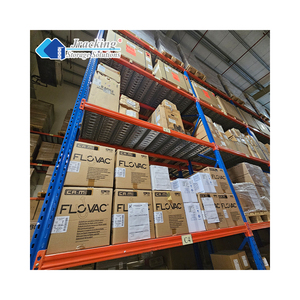
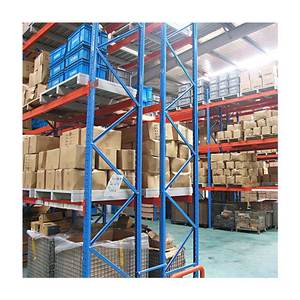
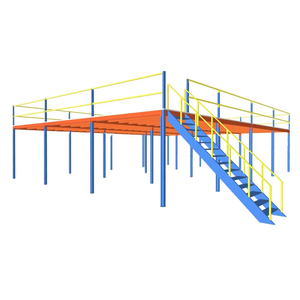
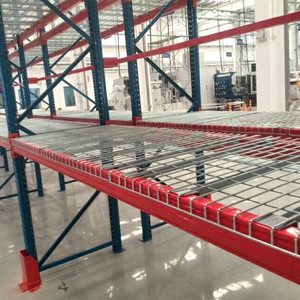
Engineering White Paper: High-Density Pallet Shuttle Automation in Nassau
Operating a distribution, import consolidation, or cold-chain storage facility in Nassau, New Providence (The Bahamas) requires overcoming an unforgiving matrix of physical and economic constraints: premium square-footage lease rates across limited island landmass, soaring electrical power tariffs from local utilities, extreme maritime atmospheric salinity, and stringent Caribbean hurricane engineering requirements. As a globally recognized racking manufacturer and wholesale exporter, our automated and semi-automated Pallet Shuttle Racking Systems transform Caribbean warehouse economics by maximizing cubic density, eliminating wasteful forklift operating aisles, and drastically accelerating container destuffing throughput.
1. The Nassau Industrial Challenge: Island Scarcity vs. High-Velocity Demand
New Providence encompasses merely 80 square miles yet anchors over 70% of the Bahamian populace alongside world-scale mega-resorts including Baha Mar, Atlantis Paradise Island, and the cruise berths at Nassau Cruise Port. Consequently, logistics facilities situated near the Gladstone Road Industrial Corridor, Soldier Road, and the Oakes Field commercial district face heavy financial pressure: prime warehouse footprints frequently trade at elevated lease valuations, rendering wide-aisle selective racking financially unsustainable for high-volume inventory.
Conventional selective pallet configurations consume up to 60% to 65% of floor area solely for forklift transit aisles. When applied to refrigerated goods—which represent the vast majority of perishable sustenance shipped through Arawak Cay Port Development (APD)—cooling unoccupied aisle volume under Bahamian electrical rates ($0.32 to $0.44+ per kWh) generates devastating operational overhead. Our Pallet Shuttle Racking systems solve this structural inefficiency by eliminating internal access aisles, condensing storage channels up to 40 pallets deep, and yielding an exceptional volumetric footprint efficiency exceeding 80% to 85%.
Deep-Lane Cubic Optimization
Replaces multiple forklift operating aisles with a single consolidated charging lane, increasing total pallet holding capacity by 100% to 180% over standard selective racking within the same structural boundary.
Cold Storage Thermal Compression
By drastically contracting internal air volume within chilled and deep-freeze (-18°C to -25°C) envelopes, facilities operating in Nassau achieve an estimated 35% to 45% reduction in refrigeration compressor electrical load.
Rapid Arawak Cay Turnaround
Fast ocean container turnover is critical to avoid marine demurrage fees. Autonomous cart travel speeds up to 1.1 m/s allow distribution crews to strip and store 40ft refrigerated reefers in record cycle times.
2. Technical Kinematics: The Intelligent Radio Pallet Shuttle
At the center of the deep-lane system is the high-performance battery-powered radio shuttle vehicle. Controlled via a ruggedized wireless industrial tablet, the shuttle travels beneath pallet loads within custom-profiled galvanized guidance rails. Utilizing high-resolution optical sensors, ultrasonic boundary detectors, and brushless DC servomotors, the platform automatically lifts, moves, and indexes pallets into the tightest possible spacing without operator entry into the storage bay.
For Nassau distribution hubs handling both broad-line food service (requiring strict FIFO: First-In, First-Out rotation) and homogeneous building materials or dry groceries (LIFO: Last-In, First-Out), the shuttle framework adapts instantaneously through software command. Integrated safety interlocks protect both the mechanical chassis and palletized cargo against over-travel, skewed alignment, and load imbalance.
| System Architecture | Cubic Density Rating | Retrieval Cycle Speed | Forklift Impact Risk | Cold-Store Operating ROI |
|---|---|---|---|---|
| Pallet Shuttle System (Semi-Automated) | Very High (85%+) | Fast (Autonomous in-lane indexing) | Extremely Low (Forklift stays on main perimeter) | Maximum (Compresses expensive thermal air volume) |
| Drive-In Racking (Manual FILO) | High (70% - 75%) | Slow (Mast travels inside deep bays) | High (Frequent upright impacts by forklifts) | Moderate (Structural repair costs run high) |
| Selective Pallet Racking | Low (35% - 45%) | Rapid (100% direct accessibility) | Moderate (Protected by floor-mounted post guards) | Poor (Excessive chilled aisle space wasted) |
| Push-Back Racking (Gravity Cart) | Medium-High (60% - 68%) | Moderate (Gravity assisted, max 5-6 deep) | Low-Moderate (Limited depth compared to shuttle) | Moderate (Limited deep-lane flexibility) |
3. Maritime Atmospheric Engineering: ISO 12944 C4/C5 Corrosion Mitigation
A critical consideration often overlooked by standard equipment wholesalers is the accelerated oxidation hazard inherent to oceanic island territories. In Nassau, constant northeast trade winds blow salt-saturated marine aerosol across New Providence. Unfinished cold-rolled steel or low-specification flash-painted uprights experience aggressive intergranular pitting and joint degradation within months of deployment.
To deliver an authoritative lifespan exceeding 20+ years, our export racking assemblies utilize multi-tier corrosion engineering. For standard ambient warehouse zones within interior industrial corridors, our components receive a 5-stage iron/zinc phosphate conversion wash followed by electrostatic high-build thermoset polyester powder coating cured at 200°C. For extreme humidity conditions, oceanfront perimeter warehouses, and sub-zero refrigerated applications subject to intense freeze-thaw condensation, our systems are manufactured with Hot-Dip Galvanization (HDG per ASTM A123 / ISO 1461) or heavy continuous pre-galvanized high-yield structural coils (Z275 to Z600 coatings). The dynamic shuttle running tracks and internal mechanical hardware are fabricated from heavy-gauge galvanized alloys and stainless-steel fasteners, preventing oxidation scale from interfering with optical laser tracking sensors.
4. Wind Uplift, Seismic, & Limestone Geological Anchoring in The Bahamas
Structural stability calculations for racking arrays deployed across Nassau must respect unique localized geotechnical parameters. Standard off-the-shelf racking footplates designed for domestic North American continental conditions fail to address the specific environmental stresses of the Bahamian archipelago:
Hurricane Envelope Wind Pressures: While indoor racking is sheltered from direct lateral drag, tropical cyclone forces (Category 4 and 5 hurricanes exceeding 165 mph) frequently compromise industrial roll-up curtain doors and light-gauge roof cladding. Rapid interior atmospheric pressurization causes significant structural flex. Our engineering design team applies ANSI MH16.1 specifications with enhanced structural tie-backs, top-bay portal bracing, and robust horizontal cross-aisle bridging to withstand unexpected dynamic loads.
Oolitic Limestone Bedrock Anchoring: Subsurface geology in New Providence predominantly consists of dense, porous oolitic marine limestone. Concrete warehouse slabs cast directly over porous coral fill require specialized anchoring calculations. We engineer enlarged structural baseplates with multiple staggered anchor bolt orientations, utilizing heavy-duty Hilti or wedge anchors calibrated specifically for the compressive strengths and shear tolerances of Bahamian industrial floor slabs.
Localized Industrial Applications & Market Growth in Nassau
The modernization of the Bahamian logistics ecosystem has accelerated rapidly, triggered by the expansion of transshipment operations, automated customs tariff integrations, and the expansion of national grocery retail chains. Below are key localized operational environments where our Pallet Shuttle Systems provide measurable capital advantages:
Resort Provisioning & Hospitality Supply
Nassau's hospitality sector requires thousands of food & beverage pallets arriving weekly on short notice. Shuttle systems running FIFO logic allow master food distributors along Gladstone Road to safely buffer high-cube perishable lines without dynamic stock rotation bottlenecks.
Arawak Cay Bonded Consolidation Hubs
3PL operators receiving 20ft and 40ft maritime shipping containers require maximum storage density adjacent to the port gate. Deep-lane shuttles maximize vertical clear height up to 14 meters, quadrupling capacity inside port-adjacent footprints.
Building Material & Retail Wholesalers
Large DIY, lumber, and heavy hardware retailers in Nassau face high import freight tariffs. Bulk stocking identical SKUs—such as cement bags, tiles, and roof shingles—in 25-pallet-deep shuttle lanes frees up footprint for high-velocity showroom display.
Emerging Bahamas Supply Chain Trends Driving Shuttle Automation
Four primary macro-economic trends in the Bahamas are driving the transition from legacy manual storage to semi-automated pallet shuttle infrastructure:
1. Customs Tariff Modernization (Bahamas Electronic Single Window - BESW): The integration of digital clearance systems known as "Click2Clear" has streamlined the release of sea-freight at APD. Distributors are processing higher container volumes in tighter delivery windows, eliminating dwell time and mandating automated handling equipment capable of keeping pace with intake docks.
2. Escalating Grid Electricity Tariffs: Energy costs remain a significant operational expense for Bahamian enterprises. As cold storage facilities install commercial rooftop solar PV arrays to offset utility rates, the physical space occupied by the building itself becomes a critical efficiency metric. Shuttle racking allows operators to condense their cooled footprint by half, optimizing solar-to-refrigeration energy ratios.
3. Labor Safety & Ergonomics Standards: Navigating heavy counterbalanced forklift trucks through sub-zero freezer aisles creates substantial safety hazards, structural racking collision risks, and operator fatigue. Shuttle racking confines forklift operations to well-lit main transfer aisles, dramatically reducing warehouse equipment collisions and creating a safer, compliant working environment.
4. Expansion of Family Island Transshipment: Nassau acts as the transshipment nerve center for goods destined for Grand Bahama, Abaco, Eleuthera, and Exuma. Consolidated freight arriving from South Florida is sorted and staged for inter-island mailboats and landing crafts. Shuttle systems provide the deep buffering needed to stage entire vessel loads without tying up staging floors.
Why Enterprise Importers Partner with Our Manufacturing Group
Sourcing commercial storage racking from an international manufacturer requires absolute confidence in raw material traceability, structural engineering standards, and reliable export logistics. As an established direct factory manufacturer and global exporter, we provide enterprise-grade capabilities tailored to Caribbean procurement teams:
Certified Global Engineering
All designs reference ANSI MH16.1 (RMI standard), FEM 10.2.02, and EN 15512 codes. Uprights and beams are cold-rolled from certified high-tensile steel, complete with mill test certificates and full structural calculation reports.
Dedicated Project Triumvirate
Every export project is assigned a dedicated Account Manager, Project Structural Engineer, and Installation Supervisor. From initial CAD drawing to container packing and on-site assembly, accountability remains unified.
Direct Caribbean Ocean Freight
We provide full container load (FCL) packing optimized for break-bulk protection and direct ocean discharge to Nassau (Arawak Cay) via transshipment channels in South Florida or direct international liner routes.
Through our advanced Computer-Aided Structural Sizing Tools, our engineering department models your specific building layout, column grids, forklift mast limits, and pallet dimensions (including standard 48"x40" GMA, CHEP, block pallets, and 1200x800mm Euro pallets). This guarantees that every beam length, frame depth, flue space, and shuttle clearance complies fully with local fire codes (NFPA 13) and insurance requirements before steel production begins.
Frequently Asked Questions: Sourcing Shuttle Racking in Nassau
Clear, engineer-verified answers covering procurement logistics, marine shipping, regulatory compliance, and operational setup for warehouse operators across The Bahamas.
How is the racking equipment shipped and cleared through Nassau ports?
Which anti-corrosion finish is recommended for facilities near Nassau Harbour or the coastline?
Can the radio shuttle system operate inside low-temperature refrigerated freezers?
How do Pallet Shuttle Racks comply with Bahamian hurricane and structural building codes?
What pallet types and load capacities are supported by the system?
How are assembly, installation, and technical maintenance handled in Nassau?
Ready to Maximize Your Nassau Warehouse Footprint?
Connect directly with our senior intralogistics engineering department. Send us your facility layout drawings, clear height specifications, and pallet inventory targets for an immediate, complimentary deep-lane CAD design and factory-direct export proposal.