Industrial Pallet Racking & High-Density Storage Solutions
Precision-engineered structural steel systems manufactured under ISO 9001 and certified for seismic, cold-chain, and high-throughput material handling operations across North America.
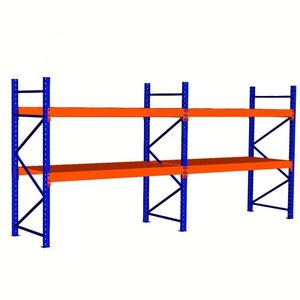
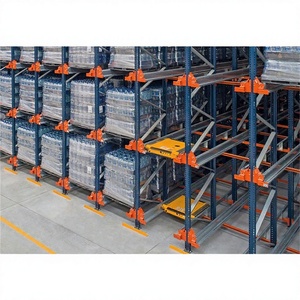
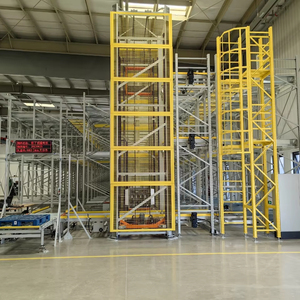
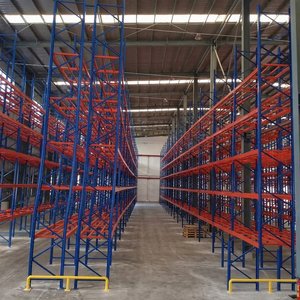
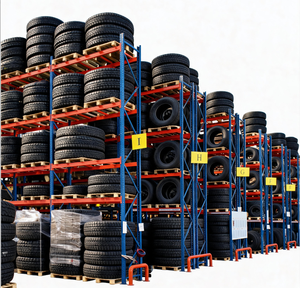
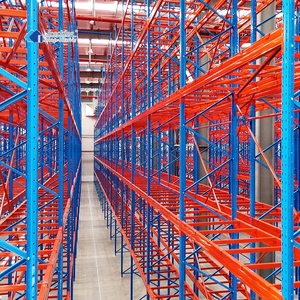
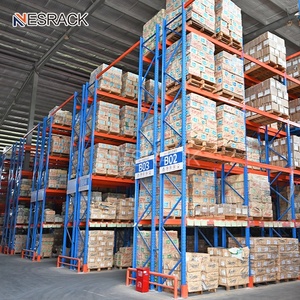
Push Rack System Architecture: Mechanical Principles and Density Engineering
A Push Rack System (commonly known throughout industrial warehousing as a Push-Back Pallet Racking System) operates on an inclined dynamic cart-on-rail or continuous flanged-roller matrix. It provides ultra-dense Last-In, First-Out (LIFO) inventory accumulation while maintaining dedicated aisle selectivity per SKU lane. Unlike traditional drive-in racking that obligates forklifts to physically enter the structural frame—risking catastrophic upright collision—push rack systems allow forklift mast operators to deposit and pick inventory strictly from the front aisle interface.
The structural kinematics rely on a sequence of nested, low-profile carts that glide along precision-sloped structural channels set at a calibrated 2.5% to 3.5% gravitational grade. When loading, the forklift operator positions the first unit load onto the top nesting cart. As the subsequent pallet is introduced, the forklift gently utilizes that pallet’s frontal edge to push the first cart rearward along the inclined structural rails, exposing the second cart. This cycle repeats for 2-deep, 3-deep, 4-deep, 5-deep, and custom 6-deep pallet lane configurations. During extraction, gravity gently advances the nested carts forward at a controlled rate, governed by integrated centrifugal mechanical brake assemblies or self-lubricating heavy-duty sealed bearings.
For operations serving Mexican industrial hubs, structural integrity demands cold-formed high-tensile structural steel profiles (conforming to Q235B and Q355B standards, comparable to ASTM A36 and ASTM A572 Grade 50). Upright columns feature multi-bend omega-profile cross sections engineered with high section modulus values to absorb heavy dynamic impact loads while resisting torsional buckling under seismic stress.
Localized Application Scenarios Across Mexican Industrial Corridors
The acceleration of international nearshoring has converted the Mexican industrial landscape into North America’s preeminent manufacturing and logistics corridor. Push rack and high-density dynamic systems deliver specialized operational value across distinct economic zones:
Monterrey & Saltillo Auto Corridor
Tier 1 & Tier 2 Staging: Automotive components, stampings, fasteners, and engine sub-assemblies require high-density buffer storage close to assembly lines. Push-back racking facilitates line-side sequencing with zero upright strike hazards.
El Bajío (Querétaro & Guanajuato)
Aerospace & Consumer Goods: Electronics, precision tooling, and dry goods distributors in Querétaro and Celaya leverage 3-deep to 5-deep push carts to manage medium-turnover SKUs without consuming expensive Class-A industrial floor plates.
Mexico City & CTT Logistics Basin
E-Commerce & FMCG Hubs: Cuautitlán, Tultitlán, and Tepotzotlán (CTT) face extreme industrial land scarcity. Dynamic push rack systems provide critical vertical cubic utilization for palletized fast-moving retail consumer inventory.
Michoacán & Sinaloa Cold Storage
Agro-Export Freezers: Freezing cubic meters in berry and avocado packing plants carries enormous kilowatt costs. Push rack systems configured with low-temperature synthetic lubricants maximize storage density down to -30°C.
Across these regions, handling units conform primarily to standard North American 48" × 40" GMA (Grocery Manufacturers Association) pallets, along with CHEP wooden and plastic pooling blocks. Our push rack carts are custom-fabricated to seat both GMA wooden stringers and Euro-pallets seamlessly, preventing load deflection or cart snagging during dynamic travel.
Strategic Industrial Trends Driving High-Density Storage in Mexico
Procurement directors and facility planners in Mexico are operating in a radically altered market environment characterized by real estate compression, strict seismic regulations, and cross-border customs integration:
Nearshoring & Class A Vacancy Compression
With industrial vacancy rates hovering below 1.5% in Northern border cities like Ciudad Juárez, Tijuana, and Monterrey, greenfield warehouse expansion is constrained. Facility directors must extract maximum capacity from existing footprints. Retrofitting older low-density selective racks with high-density push-back frames delivers an immediate 60%–75% inventory surge without relocating.
Seismic Compliance Under NTC-CDMX & CFE Manuals
Central and Southern Mexico sit on active seismic fault systems. The Mexican Federal Electricity Commission (CFE) Seismic Design Manual (Manual de Diseño de Obras Civiles por Sismo) and Mexico City Technical Norms (NTC-CDMX 2023) mandate rigorous dynamic load analysis. Every push rack export structure must incorporate enlarged base plates, heavy seismic anchors, and reinforced portal bracing.
USMCA / T-MEC & IMMEX Duty Optimization
Multinational operations running under Mexico’s IMMEX program require clear tariff classifications and documentation. Importing certified storage systems under authorized HS codes ensures duty exemptions, zero VAT under VAT/IEPS certifications, and audit-ready material traceability for capital asset ledgers across bilateral supply chains.
Industrial Racking Architecture Comparison Matrix
Evaluating the mechanical tradeoffs between storage density, equipment investment, cycle time, and structural accessibility for Mexican distribution facilities:
| Storage Topology | Density Rating | Inventory Flow | Aisle Access Required | Forklift Impact Risk | Ideal Application Profile |
|---|---|---|---|---|---|
| Push Rack System | High (75% Gain) | LIFO (Lane Dedicated) | Single Front Aisle | Minimal (Mast Stays Outside) | Medium SKU counts, fast throughput, cold storage |
| Selective Pallet Racking | Low (Benchmark) | FIFO / LIFO Direct | Every Rack Row | Moderate (Frequent Turning) | 100% SKU selectivity, highly fragmented distribution |
| Drive-In Pallet Racking | High (70% Gain) | FILO Strict | Deep Entry Channels | Severe (Trucks Enter Frame) | Homogeneous bulk raw materials, seasonal buffer |
| Radio Shuttle System | Ultra-High (85% Gain) | FIFO or LIFO | Front Load / Pick Face | Extremely Low (Automated Cart) | Massive volume SKUs, mega cold-storage, automated hubs |
| Pallet Flow (Gravity) | High (80% Gain) | FIFO Strict | Separate Load & Pick Aisles | Low (Rear Load, Front Pick) | Perishable foodstuffs, rapid inventory turnover, dates |
Integrated Manufacturing, Structural Integrity, and Project Execution
With decades of dedicated steel storage manufacturing pedigree, our operations bridge heavy industrial fabrication and meticulous European and North American engineering standards. We deliver end-to-end reliability for enterprise clients across Mexico, the United States, and Canada:
Three Dedicated Project Managers
Every Mexican client is paired with an Account Manager, a structural Project Manager, and an on-site Installation Manager. From architectural layout reviews to final handover, you communicate with one accountable engineering source.
Dual Norm Compliance (RMI & FEM)
Calculations adhere strictly to ANSI MH16.1 (Rack Manufacturers Institute) and European FEM 10.2.02 structural guidelines. We supply stamped seismic documentation, load charts, and structural calculations required by Mexican civil protection authorities.
Factory-Direct Steel Metallurgy
We utilize mill-certified Q235B and Q355B cold-rolled structural steel with uniform yield strengths and high elongation properties. Continuous automatic roll-forming lines guarantee millimeter-accurate upright hole pitch alignments for life-of-building durability.
Corrosion Protection & Electrostatic Powder
Prior to coating, steel parts pass through a 7-stage automated chemical pre-treatment and phosphating bath. Our heavy-duty thermosetting epoxy-polyester electrostatic powder coating (80–120 microns) withstands tropical humidity, chemical exposure, and sub-zero freezer cycles without delamination.
Seamless Cross-Border Ocean & Overland Logistics
Equipped for direct containerized maritime export to Mexico’s primary Pacific ports (Manzanillo, Lázaro Cárdenas) and Gulf ports (Veracruz, Altamira), alongside bonded overland drayage through Laredo, Texas. We manage professional export palletization, moisture-barrier bundling, and complete bilingual packing manifests.
Frequently Asked Questions by Mexico Procurement & Logistics Directors
Authoritative technical answers to common questions encountered when specifying, importing, and commissioning heavy industrial racking systems across Mexico:
What seismic design codes must a push rack system comply with in Mexico?
How does a push rack system accommodate 48" x 40" GMA and CHEP pallets used in Mexico?
Can push rack systems operate reliably inside sub-zero cold storage facilities in Mexico?
What documentation is required to clear industrial steel racking through Mexican customs?
What is the typical manufacturing and ocean delivery timeline to Mexican ports?
How does forklift operator safety compare between push rack and drive-in systems?
Does your factory support local assembly and installation across Mexico?
Optimize Your Mexican Warehouse Footprint Today
Whether you are designing a high-bay distribution hub in Monterrey, retrofitting a cold-storage plant in Michoacán, or setting up a cross-border maquiladora buffer in Tijuana, our structural engineers are ready to produce custom CAD layout drawings and competitive direct-export quotation matrices.