Industrial Storage Systems Sourced Direct from Certified Exporters
Heavy-duty structural configurations fabricated from high-tensile Q235B and Q355B cold-rolled steel, designed specifically to meet Southern California earthquake zone ratings and municipal high-pile combustible permits.
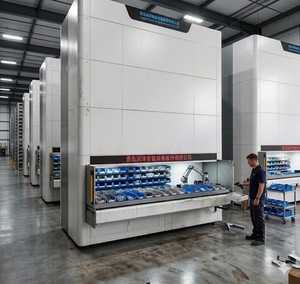
Industrial Hardware Storage VLM Automated Vertical Lift Module Heavy Capacity Warehouse Shelving System
- Tray Capacity: Up to 2,200 lbs/tray
- Height Range: 8 ft – 45 ft Vertical
- Footprint Savings: Up to 85% Recovery
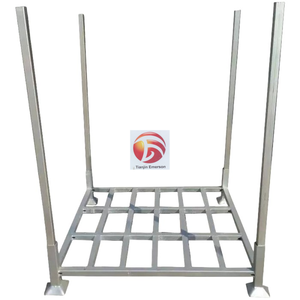
China Factory Customized Steel Storage Racks Heavy Duty Industrial Racking Stackable Scaffolding Shelves for Logistics Warehouse
- Bay Loading: 4,000 – 11,000 lbs
- Steel Standard: Q355B Certified Cold-Rolled
- Finish: Epoxy Electrostatic Powder
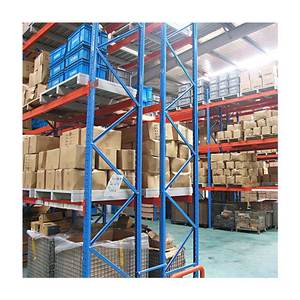
Industrial Heavy Duty Rack Manufacturing Pallet Rack Logistics Equipment Factory Warehouse Storage Racks Heavy Duty Racking
- Pallet Standard: 48" x 40" GMA & CHEP
- Seismic Bracing: K-Truss / Heavy Diagonal
- Beam Pitch: 50mm / 75mm Increments
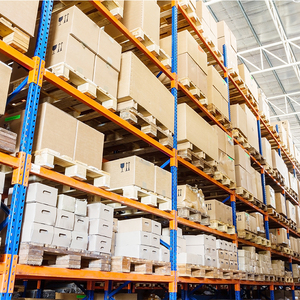
Heavy Duty Steel Fabric Roll Pallet Warehouse Racking Systems Steel Pallet Industrial Racks Nepal, Bhutan, Bangladesh
- Cradle Mounts: Non-Slip Saddle Brackets
- Load Rating: 3,500 lbs / Level
- Application: Textiles, Coils & Paper Rolls
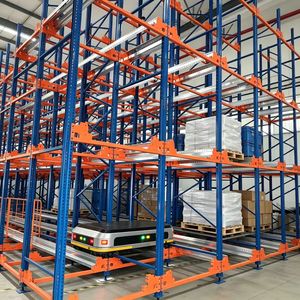
Radio Shuttle Rack Multi-Level High Density Steel Heavy Duty Corrosion Protection Pallet Storage System FIFO LIFO for Warehouse
- Lane Depth: Up to 40 Pallets Deep
- Battery: Lithium-Ion Quick Swap
- Modes: FIFO / LIFO Dynamic Select
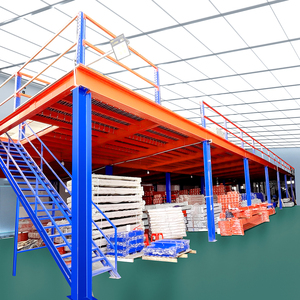
OEM Multi-level Heavy Duty Industrial Storage Warehouse Racks Pallet Racking Systems Attic Loft Mezzanine Floor Platforms
- Decking Types: B-Deck, Bar Grating, Resin
- Floor Live Load: 125 – 300 PSF
- Stairs/Gates: OSHA & IBC 2022 Compliant
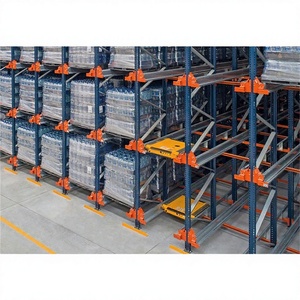
Heda Four Way Radio Shuttle Rack Intelligent Pallet Rack System Shuttle Pallet Racking Warehouse ASRS Shuttle Racking System
- Mobility: 360° Omnidirectional Cross-Lane
- Integration: WCS / WMS API Enabled
- Cold Chain: Operational to -25°C (-13°F)

Cantilever Racking Featuring Single or Double-Sided Arms for Efficient Storage of Pipes, Bars, and Planks in Warehouses
- Arm Capacity: 1,000 – 6,000 lbs / Arm
- Design: Single or Double-Sided Central Column
- Ideal For: Pipes, Timber, Aluminum Extrusions
San Diego Industrial Submarkets & Application Architecture
From cross-border maquiladora logistics in Otay Mesa to cleanroom biotechnology fulfillment in Sorrento Valley, warehouse racking in San Diego requires precise engineering alignment with distinct regional operational demands.
Otay Mesa Cross-Border Logistics & 3PL Transloading
As the busiest commercial land port of entry between California and Mexico, Otay Mesa handles billions of dollars in industrial manufacturing and consumer goods moving through the Tijuana-San Diego binational megaregion. Warehouses here face extreme square-footage premiums and massive daily pallet turnover.
- High-Bay Drive-In & Radio Shuttle: Maximizes cubic density for standardized FMCG and automotive components awaiting interstate distribution via I-905 and I-5.
- Heavy-Duty GMA Pallet Racks: Accommodates uniform 48" x 40" 4-way wood/plastic pallets with structural seismic footplates anchored into 6"–8" concrete slabs.
Sorrento Valley, Torrey Pines & Carlsbad Life Sciences
San Diego stands as one of the world's elite life sciences and biomedical clusters. Facilities across Sorrento Valley, University Town Center (UTC), and Carlsbad require ultra-clean, temperature-controlled, cGMP-compliant warehousing for medical diagnostic kits, pharmaceuticals, and active reagents.
- Stainless & Epoxy Cold Racking: Blast-freezer certified down to -25°C with anti-microbial electrostatic powder finishes resistant to harsh chemical wipe-downs.
- Vertical Lift Modules (VLM): Enclosed, dust-free automated retrieval ensuring total lot traceability, barcode scanning integration, and stringent chain of custody.
Miramar, Kearny Mesa & Defense/Aerospace Contractors
Surrounding Marine Corps Air Station Miramar and naval command centers, defense tier-1 and tier-2 manufacturers produce avionics, naval defense hardware, and composite assemblies. Storage profiles here feature high SKU variation, sensitive calibration equipment, and raw metallic stock.
- Heavy Cantilever Racking: Dedicated arm profiles engineered for uninhibited overhead crane loading of structural titanium rods, aluminum tubes, and composites.
- Industrial Loft Mezzanines: Double the footprint inside clear heights of 24'–30' to host testing labs, assembly benches, and secured mil-spec hardware cribs.
Technical Structural Blueprint: System Evaluation
When selecting industrial racking systems for San Diego County facilities, facility directors must weigh volumetric density, capital expenditure per pallet position, seismic response parameters, and compliance with NFPA 13 sprinkler flue spacing.
| System Architecture | Bay Capacity Rating | Seismic Response (SDC) | Aisle Clear Width | Inventory Velocity | NFPA 13 In-Rack Sprinkler | Pallet Density Ratio |
|---|---|---|---|---|---|---|
| Standard Teardrop Selective Cold-rolled tubular beam | 5,000 – 9,000 lbs / level | Design Cat D – F | 12.0 – 13.5 ft (Counterbalance) | 100% Direct Selectivity (FIFO) | Ceiling ESFR often sufficient (<30ft) | Baseline (1.0x) |
| Radio Shuttle Automated System Semi-automated deep lane | 3,300 lbs / pallet carrier | Design Cat D – F | 9.5 – 10.5 ft (Reach Truck) | High Batch Throughput (LIFO/FIFO) | Required in multi-tier deep bays | High Density (2.4x – 3.2x) |
| Heavy Structural Cantilever I-beam column & pinned arms | Up to 6,500 lbs / individual arm | Design Cat D – E | Variable / Side-loader compatible | Rapid Open Crane Picking | Exterior / Standard ceiling array | Specialized Long Profile |
| Rack-Supported Mezzanine Platform Multi-level structural decking | 125 – 250 lbs / sq.ft live load | Special Moment Frame (D-F) | Pedestrian Picking Aisles (42" min) | Medium / High SKU Hand-Pick | Under-deck sprinkler grid mandatory | Vertical Multiplication (2x-3x) |
| Automated Vertical Lift Module (VLM) Enclosed dual-mast extractor | 2,200 lbs / internal tray | Self-Contained Anchored Base | Zero Aisle (Front Access Bay) | Up to 300 order cycles / hour | Integrated clean agent / N2 canister | Extreme Cube Recovery (5x-8x) |
San Diego County Seismic Factor Advisory: ASCE 7-16 & CBC Chapter 16
San Diego facilities sit within active strike-slip fault networks including the Rose Canyon, Coronado Bank, and Elsinore Fault Zones. All industrial racking structures exceeding 8 feet in top-shelf height are legally classified as structural buildings by the City of San Diego Development Services Department (DSD). Racks must be engineered using mapped spectral acceleration parameters (Ss and S1 values ranging from 1.1g to over 1.6g), requiring high-grade chemical wedge anchors (Hilti HIT-HY 200 or Simpson Strong-Tie Strong-Bolt 2) and stamped PE calculations.
Macro Trends Shaping San Diego Warehouse Infrastructure
The confluence of nearshoring initiatives, stringent green building mandates, and historic industrial land scarcity is fundamentally changing how Southern California enterprises design and deploy storage assets.
The Nearshoring Renaissance & Cross-Border Freight
Global supply chain realignment has accelerated high-tech manufacturing inside Baja California's industrial parks (Tijuana, Mexicali, Tecate). As finished goods cross the border into Otay Mesa for inspection and transloading, San Diego warehouse vacancies stay compressed below national averages.
To process cross-border volume without expanding ground square footage, distribution operators are rapidly converting legacy 20-foot clear warehouses into high-density 32-to-36-foot narrow-aisle (VNA) or radio-shuttle pallet buffer environments.
California Title 24 Decarbonization & Solar Rooftops
California Building Standards Code Title 24 imposes aggressive thermal envelope and solar-ready roof regulations on industrial structures. Warehouse roofs frequently bear secondary loads from extensive photovoltaic arrays and commercial HVAC/chiller systems.
Our structural engineering pods coordinate upright rack column placements to avoid load transfers into roof trusses, while also accommodating interior high-efficiency LED rack sensor pathways and natural skylight flue corridors mandated by regional fire inspectors.
Cold-Chain Automation in Port & Regional Distribution
Imported agricultural perishables, craft brewery cold holding across North County, and clinical life science storage require high-density refrigerated racking. Operating cold storage in California entails punishing utility electric tariffs.
Automated shuttle racking reduces the cubic volume that requires active refrigeration by up to 50% compared to traditional wide-aisle forklift layouts. By minimizing refrigerated air infiltration and human presence in sub-zero chambers, operators achieve drastic energy reductions.
The Direct Factory & Exporter Advantage
Eliminate layers of middleman markups. We engineer, manufacture, and export structural storage systems directly from our ISO-certified facilities to San Diego job sites with comprehensive end-to-end accountability.
Structural Steel Precision & International Standards
All upright columns, roll-formed step beams, and structural load members are fabricated from virgin prime cold-rolled coils (Q235B and Q355B grades) with tensile strengths exceeding 490 MPa. Our manufacturing infrastructure incorporates:
- Robotic CNC Roll-Forming Lines: Continuous punching guaranteeing hole pitch precision within +/- 0.1mm for effortless teardrop pin seating.
- Automatic Continuous Welding Systems: Certified structural welds tested to AWS D1.1 structural welding specifications for high-seismic integrity.
- Multi-Stage Pre-Treatment & Electrostatic Coating: Automated 7-stage phosphating degrease wash followed by thermosetting epoxy powder coating (60–80 micron thickness) that withstands 500-hour salt spray tests.
Dedicated 3-Expert Project Pod Delivery
Every industrial project ordered for the San Diego metropolitan zone is overseen by an integrated project management pod, safeguarding your installation timeline from preliminary CAD layout through to city building permit sign-off:
- Dedicated Account Director: Single point of operational contact ensuring commercial transparency, container shipment tracking, and delivery sequencing.
- Lead Structural Calculations Engineer: Produces licensed California PE-stamped calculation packages, anchor pull-out data, and slab load verifications.
- On-Site Installation Manager: Coordinates certified rigging crews, laser-level column squaring, torque wrench anchor verification, and OSHA safety placards.
Precision Execution: Concept to Commissioning
Site Audit & Slab Profiling
Evaluation of clear heights, column grids, concrete slab thickness, compressive strength (f'c), and joint patterns.
CAD Layout & PE Math
Full 2D/3D layout development incorporating NFPA flue spaces, egress aisles, and California-stamped structural calculations.
Direct Production
Precision roll-forming, robotic welding, shot blasting, and thermoset powder baking with strict ISO 9001 QA/QC.
Intermodal Logistics
Containerized sea freight delivered direct to Port of San Diego or Long Beach, with expedited bonded transit to Otay Mesa.
Rigging & Final Sign-Off
Laser plumb alignment, seismic wedge anchoring, inspection coordination with City DSD inspectors, and load rating plaques.
San Diego Warehouse Racking: Frequently Asked Questions
Practical, code-grounded answers to assist logistics executives, operations managers, and general contractors navigating Southern California storage procurement.
Do warehouse racking installations in San Diego require building permits?
Yes. Under the City of San Diego Development Services Department (DSD) and County of San Diego building ordinances, any industrial storage rack system where the top storage level exceeds 5 feet 9 inches (or where pallet racks exceed 8 feet in overall height) legally requires a commercial building permit.
Because San Diego is designated as Seismic Design Category D, E, or F depending on specific geotechnical site coordinates, the permit submission package must include sealed engineering calculations prepared and signed by a structural engineer licensed in the State of California, confirming anchor pull-out resistance, frame baseplate dimensions, and building slab structural adequacy.
What concrete slab thickness is required for heavy-duty pallet racking?
Standard selective pallet racks carrying standard 2,500-lb GMA pallets on back-to-back uprights generally require a minimum reinforced concrete slab thickness of 5 to 6 inches, with a specified compressive strength of at least 3,000 to 4,000 PSI.
For high-bay automated shuttle systems, vertical lift modules, or narrow-aisle systems exceeding 24 feet in height, a 6-to-8-inch slab with 4,000+ PSI compressive strength is typically required to accommodate the heavy concentrated point loads transferred through the footplates. Core drilling tests may be required by local structural engineers if legacy building blueprints are unavailable.
How does NFPA 13 impact pallet rack flue space design in San Diego?
Local fire protection jurisdictions—including the San Diego Fire-Rescue Department and Chula Vista Fire Department—strictly enforce NFPA 13 and California Fire Code Chapter 32 standards for high-piled combustible storage. Racking layouts must incorporate clean vertical flue spaces:
Transverse flue spaces (between pallets along the beam) must be maintained at a minimum of 3 inches, while longitudinal flue spaces (between back-to-back rows) require a continuous 6-inch vertical chimney. This unobstructed path allows upward heat from a fire to trigger overhead ceiling sprinkler heads rapidly while permitting descending water penetration through the lower tiers.
Can your factory fabricate custom racks compatible with existing teardrop brands?
Yes. Our automated CNC punching and roll-forming equipment produces 100% interchangeable American Standard teardrop connection geometry. Our beams and upright columns seamlessly integrate with legacy brands including Interlake Mecalux, Ridg-U-Rak, Speedrack, and UNARCO.
This interchangeability allows facility managers in Otay Mesa, Miramar, and El Cajon to expand existing bays, replace forklift-damaged frames, or add selective levels without purchasing entirely new modular systems or replacing existing upright assets.
What are the ocean freight lead times and shipping routes to San Diego?
Factory fabrication typically spans 2 to 4 weeks depending on the order tonnage and custom engineering requirements. Ocean transit times across the transpacific corridor directly to the Port of San Diego (Tenth Avenue Marine Terminal / National City Marine Terminal) or the Port of Los Angeles / Long Beach average 14 to 18 days.
From dock arrival, drayage carriers deliver standard 40ft High Cube containers directly to local job sites within 48 to 72 hours of customs clearance. For cross-border maquiladora operations, bonded in-transit shipments can be routed through Otay Mesa commercial crossing without paying intermediate California state retail sales taxes.
What is the difference between roll-formed steel and structural steel racking?
Roll-formed racking is cold-shaped from gauge steel sheet into tubular or open C-channel sections with punch-pin connections. It is economical, lightweight, and fast to adjust, making it the dominant choice for retail distribution, e-commerce, and general dry goods storage.
Structural steel racking is fabricated from hot-rolled structural steel I-beams and channels with heavy bolted beam connections. It provides vastly superior resistance to repeated forklift collisions, withstands extreme abuse in high-velocity cold-storage freezers, and offers higher structural dampening properties in severe seismic activity zones.
Accelerate Your San Diego Warehouse Deployment
Connect directly with our engineering division. Receive seismic feasibility evaluations, 3D CAD facility blueprints, and factory-direct pricing for your next Southern California facility fit-out.